Epigenetics programme, Babraham Institute, Cambridge, UK.
Centre for Trophoblast Research, University of Cambridge, Cambridge, UK.
Hum Reprod Update. 2018 Sep 1;24(5):556-576. doi: 10.1093/humupd/dmy021.
Over the past few years, advances in molecular technologies have allowed unprecedented mapping of epigenetic modifications in gametes and during early embryonic development. This work is allowing a detailed genomic analysis, which for the first time can answer long-standing questions about epigenetic regulation and reprogramming, and highlights differences between mouse and human, the implications of which are only beginning to be explored.
In this review, we summarise new low-cell molecular methods enabling the interrogation of epigenetic information in gametes and early embryos, the mechanistic insights these have provided, and contrast the findings in mouse and human.
Relevant studies were identified by PubMed search.
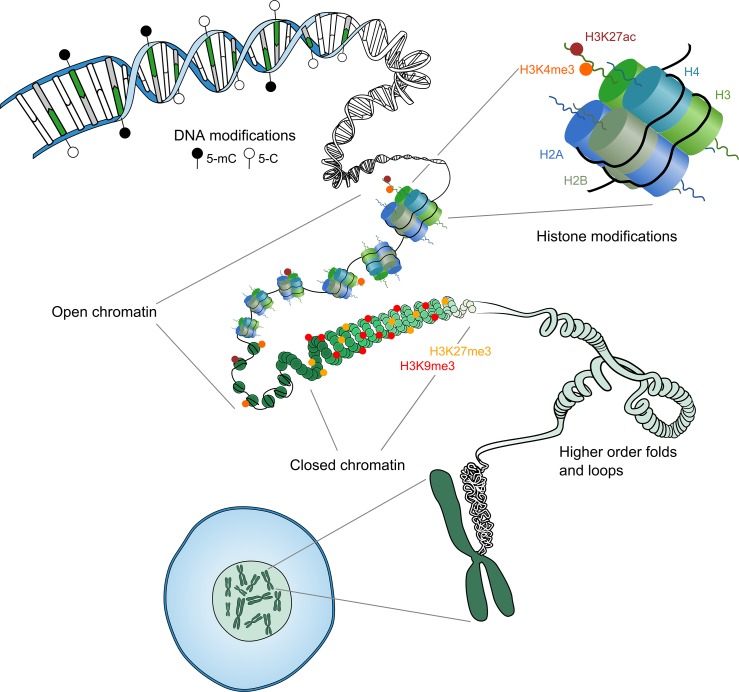
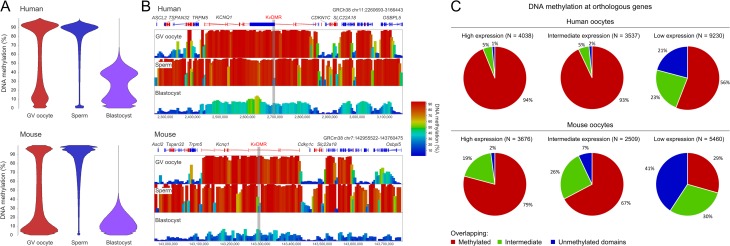
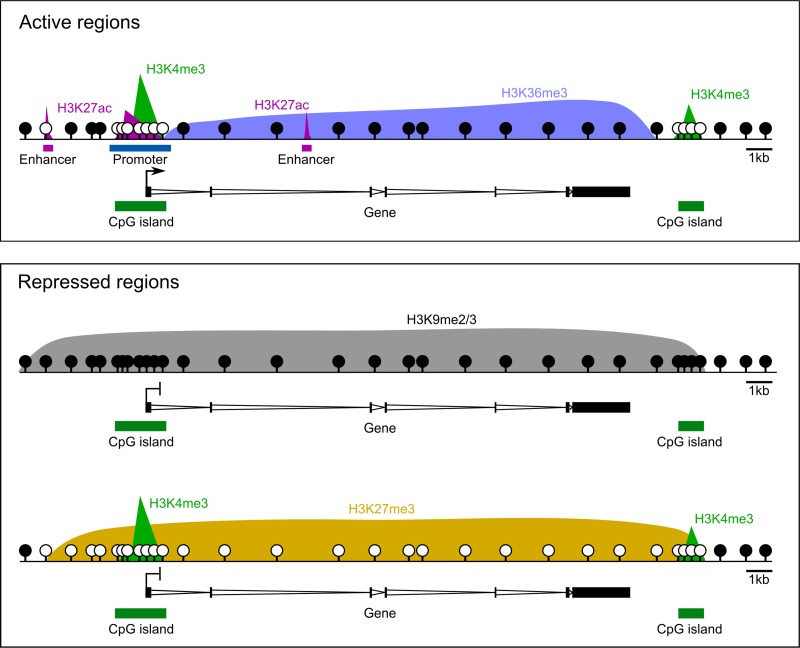
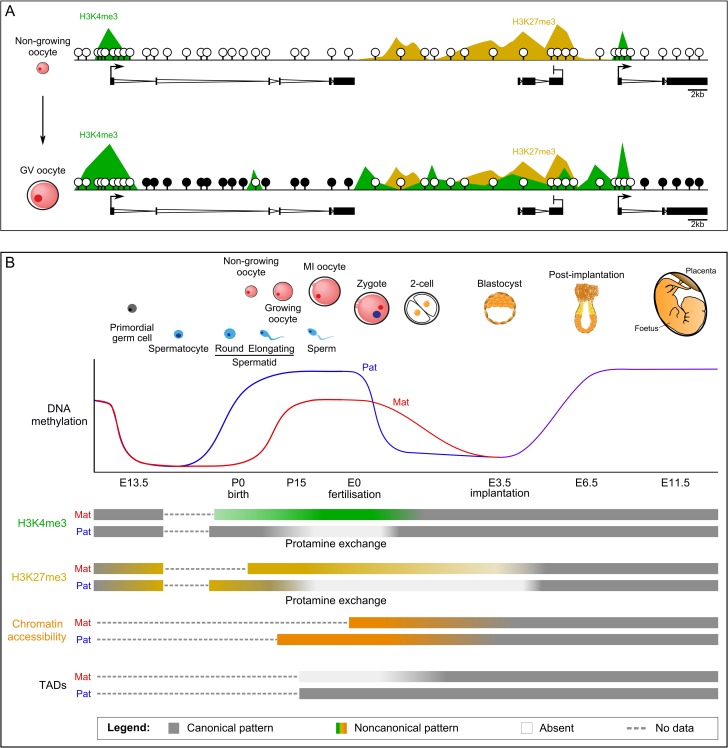
We discuss the levels of epigenetic regulation, from DNA modifications to chromatin organisation, during mouse gametogenesis, fertilisation and pre- and post-implantation development. The recently characterised features of the oocyte epigenome highlight its exceptionally unique regulatory landscape. The chromatin organisation and epigenetic landscape of both gametic genomes are rapidly reprogrammed after fertilisation. This extensive epigenetic remodelling is necessary for zygotic genome activation, but the mechanistic link remains unclear. While the vast majority of epigenetic information from the gametes is erased in pre-implantation development, new insights suggest that repressive histone modifications from the oocyte may mediate a novel mechanism of imprinting. To date, the characterisation of epigenetics in human development has been almost exclusively limited to DNA methylation profiling; these data reinforce that the global dynamics are conserved between mouse and human. However, as we look closer, it is becoming apparent that the mechanisms regulating these dynamics are distinct. These early findings emphasise the importance of investigations of fundamental epigenetic mechanisms in both mouse and humans.
Failures in epigenetic regulation have been implicated in human disease and infertility. With increasing maternal age and use of reproductive technologies in countries all over the world, it is becoming ever more important to understand the necessary processes required to establish a developmentally competent embryo. Furthermore, it is essential to evaluate the extent to which these epigenetic patterns are sensitive to such technologies and other adverse environmental exposures.
在过去的几年中,分子技术的进步使得对配子和早期胚胎发育过程中的表观遗传修饰进行前所未有的图谱绘制成为可能。这项工作正在进行详细的基因组分析,首次能够回答关于表观遗传调控和重编程的长期存在的问题,并强调了小鼠和人类之间的差异,其影响才刚刚开始被探索。
在这篇综述中,我们总结了新的低细胞分子方法,这些方法能够检测配子和早期胚胎中的表观遗传信息,以及这些方法提供的机制见解,并对比了小鼠和人类的研究结果。
通过 PubMed 搜索确定相关研究。
我们讨论了在小鼠配子发生、受精和前-后植入发育过程中,从 DNA 修饰到染色质组织的不同层次的表观遗传调控。最近对卵母细胞表观基因组特征的研究突出了其极其独特的调控景观。配子基因组的染色质组织和表观遗传景观在受精后迅速被重新编程。这种广泛的表观遗传重塑对于合子基因组激活是必要的,但机制联系尚不清楚。虽然在前期胚胎发育过程中来自配子的绝大多数表观遗传信息被抹去,但新的研究表明,卵母细胞中的抑制性组蛋白修饰可能介导一种新的印迹机制。迄今为止,人类发育过程中的表观遗传学特征几乎完全限于 DNA 甲基化谱分析;这些数据证实了这些全局动态在小鼠和人类之间是保守的。然而,当我们进一步观察时,很明显,调节这些动态的机制是不同的。这些早期发现强调了在小鼠和人类中研究基本表观遗传机制的重要性。
表观遗传调控失败与人类疾病和不孕不育有关。随着全球各国的女性生育年龄的增加和生殖技术的使用,了解建立一个具有发育能力的胚胎所需的必要过程变得越来越重要。此外,评估这些表观遗传模式对这些技术和其他不利环境暴露的敏感性程度至关重要。