Donati Pablo Alejandro, Gogniat Emiliano, Madorno Matías, Guevara Juan Manuel, Guillemi Eliana Carolina, Lavalle María Del Carmen, Scorza Francisco Patricio, Mayer Germán Federico, Rodriguez Pablo Oscar
Unidade de Terapia Intensiva Veterinária UCIcoop - Buenos Aires, Argentina.
Unidade de Terapia Intensiva, Hospital Italiano de Buenos Aires - Buenos Aires, Argentina.
Rev Bras Ter Intensiva. 2018 Apr-Jun;30(2):144-152. doi: 10.5935/0103-507X.20180028.
To evaluate a novel physiological approach for setting the tidal volume in mechanical ventilation according to inspiratory capacity, and to determine if it results in an appropriate mechanical and gas exchange measurements in healthy and critically ill dogs.
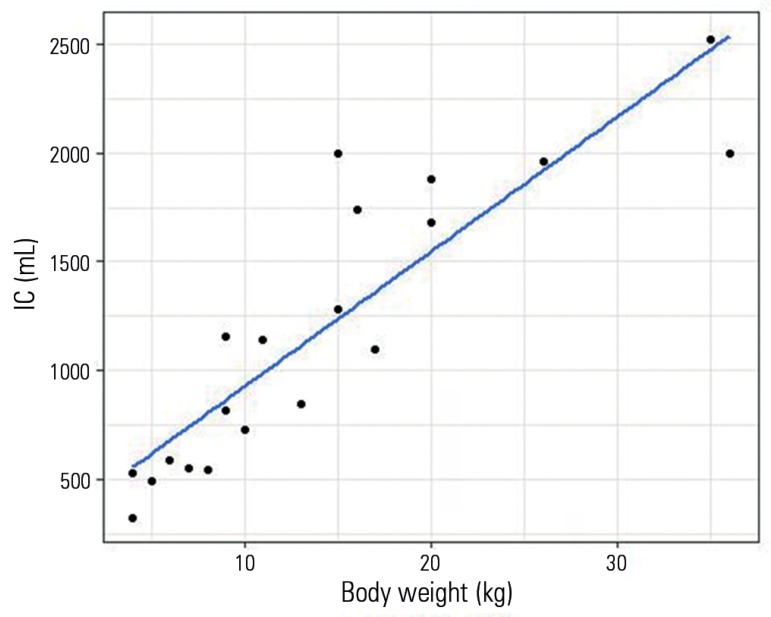
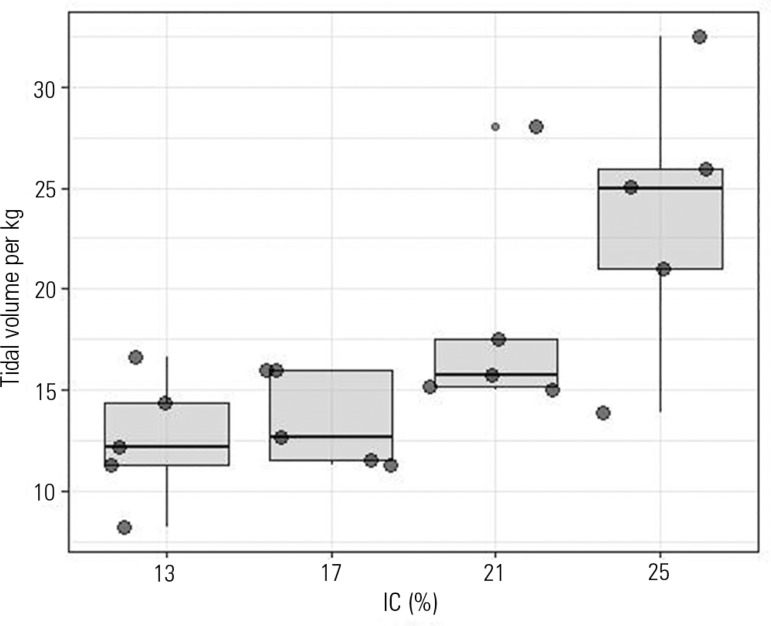
Twenty healthy animals were included in the study to assess the tidal volume expressed as a percentage of inspiratory capacity. For inspiratory capacity measurement, the mechanical ventilator was set as follows: pressure control mode with 35cmH2O of inspired pressure and zero end-expiratory pressure for 5 seconds. Subsequently, the animals were randomized into four groups and ventilated with a tidal volume corresponding to the different percentages of inspiratory capacity. Subsequently, ten critically ill dogs were studied.
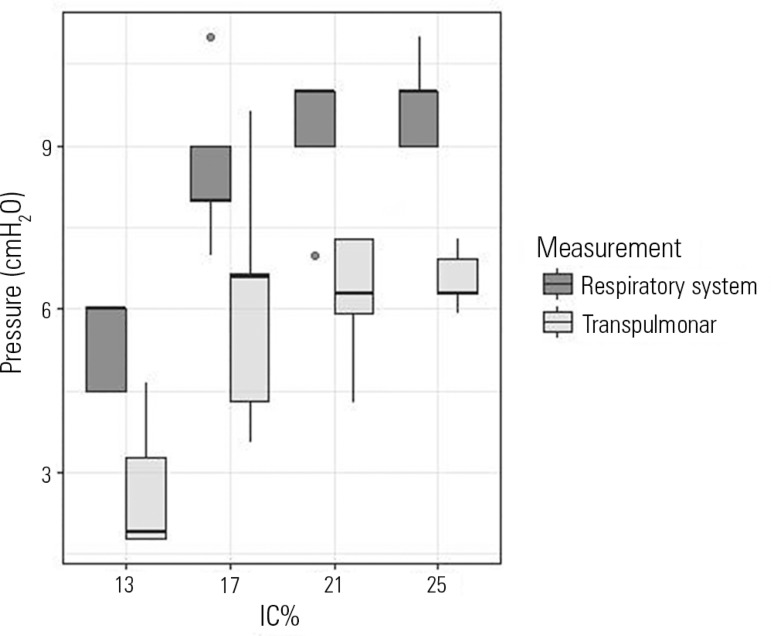
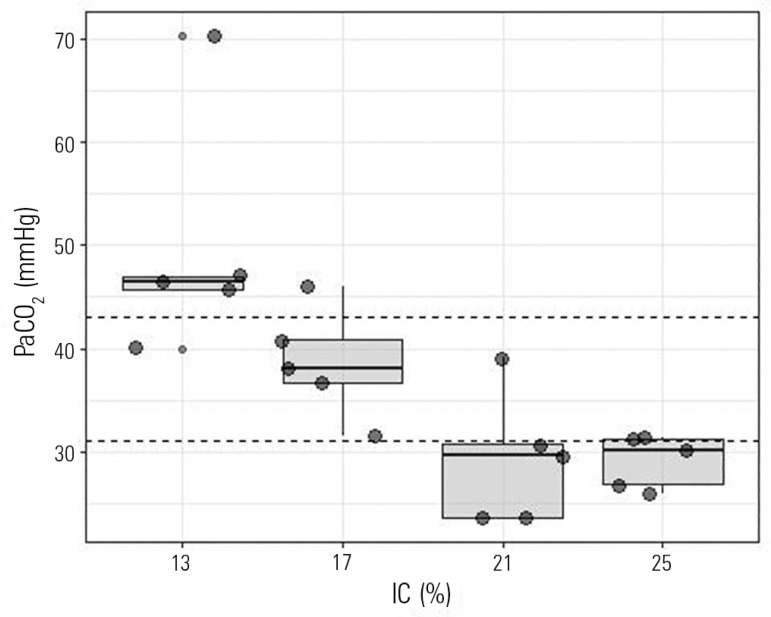
Healthy dogs ventilated with a tidal volume of 17% of the inspiratory capacity showed normal respiratory mechanics and presented expected PaCO2 values more frequently than the other groups. The respiratory system and transpulmonary driving pressure were significantly higher among the critically ill dogs but below 15 cmH2O in all cases.
The tidal volume based on the inspiratory capacity of each animal has proven to be a useful and simple tool when setting ventilator parameters. A similar approach should also be evaluated in other species, including human beings, if we consider the potential limitations of tidal volume titration based on the calculated ideal body weight.
评估一种根据吸气容量设置机械通气潮气量的新型生理学方法,并确定其在健康和危重病犬中是否能产生合适的机械和气体交换测量结果。
20只健康动物纳入研究,以评估潮气量占吸气容量的百分比。为测量吸气容量,将机械通气机设置如下:压力控制模式,吸气压力35cmH2O,呼气末压力为零,持续5秒。随后,将动物随机分为四组,以对应不同吸气容量百分比的潮气量进行通气。随后,对10只危重病犬进行研究。
以吸气容量的17%作为潮气量进行通气的健康犬表现出正常的呼吸力学,且比其他组更频繁地呈现出预期的PaCO2值。危重病犬的呼吸系统和跨肺驱动压力显著更高,但在所有情况下均低于15cmH2O。
基于每只动物吸气容量的潮气量已被证明是设置通气参数时一种有用且简单的工具。如果我们考虑基于计算出的理想体重进行潮气量滴定的潜在局限性,类似方法也应在包括人类在内的其他物种中进行评估。