Department of Biological Engineering, Massachusetts Institute of Technology, Cambridge, MA 02139.
Department of Mechanical Engineering, Massachusetts Institute of Technology, Cambridge, MA 02139.
Mol Biol Cell. 2018 Aug 8;29(16):1927-1940. doi: 10.1091/mbc.E18-03-0164. Epub 2018 Jul 11.
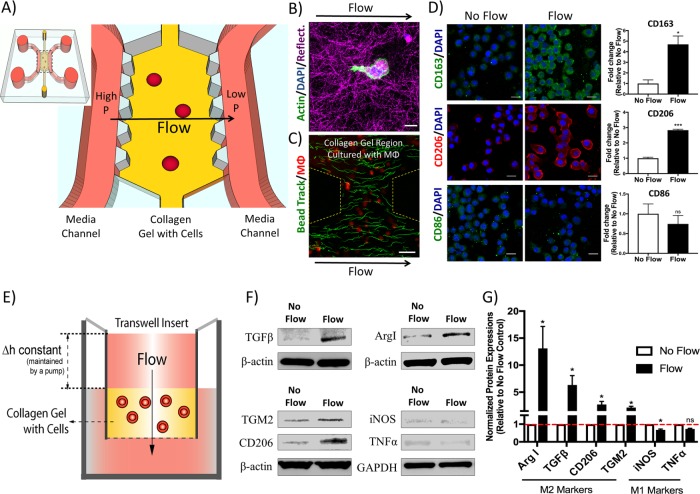
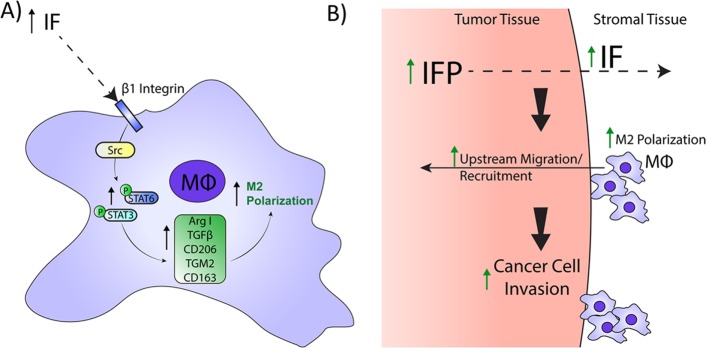
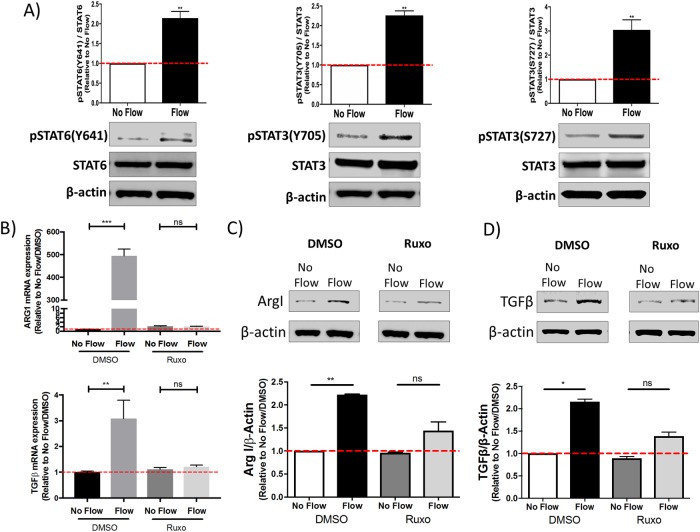
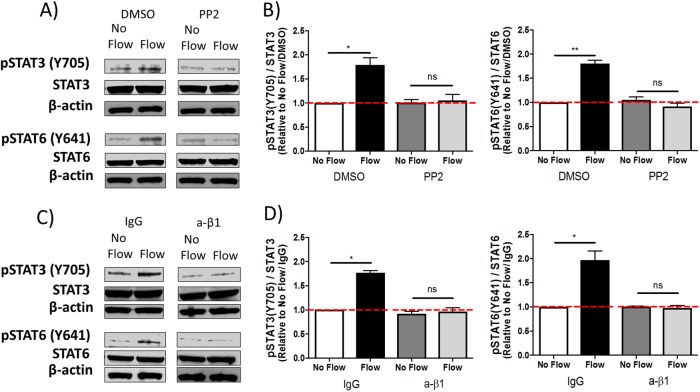
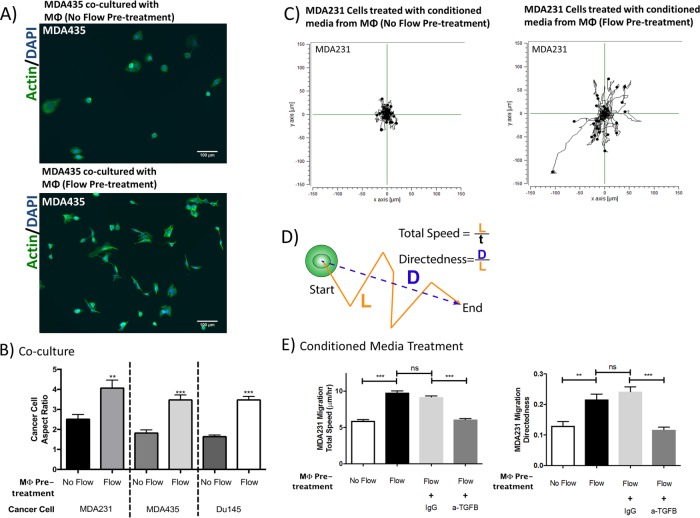
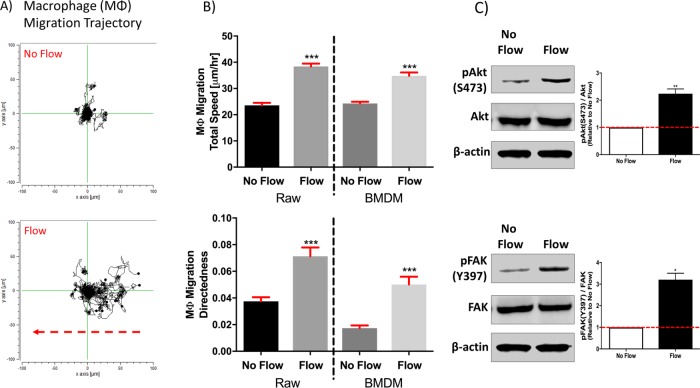
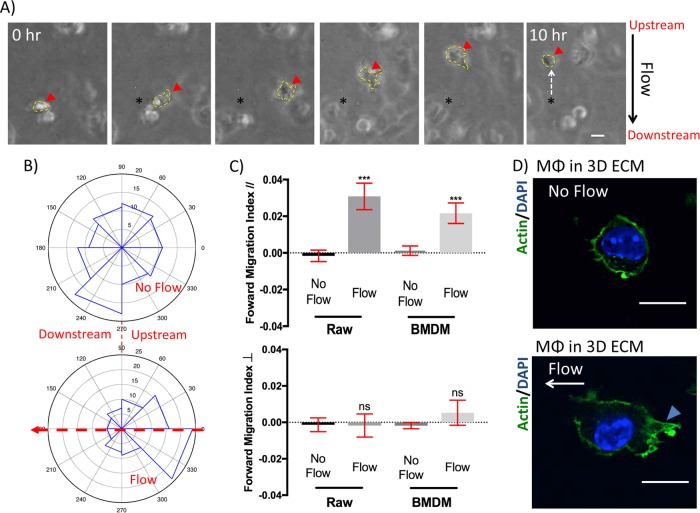
Tumor tissues are characterized by an elevated interstitial fluid flow from the tumor to the surrounding stroma. Macrophages in the tumor microenvironment are key contributors to tumor progression. While it is well established that chemical stimuli within the tumor tissues can alter macrophage behaviors, the effects of mechanical stimuli, especially the flow of interstitial fluid in the tumor microenvironment, on macrophage phenotypes have not been explored. Here, we used three-dimensional biomimetic models to reveal that macrophages can sense and respond to pathophysiological levels of interstitial fluid flow reported in tumors (∼3 µm/s). Specifically, interstitial flow (IF) polarizes macrophages toward an M2-like phenotype via integrin/Src-mediated mechanotransduction pathways involving STAT3/6. Consistent with this flow-induced M2 polarization, macrophages treated with IF migrate faster and have an enhanced ability to promote cancer cell migration. Moreover, IF directs macrophages to migrate against the flow. Since IF emanates from the tumor to the surrounding stromal tissues, our results suggest that IF could not only induce M2 polarization of macrophages but also recruit these M2 macrophages toward the tumor masses, contributing to cancer cell invasion and tumor progression. Collectively, our study reveals that IF could be a critical regulator of tumor immune environment.
肿瘤组织的特点是肿瘤到周围基质的间质液流动增加。肿瘤微环境中的巨噬细胞是肿瘤进展的关键贡献者。虽然已经证实肿瘤组织内的化学刺激可以改变巨噬细胞的行为,但机械刺激,特别是肿瘤微环境中间质液的流动对巨噬细胞表型的影响尚未得到探索。在这里,我们使用三维仿生模型揭示了巨噬细胞可以感知和响应报道的肿瘤中存在的病理生理水平的间质液流动(∼3 µm/s)。具体来说,间质液流动(IF)通过整合素/Src 介导的机械转导途径使巨噬细胞极化向 M2 样表型,该途径涉及 STAT3/6。与这种诱导的 M2 极化一致,IF 处理的巨噬细胞迁移速度更快,并且增强了促进癌细胞迁移的能力。此外,IF 指导巨噬细胞逆着流动迁移。由于 IF 从肿瘤流向周围基质组织,我们的结果表明,IF 不仅可以诱导巨噬细胞的 M2 极化,还可以将这些 M2 巨噬细胞募集到肿瘤部位,促进癌细胞浸润和肿瘤进展。总之,我们的研究表明,IF 可能是肿瘤免疫环境的一个关键调节因子。