Oetiker Nia, Norambuena Rodrigo, Martínez-Bussenius Cristóbal, Navarro Claudio A, Amaya Fernando, Álvarez Sergio A, Paradela Alberto, Jerez Carlos A
Laboratory of Molecular Microbiology and Biotechnology, Department of Biology, Faculty of Sciences, University of Chile, Santiago 7800003, Chile.
Department of Biochemistry and Molecular Biology, Faculty of Chemical and Pharmaceutical Sciences, University of Chile, Santiago 7800003, Chile.
Genes (Basel). 2018 Jul 10;9(7):347. doi: 10.3390/genes9070347.
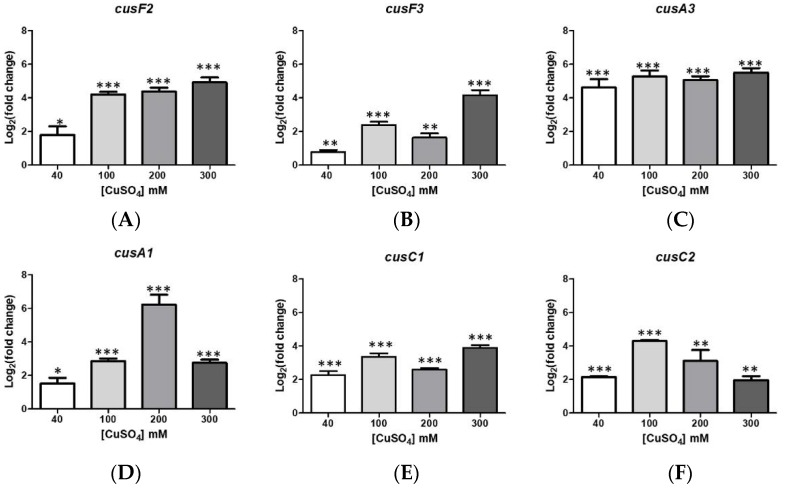
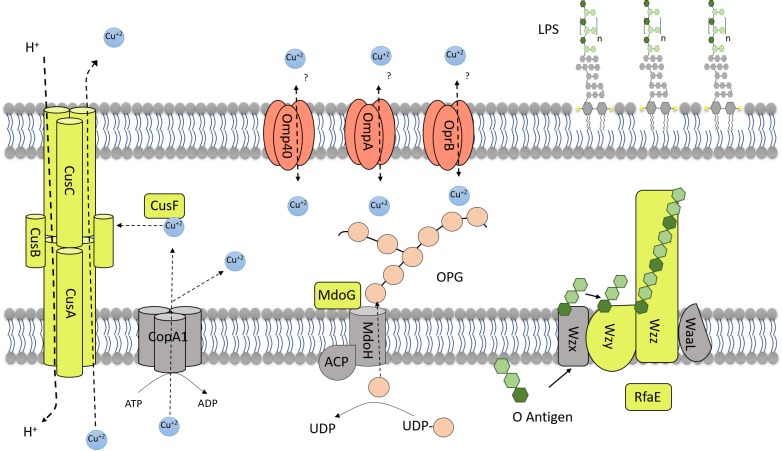
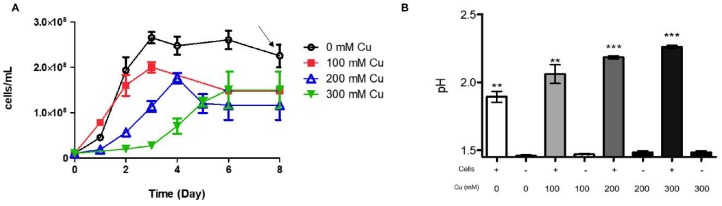
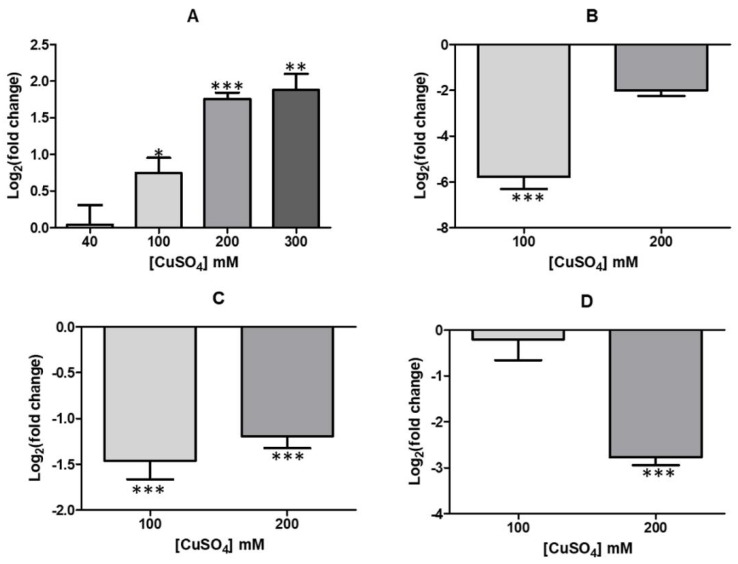
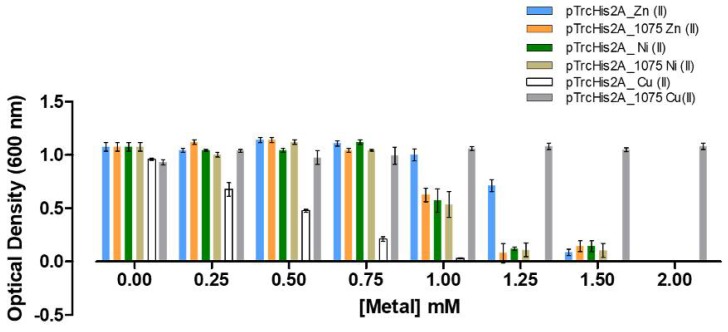
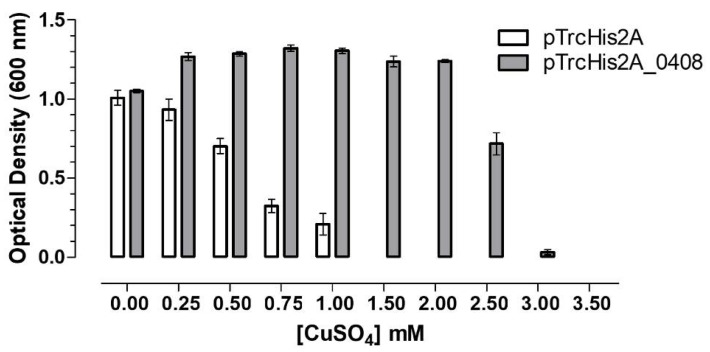
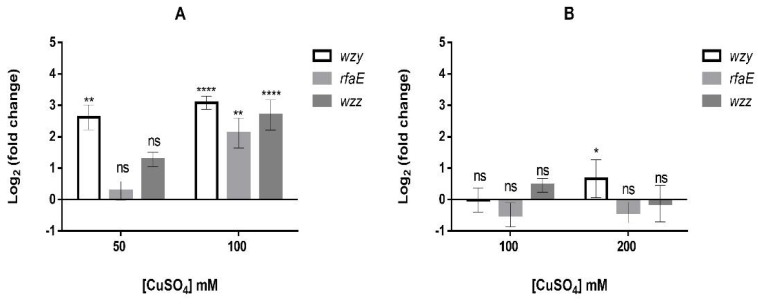
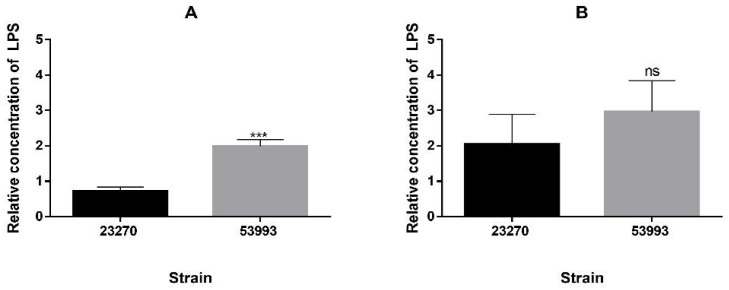
resists extremely high concentrations of copper. Strain ATCC 53993 is much more resistant to the metal compared with strain ATCC 23270, possibly due to the presence of a genomic island in the former one. The global response of strain ATCC 53993 to copper was analyzed using iTRAQ (isobaric tag for relative and absolute quantitation) quantitative proteomics. Sixty-seven proteins changed their levels of synthesis in the presence of the metal. On addition of CusCBA efflux system proteins, increased levels of other envelope proteins, such as a putative periplasmic glucan biosynthesis protein (MdoG) involved in the osmoregulated synthesis of glucans and a putative antigen O polymerase (Wzy), were seen in the presence of copper. The expression of or genes in a copper sensitive conferred it a higher metal resistance, suggesting the possible role of these components in copper resistance of . Transcriptional levels of genes , and also increased in strain ATCC 23270 grown in the presence of copper, but not in strain ATCC 53993. Additionally, in the absence of this metal, lipopolysaccharide (LPS) amounts were 3-fold higher in ATCC 53993 compared with strain 23270. Nevertheless, both strains grown in the presence of copper contained similar LPS quantities, suggesting that strain 23270 synthesizes higher amounts of LPS to resist the metal. On the other hand, several porins diminished their levels in the presence of copper. The data presented here point to an essential role for several envelope components in the extreme copper resistance by this industrially important acidophilic bacterium.
对极高浓度的铜具有抗性。与菌株ATCC 23270相比,菌株ATCC 53993对这种金属的抗性要强得多,这可能是由于前者存在一个基因组岛。使用iTRAQ(相对和绝对定量的等压标签)定量蛋白质组学分析了菌株ATCC 53993对铜的全局响应。在有这种金属存在的情况下,67种蛋白质改变了它们的合成水平。添加CusCBA外排系统蛋白后,在有铜存在的情况下,可以看到其他包膜蛋白的水平增加,例如参与葡聚糖渗透调节合成的假定周质葡聚糖生物合成蛋白(MdoG)和假定抗原O聚合酶(Wzy)。在对铜敏感的菌株中, 或 基因的表达赋予了它更高的金属抗性,这表明这些成分可能在该菌株的铜抗性中发挥作用。在有铜存在的情况下生长的菌株ATCC 23270中, 、 和 基因的转录水平也增加了,但在菌株ATCC 53993中没有增加。此外,在没有这种金属的情况下,菌株ATCC 53993中的脂多糖(LPS)含量比菌株23270高3倍。然而,在有铜存在的情况下生长的两种菌株含有相似数量的LPS,这表明菌株23270合成了更高量的LPS来抵抗这种金属。另一方面,几种孔蛋白在有铜存在的情况下水平降低。此处呈现的数据表明,几种包膜成分在这种具有工业重要性的嗜酸细菌的极端铜抗性中起着至关重要的作用。