Department of Genetics & Biochemistry, Clemson University, Clemson, South Carolina, USA.
Eukaryotic Pathogens Innovation Center (EPIC), Clemson University, Clemson, South Carolina, USA.
mSphere. 2018 Jul 11;3(4):e00164-18. doi: 10.1128/mSphere.00164-18.
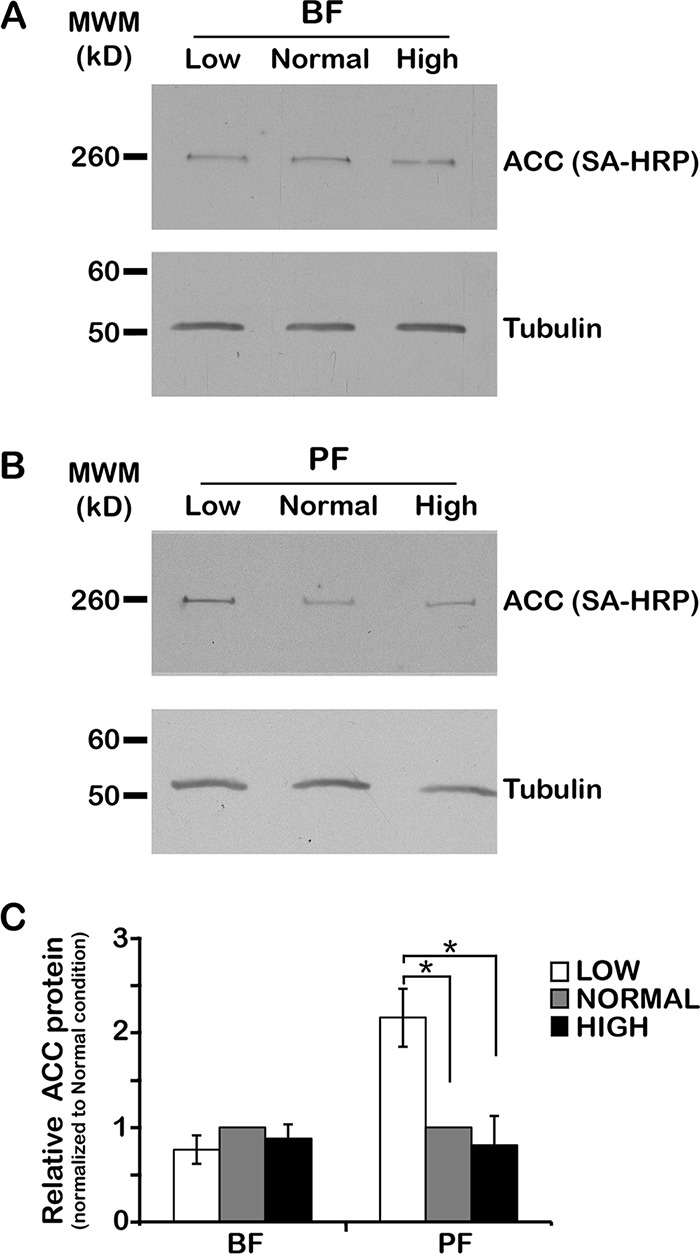
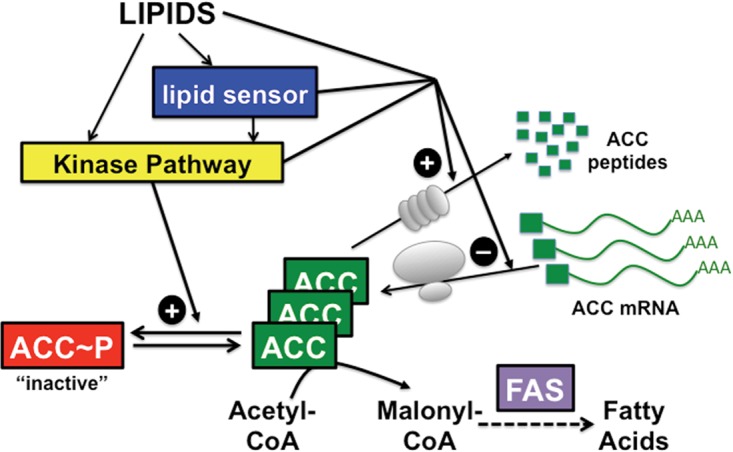
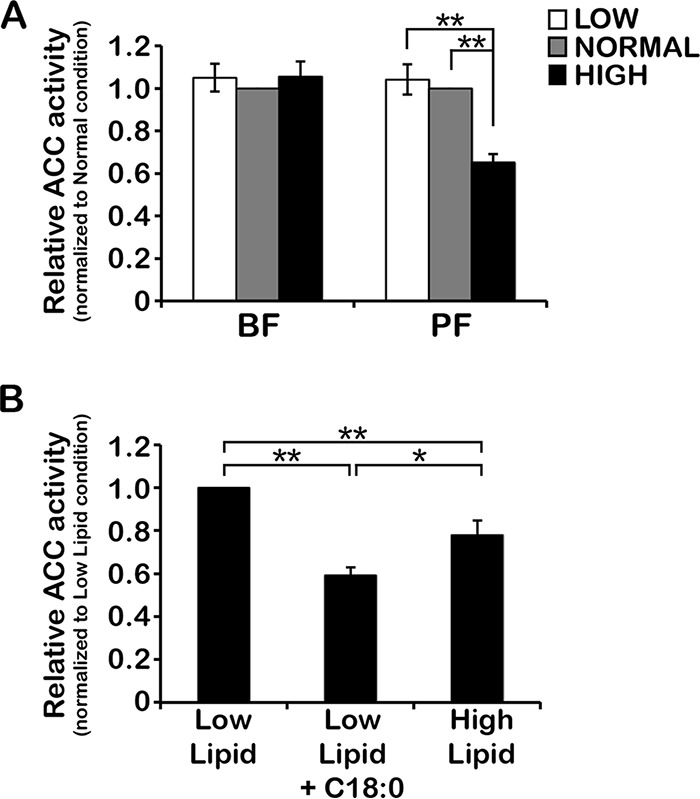
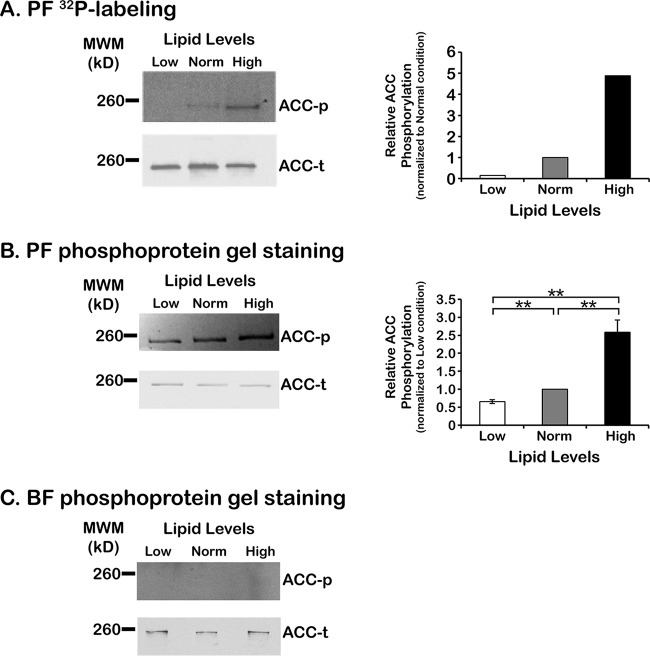
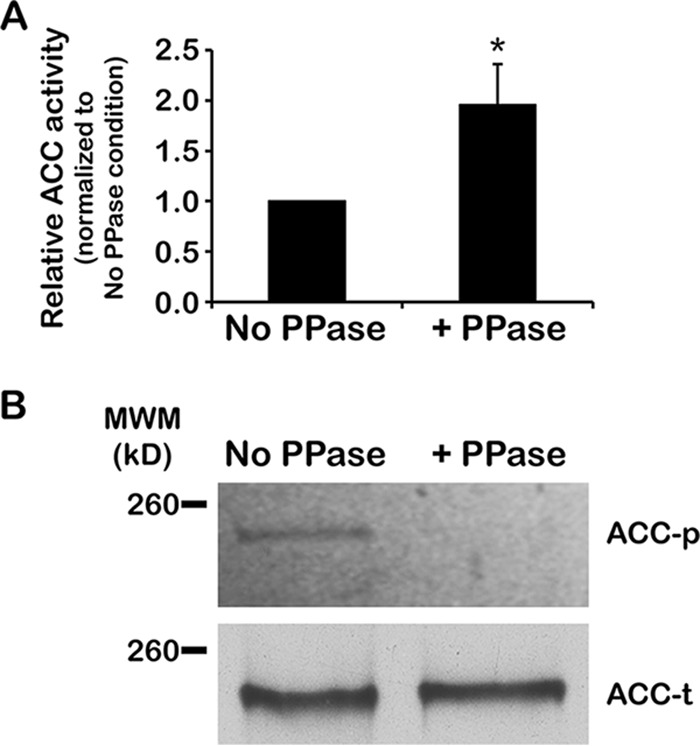
To satisfy its fatty acid needs, the extracellular eukaryotic parasite relies on two mechanisms: uptake of fatty acids from the host and synthesis. We hypothesized that modulates fatty acid synthesis in response to environmental lipid availability. The first committed step in fatty acid synthesis is catalyzed by acetyl coenzyme A (acetyl-CoA) carboxylase (ACC) and serves as a key regulatory point in other organisms. To test our hypothesis, mammalian bloodstream and insect procyclic forms were grown in low-, normal-, or high-lipid media and the effect on ACC (TbACC) mRNA, protein, and enzymatic activity was examined. In bloodstream form , media lipids had no effect on TbACC expression or activity. In procyclic form , we detected no change in TbACC mRNA levels but observed 2.7-fold-lower TbACC protein levels and 37% lower TbACC activity in high-lipid media than in low-lipid media. Supplementation of low-lipid media with the fatty acid stearate mimicked the effect of high lipid levels on TbACC activity. In procyclic forms, TbACC phosphorylation also increased 3.9-fold in high-lipid media compared to low-lipid media. Phosphatase treatment of TbACC increased activity, confirming that phosphorylation represented an inhibitory modification. Together, these results demonstrate a procyclic-form-specific environmental lipid response pathway that regulates TbACC posttranscriptionally, through changes in protein expression and phosphorylation. We propose that this environmental response pathway enables procyclic-form to monitor the host lipid supply and downregulate fatty acid synthesis when host lipids are abundant and upregulate fatty acid synthesis when host lipids become scarce. is a eukaryotic parasite that causes African sleeping sickness. is transmitted by the blood-sucking tsetse fly. In order to adapt to its two very different hosts, must sense the host environment and alter its metabolism to maximize utilization of host resources and minimize expenditure of its own resources. One key nutrient class is represented by fatty acids, which the parasite can either take from the host or make themselves. Our work describes a novel environmental regulatory pathway for fatty acid synthesis where the parasite turns off fatty acid synthesis when environmental lipids are abundant and turns on synthesis when the lipid supply is scarce. This pathway was observed in the tsetse midgut form but not the mammalian bloodstream form. However, pharmacological activation of this pathway in the bloodstream form to turn fatty acid synthesis off may be a promising new avenue for sleeping sickness drug discovery.
为满足其脂肪酸需求,细胞外真核寄生虫依赖于两种机制:从宿主摄取脂肪酸和合成。我们假设调节脂肪酸合成以响应环境脂质可用性。脂肪酸合成的第一步是由乙酰辅酶 A(乙酰辅酶 A)羧化酶(ACC)催化的,并且在其他生物体中是一个关键的调节点。为了检验我们的假设,在低、正常和高脂质培养基中培养哺乳动物血液形式和昆虫前鞭毛体形式,并检查对 ACC(TbACC)mRNA、蛋白质和酶活性的影响。在血液形式中,培养基脂质对 TbACC 表达或活性没有影响。在前鞭毛体形式中,我们没有检测到 TbACC mRNA 水平的变化,但观察到高脂质培养基中 TbACC 蛋白水平低 2.7 倍,TbACC 活性低 37%。用脂肪酸硬脂酸盐补充低脂质培养基可模拟高脂质水平对 TbACC 活性的影响。在前鞭毛体形式中,与低脂质培养基相比,高脂质培养基中 TbACC 磷酸化增加了 3.9 倍。用磷酸酶处理 TbACC 增加了活性,证实磷酸化代表了一种抑制性修饰。总之,这些结果表明,存在一种前鞭毛体形式特异性的环境脂质反应途径,通过改变蛋白表达和磷酸化来调节 TbACC 的转录后水平。我们提出,这种环境反应途径使前鞭毛体能够监测宿主脂质供应,并在宿主脂质丰富时下调脂肪酸合成,在宿主脂质稀缺时上调脂肪酸合成。是一种引起非洲昏睡病的真核寄生虫。通过吸血的采采蝇传播。为了适应其两个非常不同的宿主,必须感知宿主环境并改变其代谢以最大限度地利用宿主资源并最小化自身资源的消耗。一类关键的营养物质是脂肪酸,寄生虫可以从宿主那里获取或自己制造。我们的工作描述了一种新的脂肪酸合成环境调节途径,其中寄生虫在环境脂质丰富时关闭脂肪酸合成,在脂质供应稀缺时打开合成。该途径在前鞭毛体形式中观察到,但在哺乳动物血液形式中未观察到。然而,在血液形式中激活该途径以关闭脂肪酸合成可能是昏睡病药物发现的一个有前途的新途径。