Xie Xiao, Yang Chunlei, Guan Le L, Wang Jiakun, Xue Mingyuan, Liu Jian X
Institute of Dairy Science, College of Animal Sciences, Zhejiang University, Hangzhou, China.
Department of Agricultural, Food and Nutritional Science, University of Alberta, Edmonton, AB, Canada.
Front Microbiol. 2018 Jun 26;9:1363. doi: 10.3389/fmicb.2018.01363. eCollection 2018.
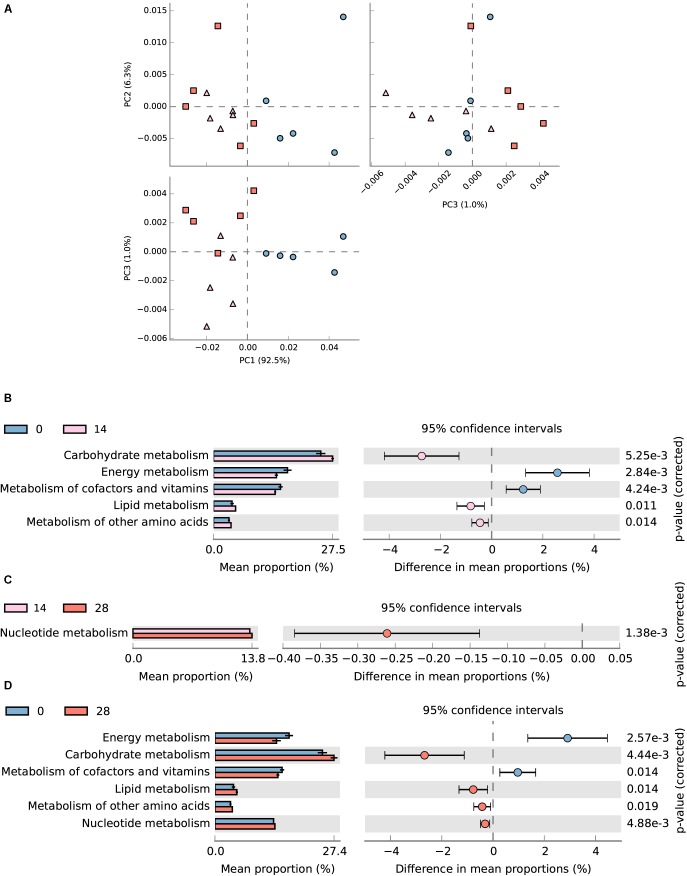
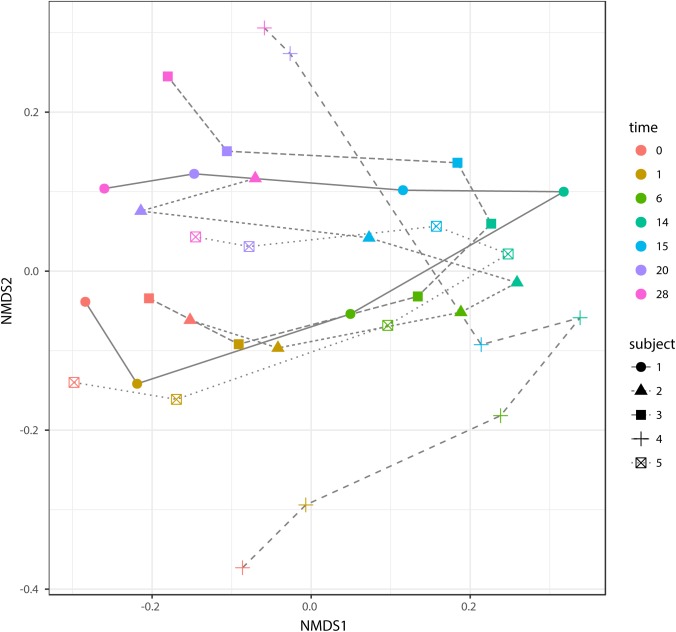
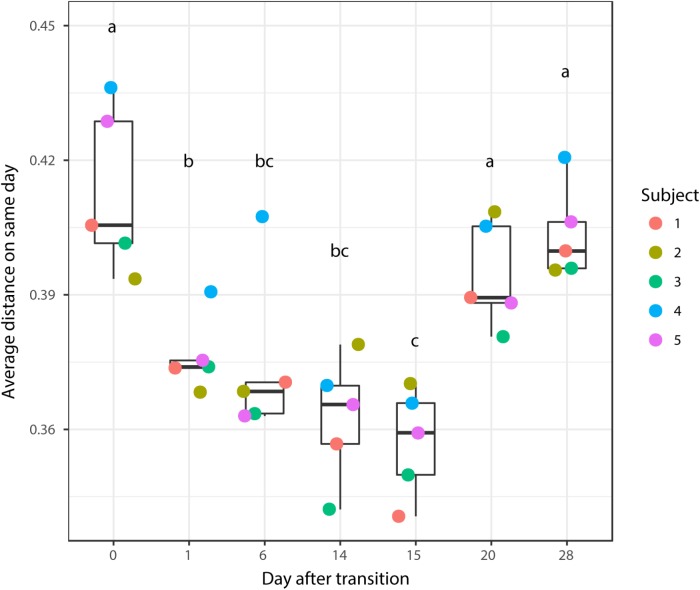
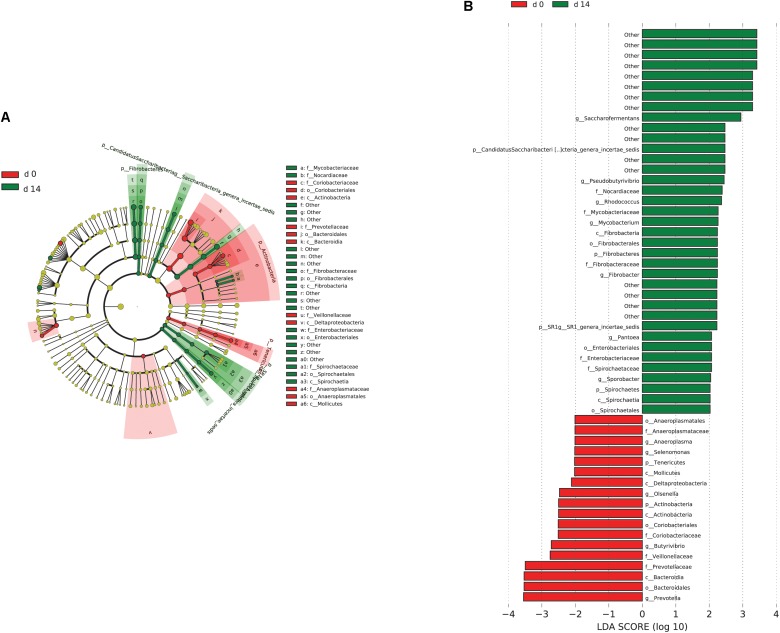
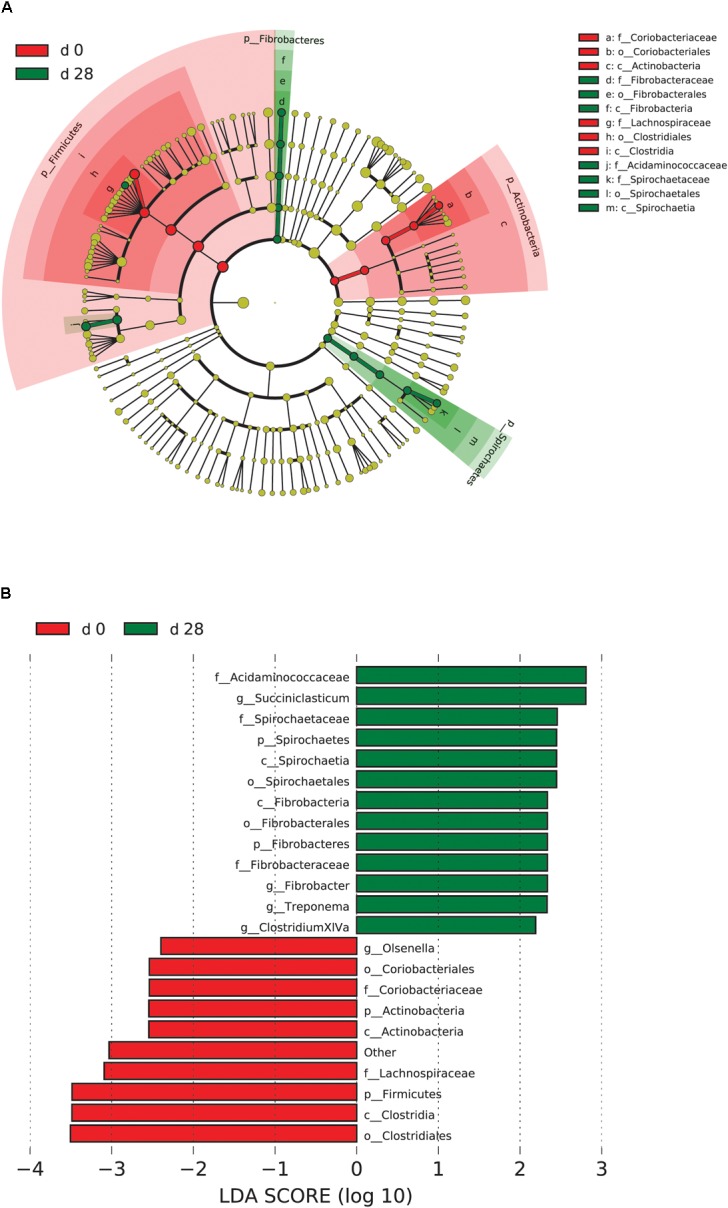
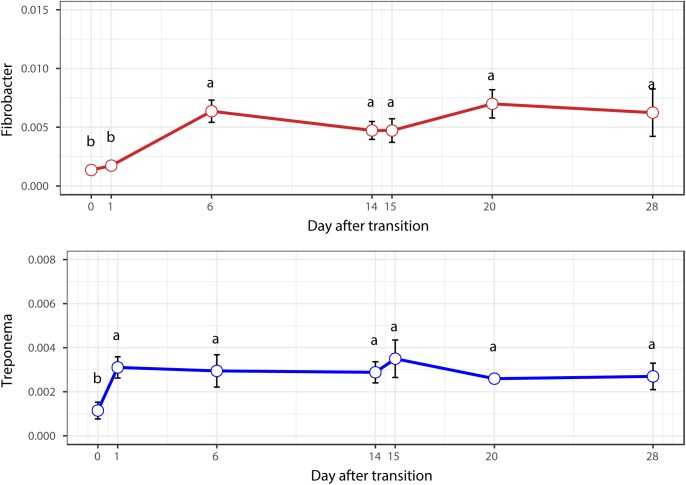
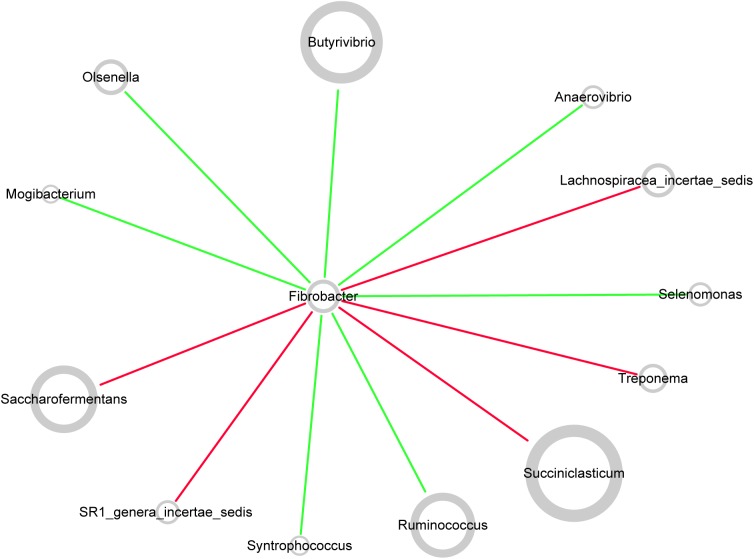
Limited lignocellulose degradation is the primary obstacle to feed digestion efficiency in ruminant animals. Low-quality forage with high levels of fibrous components can favor the proliferation of fibrolytic bacteria, but whether this can result a profound microbial shift after dietary intervention remains unclear. In this study, we monitored the microbial communities in the rumens of five ruminally cannulated Hu sheep through dietary transition from alfalfa hay (AH, pre-CS) to corn stover (CS, post-CS) and then back to AH (post-AH), with each treatment lasting for 14 days. The CS intervention significantly increased the relative abundance of microorganisms involved in lignocellulose degradation, including and . When the diet was switched back to AH, the microbial community did not completely return to a pre-CS treatment state. In the post-AH microbial community, the relative abundances of and were persistently high, and were similar to those in the post-CS community. Meanwhile, the diversity of the microbial community increased after dietary transition from AH to CS and remained significantly higher after transition from CS to AH compared to those under the original AH diet. Enzyme activity measurement verified significant increase of carboxymethyl cellulase (CMCase) and xylanase catalytic activities in the rumen. Microbial functional predictions using Tax4Fun revealed that this microbial persistence may enhance the carbohydrate metabolism pathway in the rumen. In summary, persistence of and can be enhanced through a low-quality forage intervention at least for 2 weeks, which may enlighten the reprogram of microbial population in the rumen in the future.
木质纤维素降解有限是反刍动物饲料消化效率的主要障碍。含有高水平纤维成分的低质量草料有利于纤维分解菌的增殖,但饮食干预后这是否会导致微生物群落发生深刻变化仍不清楚。在本研究中,我们监测了5只安装有瘤胃瘘管的湖羊瘤胃中的微生物群落,通过从苜蓿干草(AH,CS前)过渡到玉米秸秆(CS,CS后),然后再回到AH(AH后)的饮食转变,每次处理持续14天。CS干预显著增加了参与木质纤维素降解的微生物的相对丰度,包括[具体微生物名称1]和[具体微生物名称2]。当饮食换回AH时,微生物群落并未完全恢复到CS处理前的状态。在AH后微生物群落中,[具体微生物名称1]和[具体微生物名称2]的相对丰度持续较高,且与CS后群落中的相似。同时,从AH过渡到CS后微生物群落的多样性增加,并且从CS过渡到AH后仍显著高于原始AH饮食下的多样性。酶活性测量证实瘤胃中羧甲基纤维素酶(CMCase)和木聚糖酶催化活性显著增加。使用Tax4Fun进行的微生物功能预测表明,这种微生物的持续性可能会增强瘤胃中的碳水化合物代谢途径。总之,通过至少2周的低质量草料干预可以增强[具体微生物名称1]和[具体微生物名称2]的持续性,这可能为未来瘤胃微生物种群的重新编程提供启示。