Wang Xu, Singh Daljit, Marla Sandeep, Morris Geoffrey, Poland Jesse
1Department of Plant Pathology, 4024 Throckmorton Plant Sciences Center, Kansas State University, Manhattan, KS 66506 USA.
2Department of Agronomy, 2004 Throckmorton Plant Sciences Center, Kansas State University, Manhattan, KS 66506 USA.
Plant Methods. 2018 Jul 4;14:53. doi: 10.1186/s13007-018-0324-5. eCollection 2018.
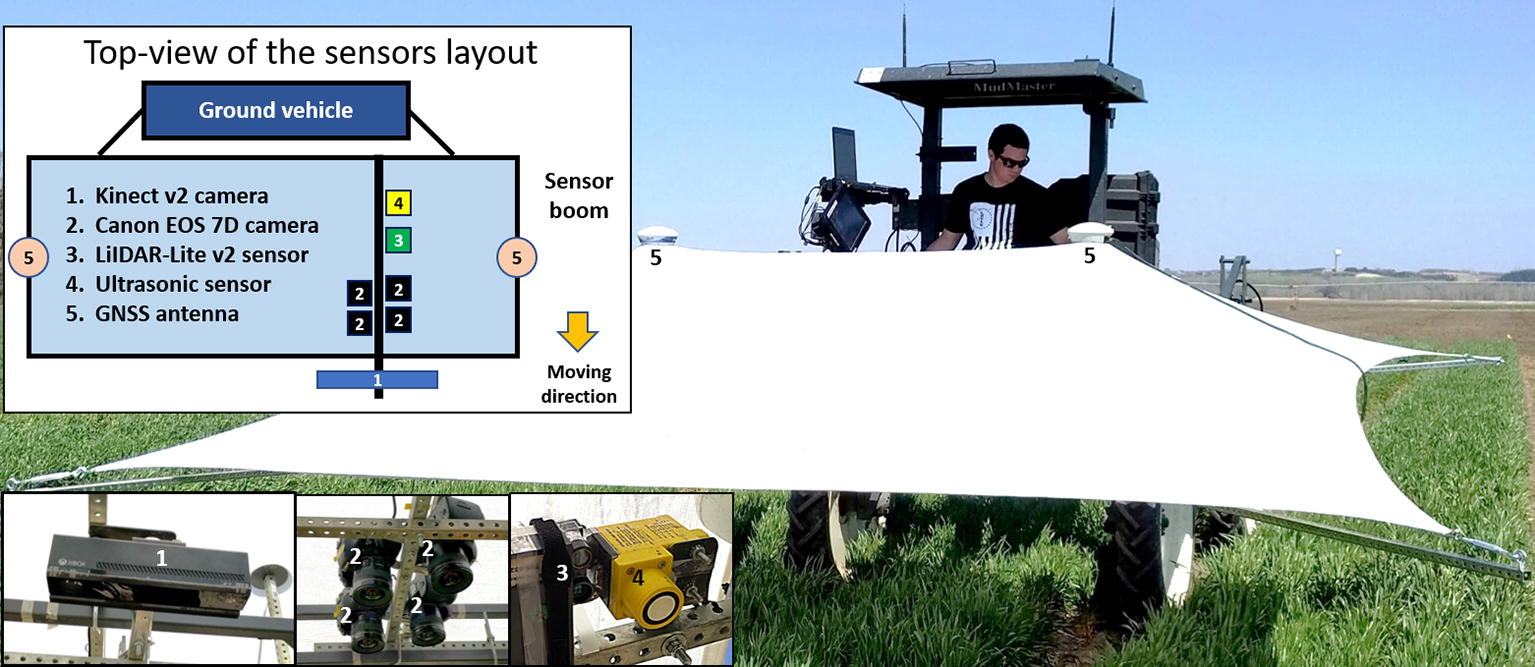
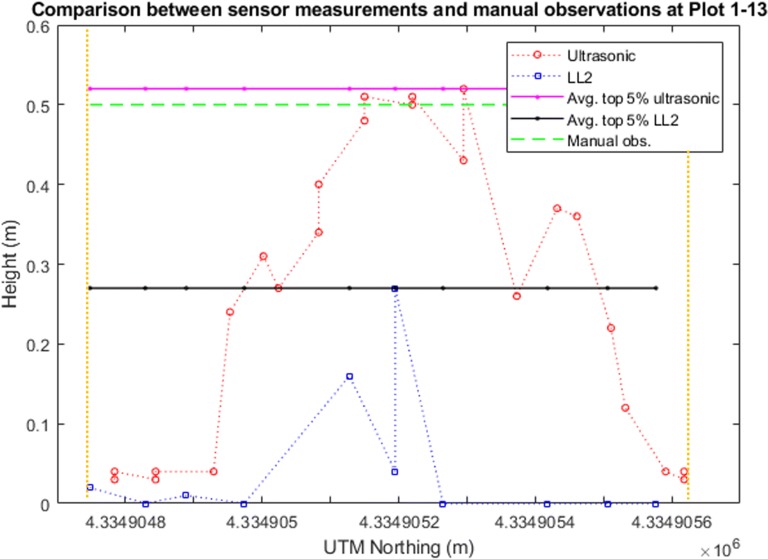
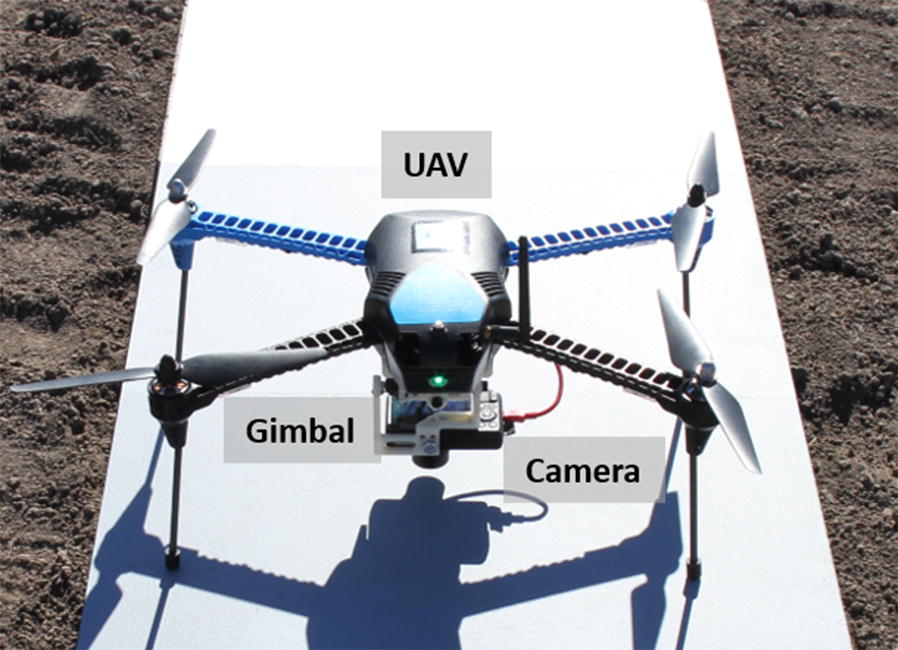
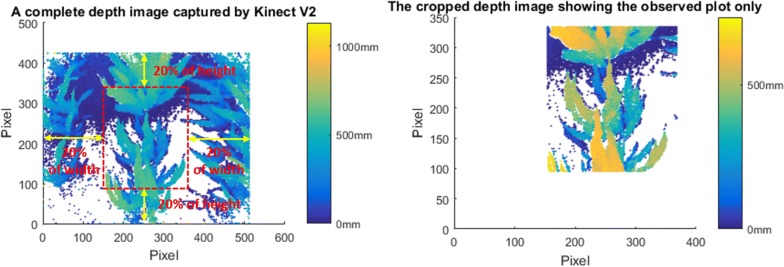
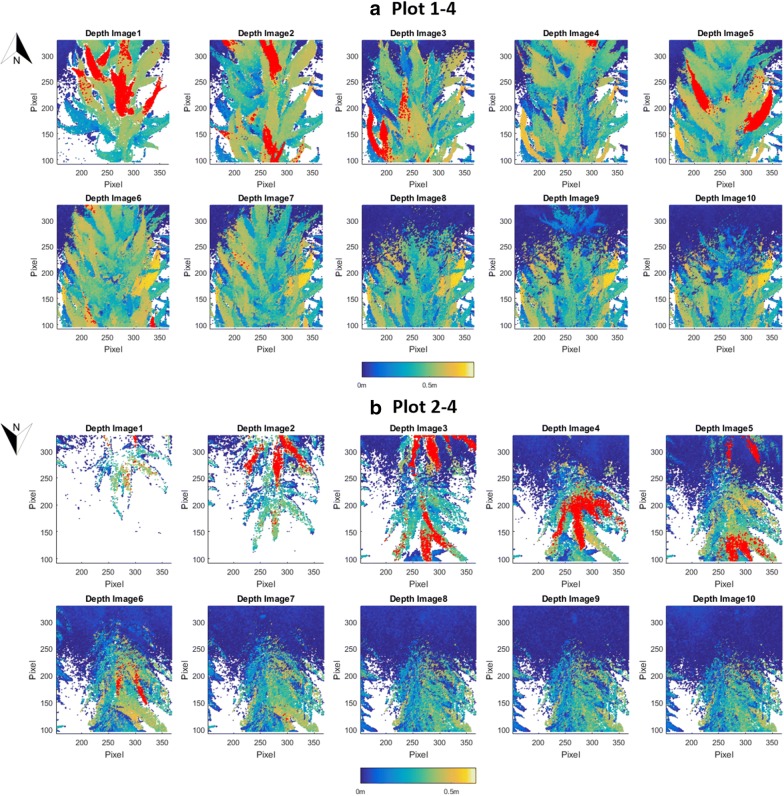
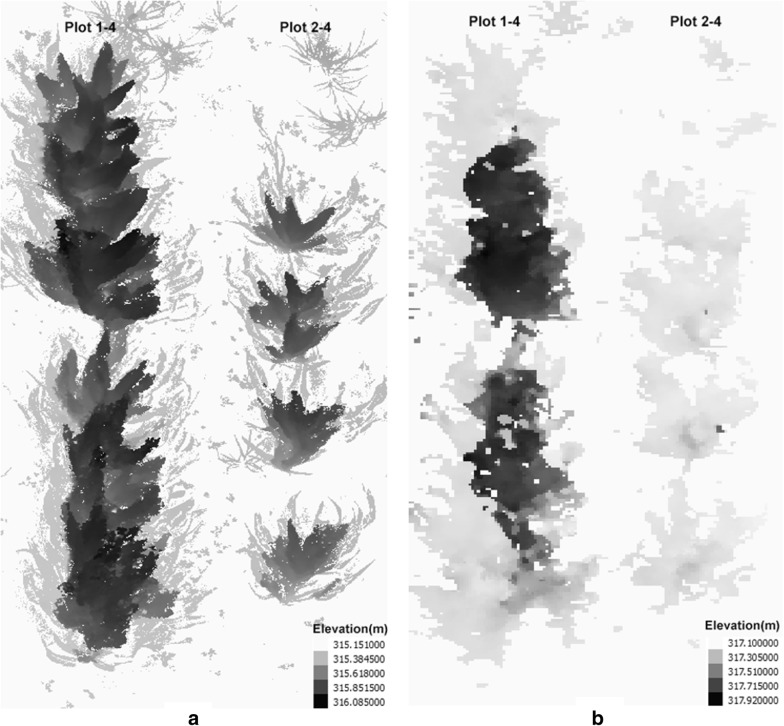
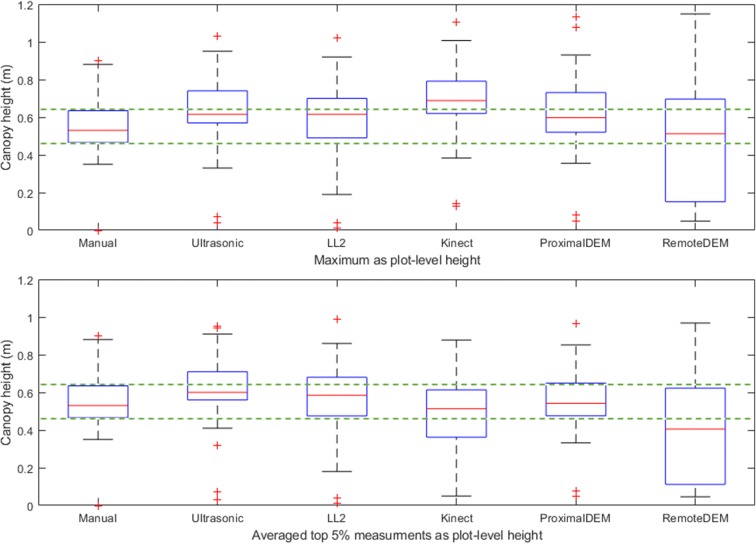
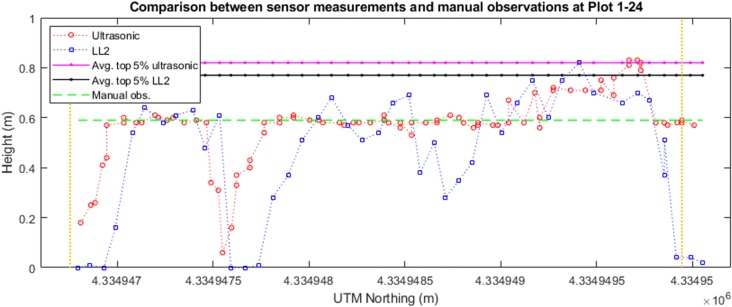
Plant height is an important morphological and developmental phenotype that directly indicates overall plant growth and is widely predictive of final grain yield and biomass. Currently, manually measuring plant height is laborious and has become a bottleneck for genetics and breeding programs. The goal of this research was to evaluate the performance of five different sensing technologies for field-based high throughput plant phenotyping (HTPP) of sorghum [ (L.) Moench] height. With this purpose, (1) an ultrasonic sensor, (2) a LIDAR-Lite v2 sensor, (3) a Kinect v2 camera, (4) an imaging array of four high-resolution cameras were evaluated on a ground vehicle platform, and (5) a digital camera was evaluated on an unmanned aerial vehicle platform to obtain the performance baselines to measure the plant height in the field. Plot-level height was extracted by averaging different percentiles of elevation observations within each plot. Measurements were taken on 80 single-row plots of a US × Chinese sorghum recombinant inbred line population. The performance of each sensing technology was also qualitatively evaluated through comparison of device cost, measurement resolution, and ease and efficiency of data analysis.
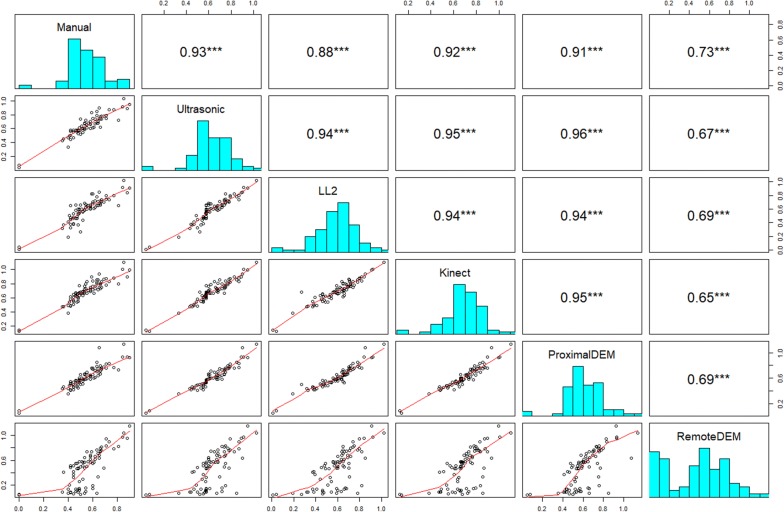
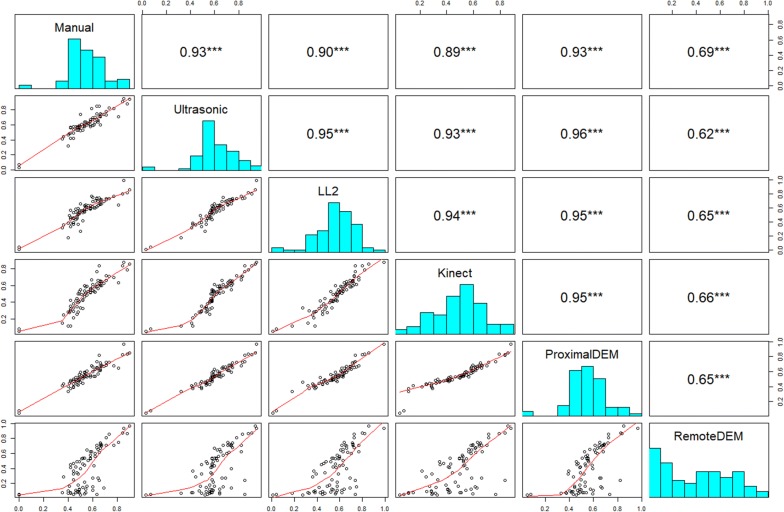
We found the heights measured by the ultrasonic sensor, the LIDAR-Lite v2 sensor, the Kinect v2 camera, and the imaging array had high correlation with the manual measurements ( ≥ 0.90), while the heights measured by remote imaging had good, but relatively lower correlation to the manual measurements ( = 0.73).
These results confirmed the ability of the proposed methodologies for accurate and efficient HTPP of plant height and can be extended to a range of crops. The evaluation approach discussed here can guide the field-based HTPP research in general.
株高是一种重要的形态和发育表型,直接反映植株的整体生长情况,并且广泛用于预测最终的谷物产量和生物量。目前,人工测量株高费力且已成为遗传学和育种计划的瓶颈。本研究的目的是评估五种不同传感技术用于高粱[(L.)Moench]株高田间高通量植物表型分析(HTPP)的性能。为此,(1)在地面车辆平台上评估了超声波传感器,(2)LIDAR-Lite v2传感器,(3)Kinect v2相机,(4)四个高分辨率相机的成像阵列,以及(5)在无人机平台上评估了数码相机,以获得测量田间株高的性能基线。通过对每个小区内不同百分位数的海拔观测值求平均来提取小区水平的株高。对一个美国×中国高粱重组自交系群体的80个单行小区进行了测量。还通过比较设备成本、测量分辨率以及数据分析的难易程度和效率,对每种传感技术的性能进行了定性评估。
我们发现,超声波传感器、LIDAR-Lite v2传感器、Kinect v2相机和成像阵列测量的株高与人工测量高度具有高度相关性(≥0.90),而通过远程成像测量的株高与人工测量高度具有良好但相对较低的相关性(=0.73)。
这些结果证实了所提出的方法能够准确、高效地进行株高的高通量植物表型分析,并且可以扩展到一系列作物。这里讨论的评估方法总体上可以指导基于田间的高通量植物表型分析研究。