Soltani Soroosh, Zohoori Dariush, Adineh Mojtaba
Medical Student, Student Research Committee, International Branch, Shiraz University of Medical Sciences, Shiraz, Iran.
M.D., Pediatrician, Assistant Professor, Department of Pediatrics and Neonatology, International Branch, Shiraz University of Medical Sciences, Shiraz, Iran.
Electron Physician. 2018 May 5;10(5):6741-6748. doi: 10.19082/6741. eCollection 2018 May.
Today, it is considered that infants can feel pain, and it can have several adverse effects on their development. Although different interventions, such as skin-to-skin contact (kangaroo mother care method), glucose solutions, breastfeeding, and local anesthetic agents, have been evaluated to reduce infants' pain, there is no clinical trial available to identify the best method.
The aim of this study was to compare the efficacy of four methods of relieving infants' pain, i.e., breastfeeding, oral 25% dextrose, kangaroo mother care method (KMCM), and EMLA cream based on a pain score level following heal-prick sampling in term newborns.
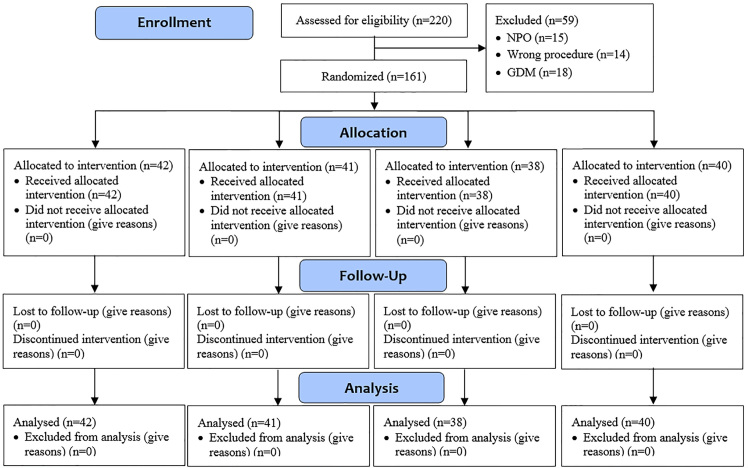
In this double-blind, controlled, randomized clinical trial, full term, and healthy infants in Shahid Motahhari Hospital, Marvdasht, Shiraz Province, Iran were studied. Infants were randomly allocated to four groups of interventions, i.e., A: breast milk feeding (n=42), B: oral 25% dextrose (n=40), C: KMCM (n=38), and D: KMCM ointment (n=40). All interventions were applied 15 minutes before heel-prick sampling. To evaluate the pain level in infants, the Neonatal Infant Pain Scale (NIPS) questionnaire was used. The data were analyzed with SPSS version 16 by ANOVA and the chi-squared tests.
One hundred and sixty-one infants (93 males, 68 females) with an age range of 3 to 5 days were studied. There was no significant difference between the groups in terms of gender (p=0.113), weight (p=0.059), and baseline pain score level (p=0.904). The breastfeeding method showed the lowest pain score in comparison to the other interventions (A=5.52±2.22, B=6.45±1.88, C=6.84±1.96, D=7.37±1.95; p=0.001) after the heel-prick sampling.
It seems that, among the four methods of interventions in this study, the most effective method of lowering perceived pain in infants undergoing painful procedures was proven to be breastfeeding.
This study is registered in the Iranian Registry of Clinical Trials with the registration number of IRCT20151201253256N1.
This research was supported financially by the Research Council of the International Campus of Shiraz University of Medical Sciences.
如今,人们认为婴儿能够感知疼痛,且疼痛会对其发育产生多种不利影响。尽管已经对不同的干预措施进行了评估,如皮肤接触(袋鼠式护理法)、葡萄糖溶液、母乳喂养和局部麻醉剂,以减轻婴儿的疼痛,但尚无临床试验来确定最佳方法。
本研究旨在比较四种缓解婴儿疼痛的方法的疗效,即母乳喂养、口服25%葡萄糖、袋鼠式护理法(KMCM)和复方利多卡因乳膏,依据足后跟采血后疼痛评分水平进行比较,研究对象为足月儿。
在这项双盲、对照、随机临床试验中,对伊朗设拉子省马尔达什特市沙希德·莫塔哈里医院的足月健康婴儿进行了研究。婴儿被随机分为四组干预措施,即A组:母乳喂养(n = 42),B组:口服25%葡萄糖(n = 40),C组:袋鼠式护理法(n = 38),D组:复方利多卡因乳膏(n = 40)。所有干预措施均在足跟采血前15分钟应用。为评估婴儿的疼痛程度,使用了新生儿疼痛量表(NIPS)问卷。数据采用SPSS 16版通过方差分析和卡方检验进行分析。
研究了161名年龄在3至5天的婴儿(93名男性,68名女性)。各组在性别(p = 0.113)、体重(p = 0.059)和基线疼痛评分水平(p = 0.904)方面无显著差异。足跟采血后,与其他干预措施相比,母乳喂养方法的疼痛评分最低(A组 = 5.52±2.22,B组 = 6.45±1.88,C组 = 6.84±1.96,D组 = 7.37±1.95;p = 0.001)。
在本研究的四种干预方法中,似乎被证明对接受疼痛操作的婴儿降低感知疼痛最有效的方法是母乳喂养。
本研究已在伊朗临床试验注册中心注册,注册号为IRCT20151201253256N1。
本研究得到了设拉子医科大学国际校区研究委员会的资金支持。