Albada H Bauke, Golub Eyal, Willner Itamar
Institute of Chemistry , The Minerva Center for Biohybrid Complex Systems , The Hebrew University of Jerusalem , Jerusalem , 91904 , Israel . Email:
Chem Sci. 2016 May 1;7(5):3092-3101. doi: 10.1039/c5sc04832j. Epub 2016 Jan 25.
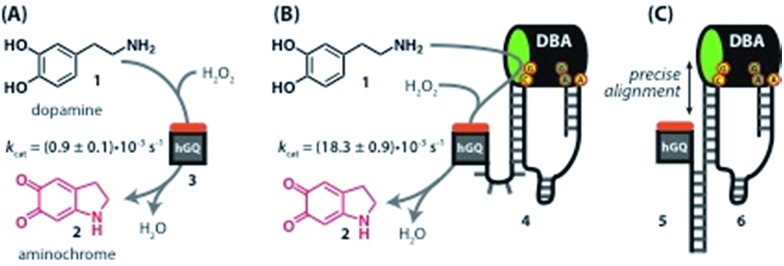
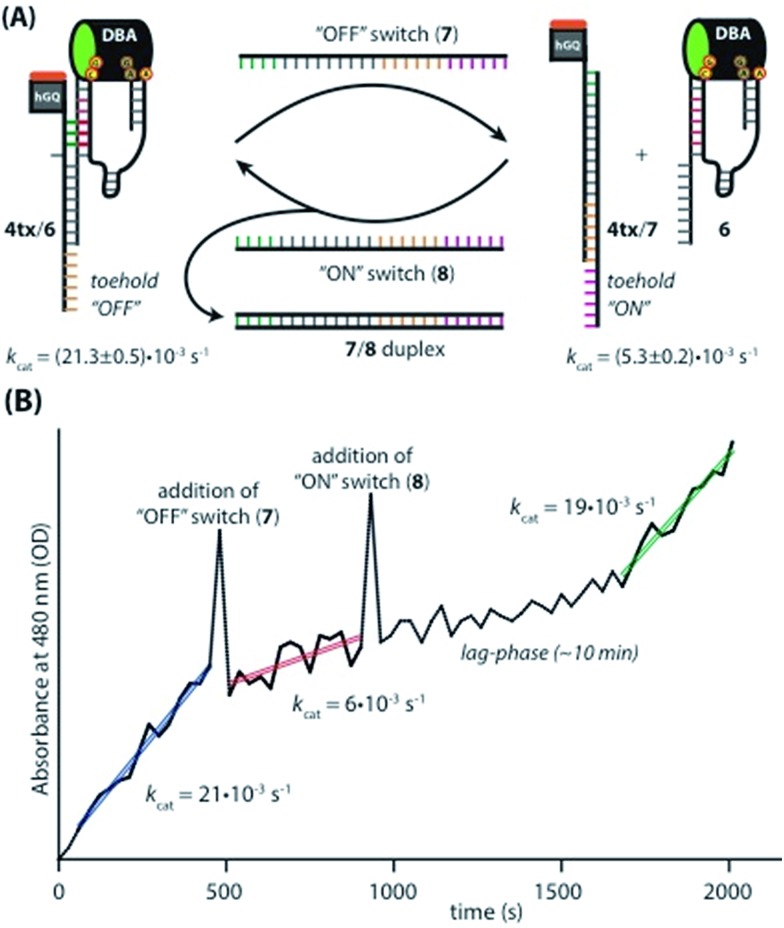
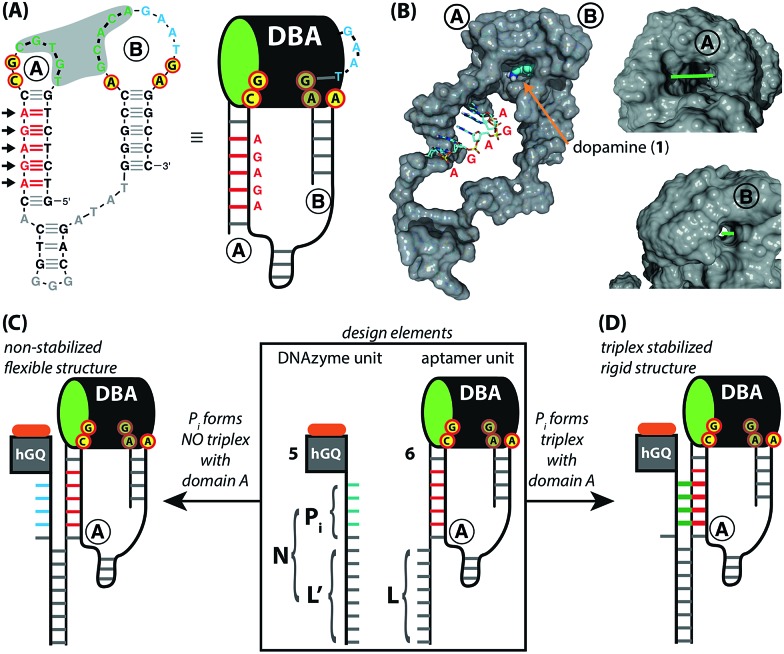
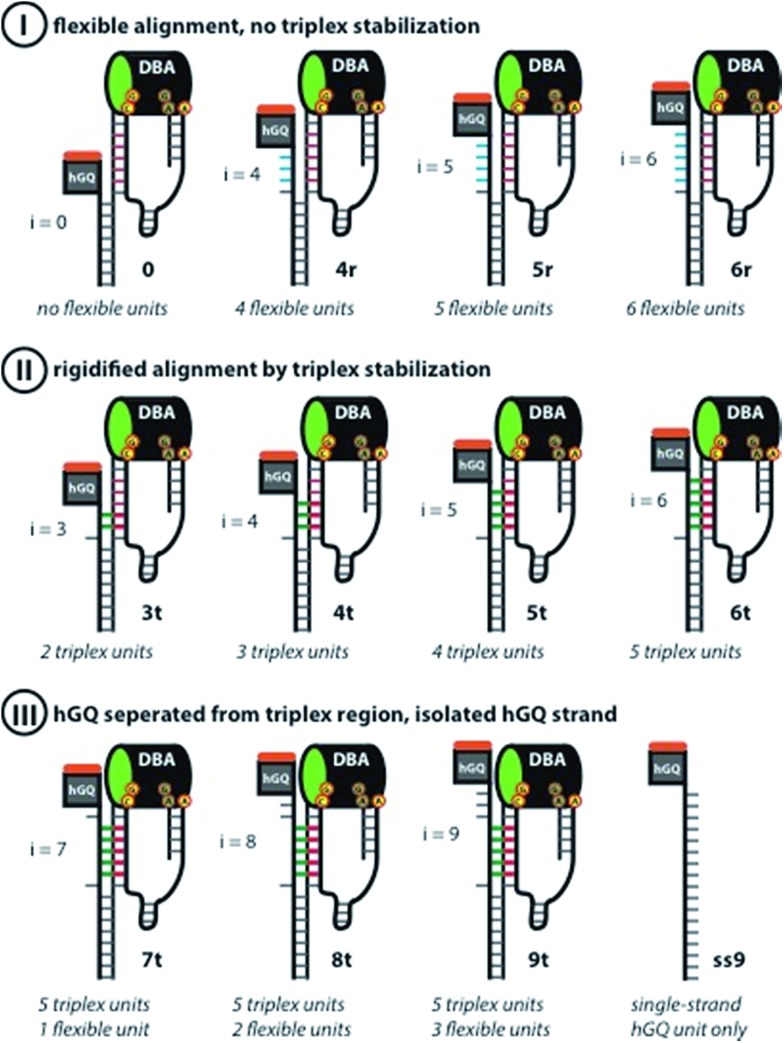
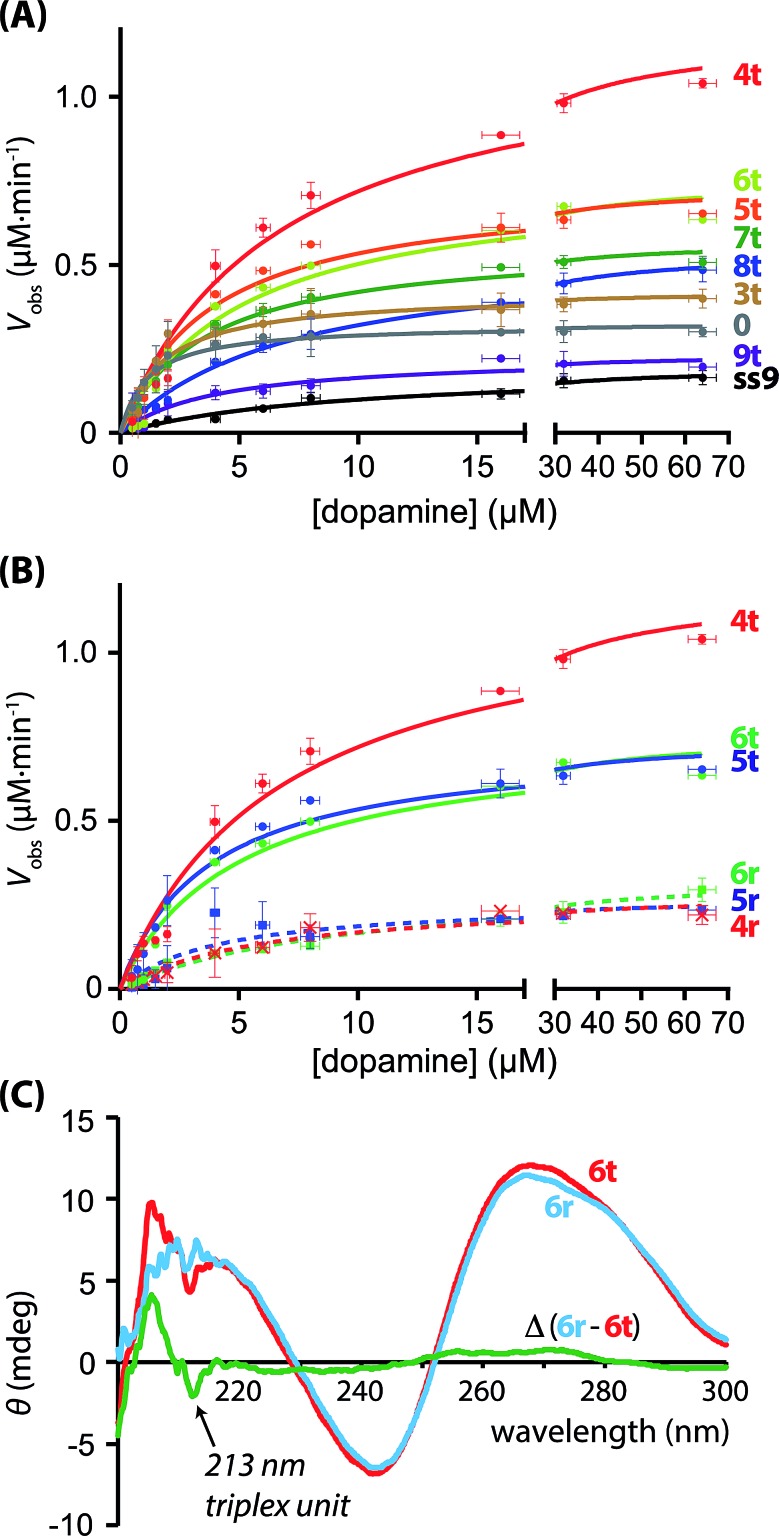
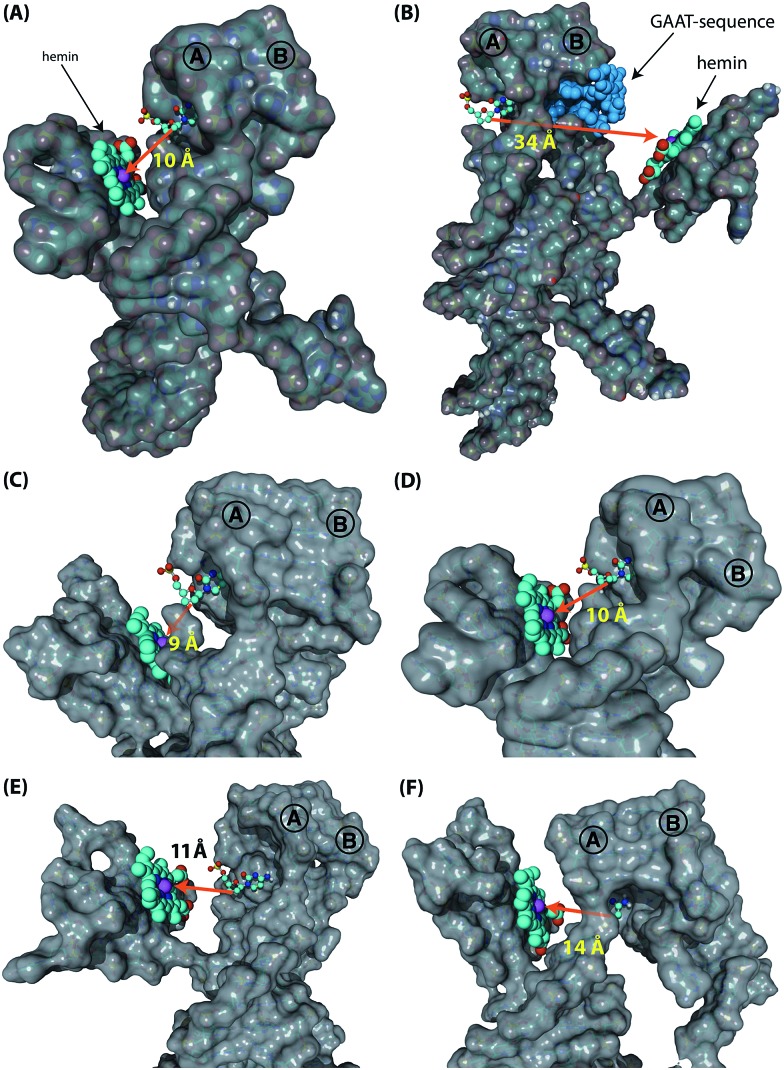
The rational design of a set of hemin/G-quadruplex (hGQ)-dopamine binding aptamer (DBA) conjugates, acting as nucleoapzymes, is described. The nucleoapzyme constructs consist of a hGQ DNAzyme as a catalytic unit and DBA as a substrate binding unit that are brought into spatial proximity by a duplex scaffold composed of complementary oligonucleotide strands. When the hGQ unit is linked to the duplex scaffold a single-strand DNA tether of variable length, the resulting nucleoapzymes reveal a moderate catalytic enhancement toward the HO-mediated oxidation of dopamine to aminochrome as compared to the process stimulated by the separated hGQ and DBA units (5-7 fold enhancement). This limited enhancement is attributed to inappropriate spatial positioning of the hGQ in respect to the dopamine binding site, and/or to the flexibility of the tether that links the hGQ catalytic site to the double-stranded scaffold. To solve this, rigidification of the hGQ/DBA conjugates by triplex oligonucleotide structures that anchor the hGQ to a duplex domain associated with the DBA units was achieved. By the sequential, programmed, triplex-controlled rigidification of the hGQ/DBA structure, a nucleoapzyme with superior catalytic activity toward the oxidation of dopamine to aminochrome is identified (30-fold catalytic enhancement). Molecular dynamics simulations reveal that in the resulting highly active rigidified nucleoapzyme structure, the hGQ catalytic site is positioned in spatial proximity to the opening of the DBA substrate binding site, thus rationalizing and supporting the enhanced catalytic functions of the system. Finally, the most active nucleoapzyme system was subjected to fuel- and anti-fuel strands that separate and re-assemble the nucleoapzyme structure, allowing "ON" and "OFF" switching of the nucleoapzyme catalytic functions.
本文描述了一组作为核酶的血红素/ G-四链体(hGQ)-多巴胺结合适体(DBA)缀合物的合理设计。核酶构建体由作为催化单元的hGQ DNA酶和作为底物结合单元的DBA组成,它们通过由互补寡核苷酸链组成的双链支架在空间上靠近。当hGQ单元通过可变长度的单链DNA连接链连接到双链支架上时,与由分离的hGQ和DBA单元刺激的过程相比,所得核酶对HO介导的多巴胺氧化为氨基色素显示出适度的催化增强(增强5-7倍)。这种有限的增强归因于hGQ相对于多巴胺结合位点的空间定位不当,和/或连接hGQ催化位点与双链支架的连接链的灵活性。为了解决这个问题,通过将hGQ锚定到与DBA单元相关的双链结构域的三链寡核苷酸结构实现了hGQ / DBA缀合物的刚性化。通过hGQ / DBA结构的顺序、程序化、三链体控制的刚性化,鉴定了一种对多巴胺氧化为氨基色素具有优异催化活性的核酶(30倍催化增强)。分子动力学模拟表明,在所得的高活性刚性化核酶结构中,hGQ催化位点位于DBA底物结合位点开口的空间附近,从而合理化并支持了该系统增强的催化功能。最后,将活性最高的核酶系统与燃料链和抗燃料链进行处理,这些链可分离并重新组装核酶结构,从而实现核酶催化功能的“开”和“关”切换。