Institute of Chemistry, The Minerva Center of Biohybrid Complex Systems, The Hebrew University of Jerusalem, Jerusalem 91904, Israel.
Biochemistry. 2021 Apr 6;60(13):956-965. doi: 10.1021/acs.biochem.0c00421. Epub 2020 Jul 14.
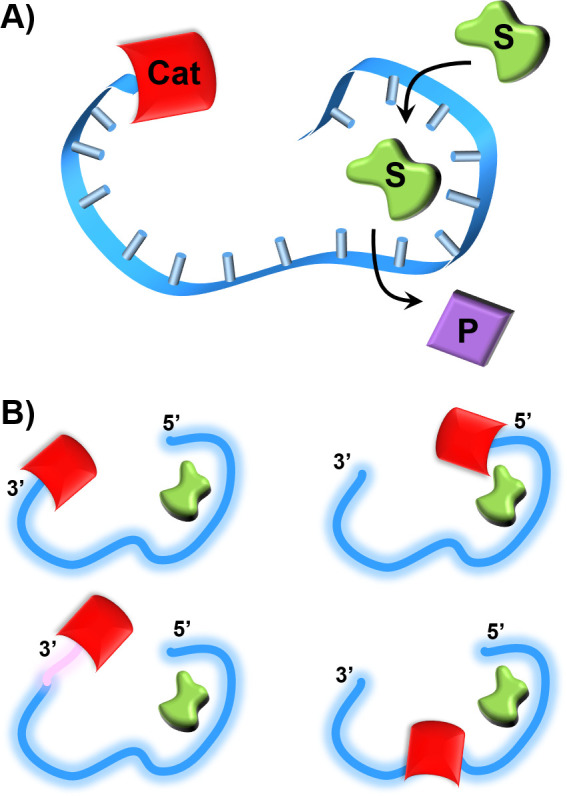
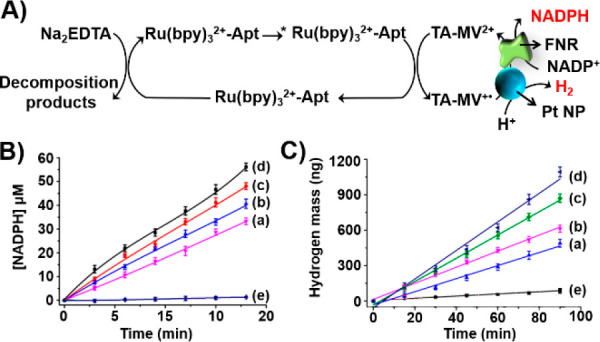
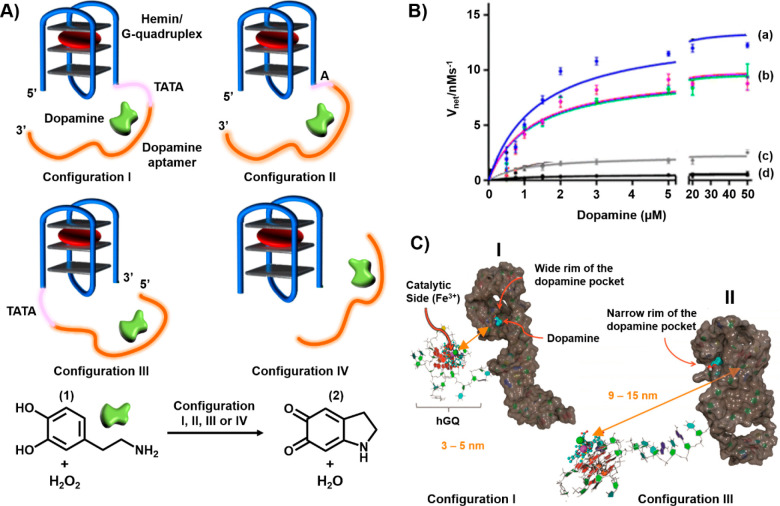
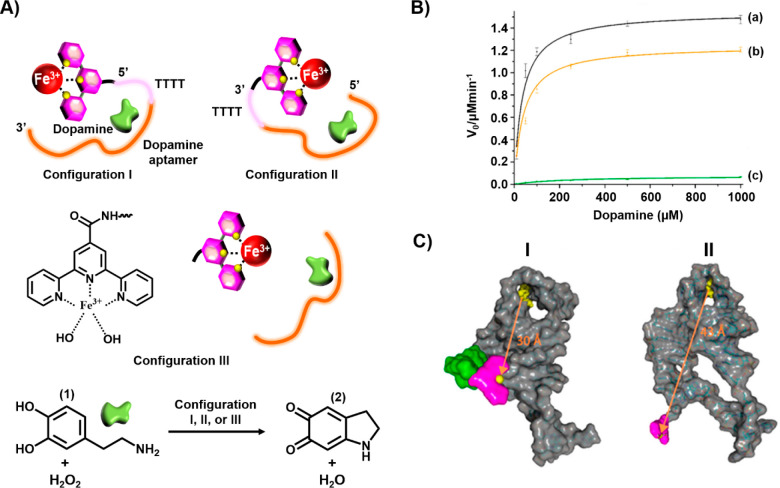
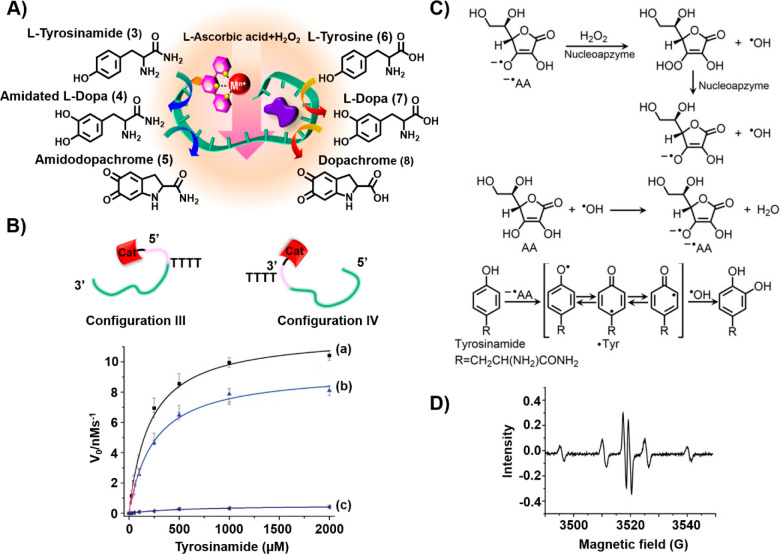
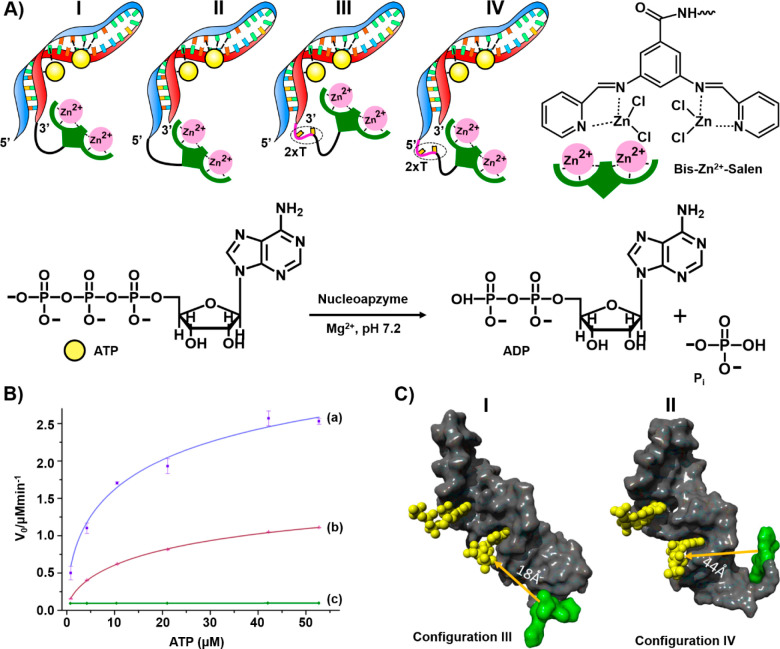
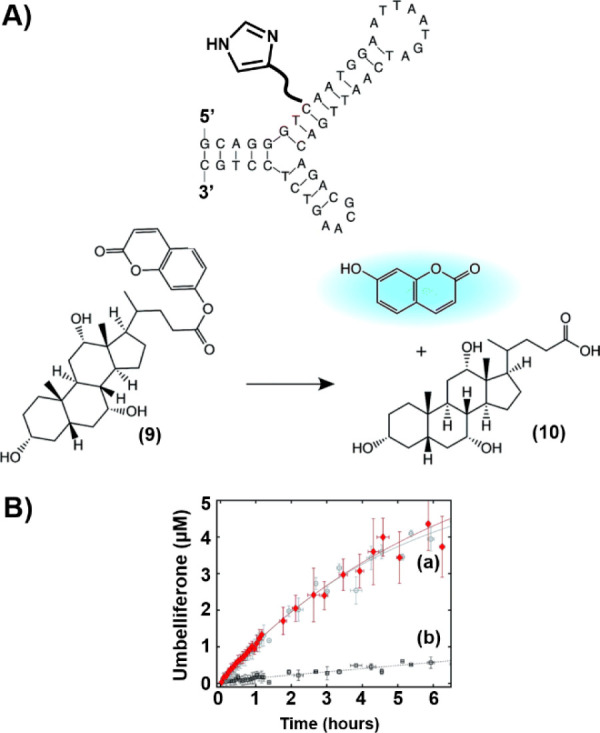
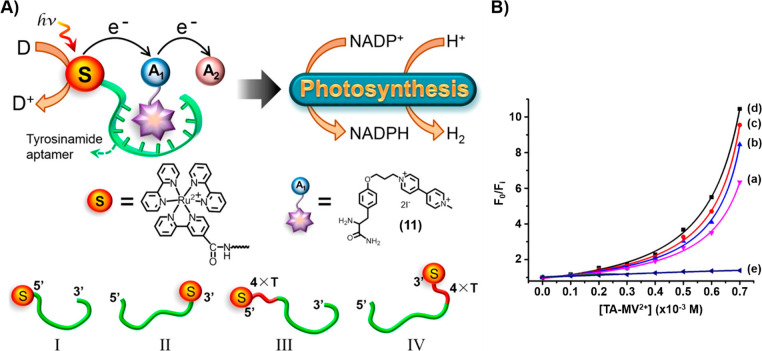
The covalent linkage of catalytic units to aptamer sequence-specific nucleic acids exhibiting selective binding affinities for substrates leads to functional scaffolds mimicking native enzymes, nucleoapzymes. The binding of the substrates to the aptamer and their structural orientation with respect to the catalytic units duplicate the functions of the active center of enzymes. The possibility of linking the catalytic sites directly, or through spacer units, to the 5'-end, 3'-end, and middle positions of the aptamers allows the design of nucleoapzyme libraries, revealing structure-functions diversities, and these can be modeled by molecular dynamics simulations. Catalytic sites integrated into nucleoapzymes include DNAzymes, transition metal complexes, and organic ligands. Catalytic transformations driven by nucleoapzymes are exemplified by the oxidation of dopamine or l-arginine, hydroxylation of tyrosine to l-DOPA, hydrolysis of ATP, and cholic acid-modified esters. The covalent linkage of photosensitizers to the tyrosinamide aptamer leads to a photonucleoapzyme scaffold that binds the -methyl-'-(3-aminopropane)-4,4'-bipyridinium-functionalized tyrosinamide to the aptamer. By linking the photosensitizer directly, or through a spacer bridge to the 5'-end or 3'-end of the aptamer, we demonstrate a library of supramolecular photosensitizer/electron acceptor photonucleoapzymes mimicking the functions of photosystem I in the photosynthetic apparatus. The photonucleoapzymes catalyze the photoinduced generation of NADPH, in the presence of ferredoxin-NADP-reductase (FNR), or the photoinduced H evolution catalyzed by Pt nanoparticles. The future prospects of nucleoapzymes and photonucleoapzymes are discussed.
催化单元与对底物具有选择性结合亲和力的适体序列特异性核酸的共价连接导致功能支架模拟天然酶,核酶。底物与适体的结合及其相对于催化单元的结构取向复制了酶的活性中心的功能。通过直接连接或通过间隔单元将催化位点连接到适体的 5'-端、3'-端和中间位置的可能性允许设计核酶库,揭示结构-功能多样性,这些可以通过分子动力学模拟进行建模。整合到核酶中的催化位点包括 DNA 酶、过渡金属配合物和有机配体。核酶驱动的催化转化的例子包括多巴胺或 l-精氨酸的氧化、酪氨酸向 l-DOPA 的羟化、ATP 的水解和胆酸修饰的酯的水解。将光敏剂共价连接到酪氨酸酰胺适体上,导致光核酶支架与 -甲基-'-(3-氨基丙基)-4,4'-联吡啶功能化的酪氨酸酰胺结合到适体上。通过将光敏剂直接连接,或通过间隔桥连接到适体的 5'-端或 3'-端,我们展示了模拟光合作用装置中光系统 I 功能的超分子光敏剂/电子受体光核酶库。光核酶在铁氧还蛋白-NADP-还原酶 (FNR) 的存在下催化光诱导生成 NADPH,或在 Pt 纳米颗粒存在下催化光诱导的 H 演化。讨论了核酶和光核酶的未来前景。