Anantharaj S, Jayachandran M, Kundu Subrata
Electrochemical Materials Science (ECMS) Division , CSIR-Central Electrochemical Research Institute (CECRI) , Karaikudi-630006 , Tamilnadu , India . Email:
Chem Sci. 2016 May 1;7(5):3188-3205. doi: 10.1039/c5sc04714e. Epub 2016 Jan 20.
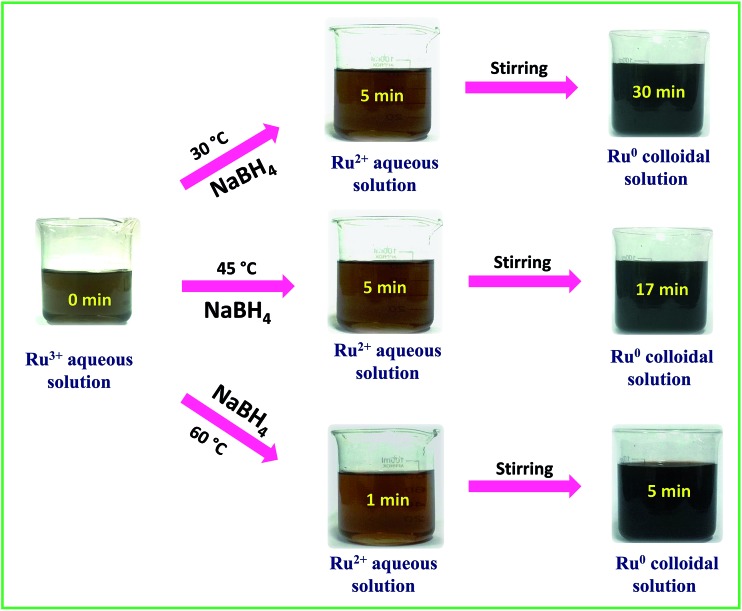
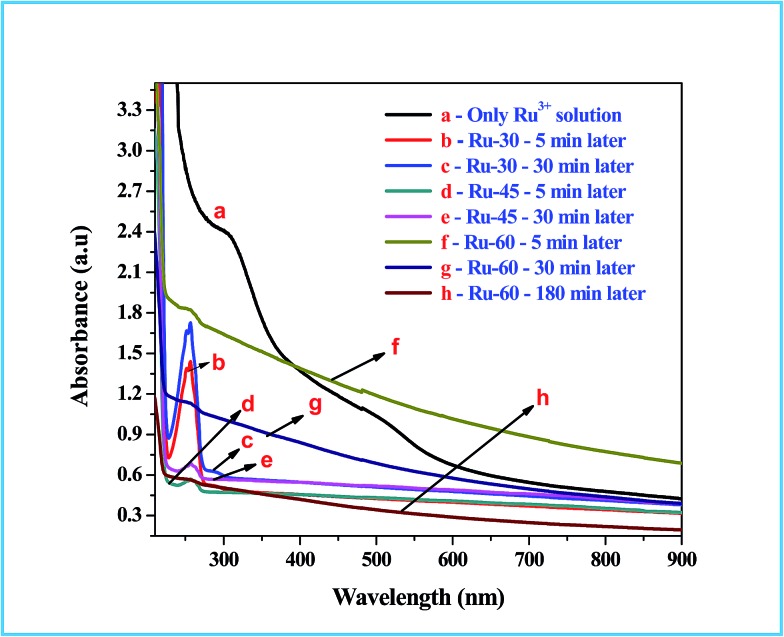
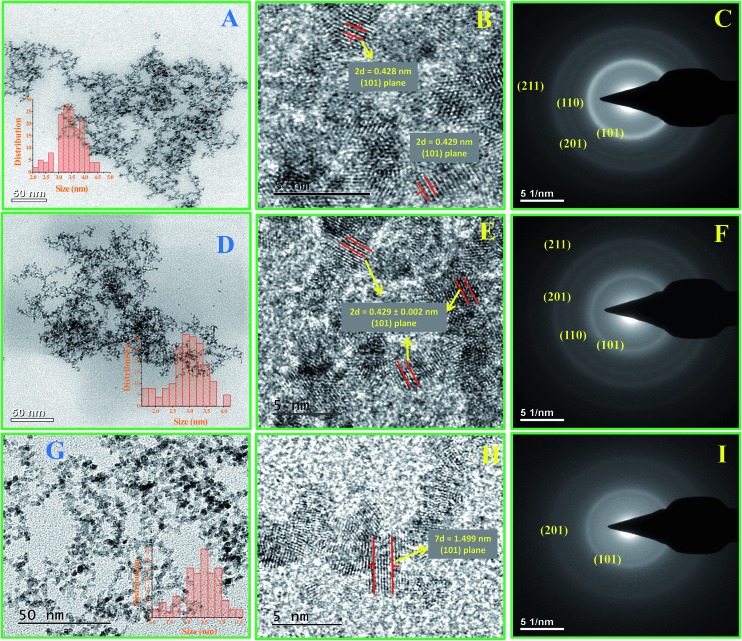
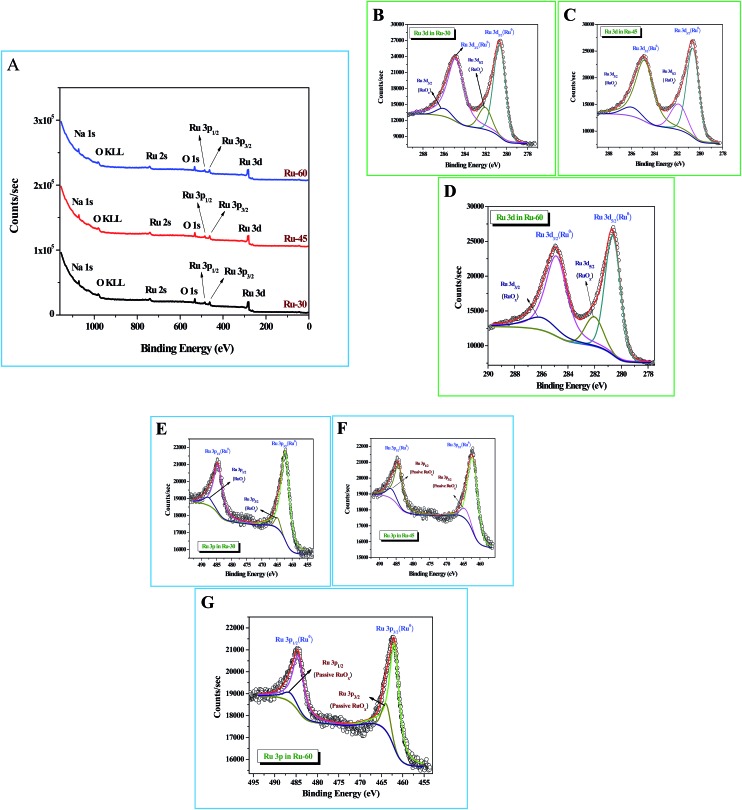
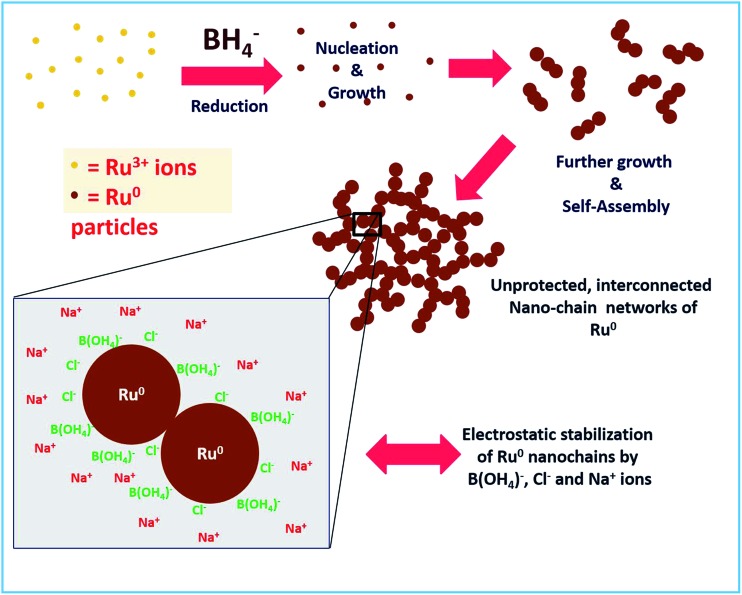
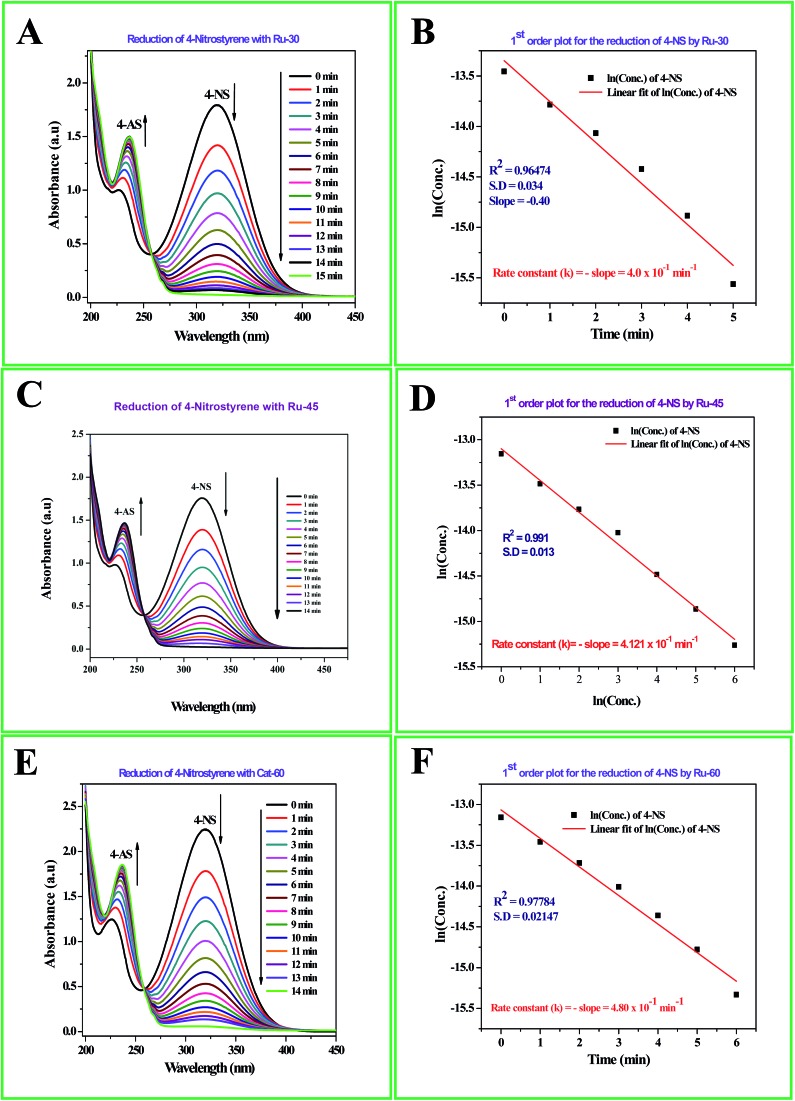
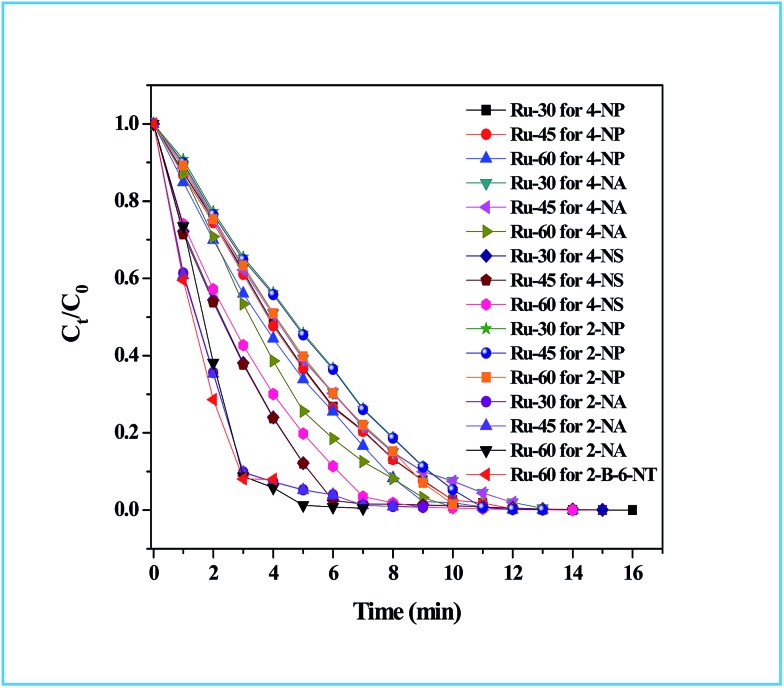
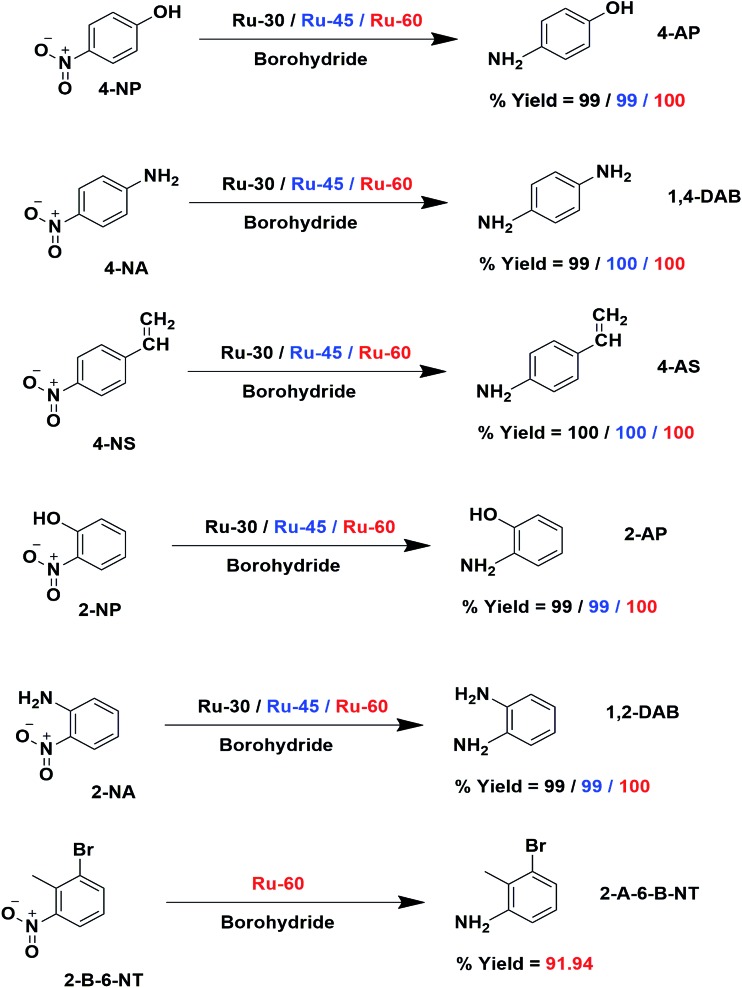
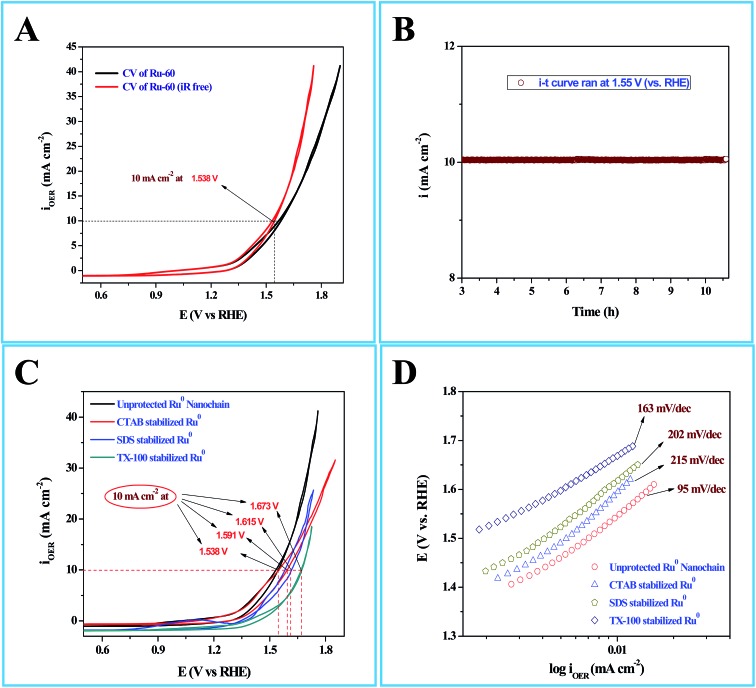
Seedless, surfactantless and support-free unprotected, metallic, interconnected nano-chain networks of ruthenium nanoparticles (NPs) were successfully synthesized the reduction of ruthenium(iii) chloride (RuCl) with sodium borohydride (NaBH) at three different temperatures, 30 °C, 45 °C and 60 °C. The molar ratio of RuCl solution and borohydride was optimized to be 1 : 1.5 to produce stable colloids with the optimum final solution pH of 9.7 ± 0.2. Average diameters of the interconnected nano-chain networks prepared at 30 °C (Ru-30), 45 °C (Ru-45) and 60 °C (Ru-60) were 3.5 ± 0.5 nm, 3.0 ± 0.2 nm and 2.6 ± 0.2 nm respectively. The morphology and composition dependent catalytic and electrocatalytic activities of these unprotected Ru nano-chain networks (Ru-30, Ru-45 and Ru-60) were studied in detail. The catalysis study was performed by investigating the transfer hydrogenation of several substituted aromatic nitro compounds. It was observed that Ru-60 was relatively more active compared to Ru-30 and Ru-45, which was reflected in their rate constant values. The electrocatalytic activities of Ru-30, Ru-45 and Ru-60 were screened for anodic water splitting in alkaline medium (0.1 M NaOH) and it was found that all of them showed almost the same activity which required an over-voltage of 308 ± 2 mV to obtain an anodic current density of 10 mA cm. The catalytic and electrocatalytic performances of these unprotected Ru networks were compared with Ru nanomaterials prepared under similar conditions with three different surfactants, CTAB, SDS and TX-100, which revealed that unprotected Ru networks are better catalysts than those stabilized with surfactants. The superior catalytic and electrocatalytic performance is due to the availability of unprotected Ru surfaces. The present route may provide a new possibility of synthesizing other surfactant-free, unprotected metal colloids for enhanced catalytic and electrocatalytic applications.
在30℃、45℃和60℃这三个不同温度下,通过硼氢化钠(NaBH)还原氯化钌(RuCl),成功合成了无籽、无表面活性剂且无载体保护的金属互连钌纳米颗粒(NPs)纳米链网络。优化RuCl溶液与硼氢化物的摩尔比为1∶1.5,以制备稳定的胶体,最终溶液的最佳pH值为9.7±0.2。在30℃(Ru - 30)、45℃(Ru - 45)和60℃(Ru - 60)下制备的互连纳米链网络的平均直径分别为3.5±0.5纳米、3.0±0.2纳米和2.6±0.2纳米。详细研究了这些无保护的Ru纳米链网络(Ru - 30、Ru - 45和Ru - 60)的形态和组成依赖性催化及电催化活性。通过研究几种取代芳族硝基化合物的转移氢化反应进行催化研究。观察到Ru - 60比Ru - 30和Ru - 45相对更具活性,这体现在它们的速率常数上。筛选了Ru - 30、Ru - 45和Ru - 60在碱性介质(0.1 M NaOH)中阳极析氢反应的电催化活性,发现它们都表现出几乎相同的活性,获得10 mA cm的阳极电流密度需要308±2 mV的过电压。将这些无保护的Ru网络的催化和电催化性能与在类似条件下用三种不同表面活性剂(CTAB、SDS和TX - 100)制备的Ru纳米材料进行了比较,结果表明无保护的Ru网络比用表面活性剂稳定的Ru网络是更好的催化剂。优异的催化和电催化性能归因于无保护的Ru表面的可用性。本方法可能为合成其他无表面活性剂、无保护的金属胶体以增强催化和电催化应用提供新的可能性。