Department of Electronics, Information, and Bioengineering, Politecnico di Milano, Milan , Italy.
Istituto di Ricerche Farmacologiche Mario Negri IRCCS, Milan, Italy.
J Appl Physiol (1985). 2018 Oct 1;125(4):1011-1020. doi: 10.1152/japplphysiol.00348.2018. Epub 2018 Jul 12.
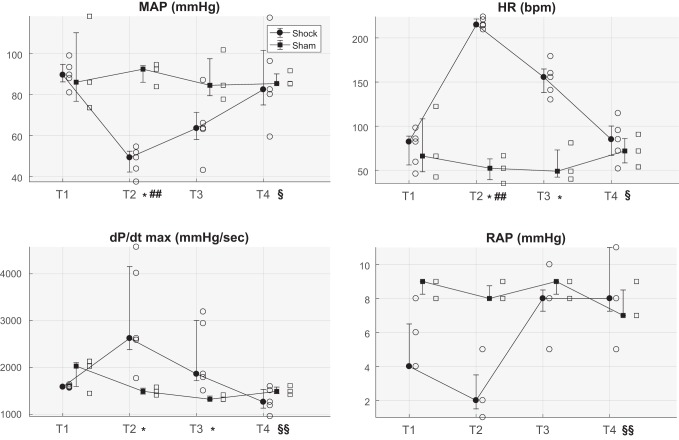
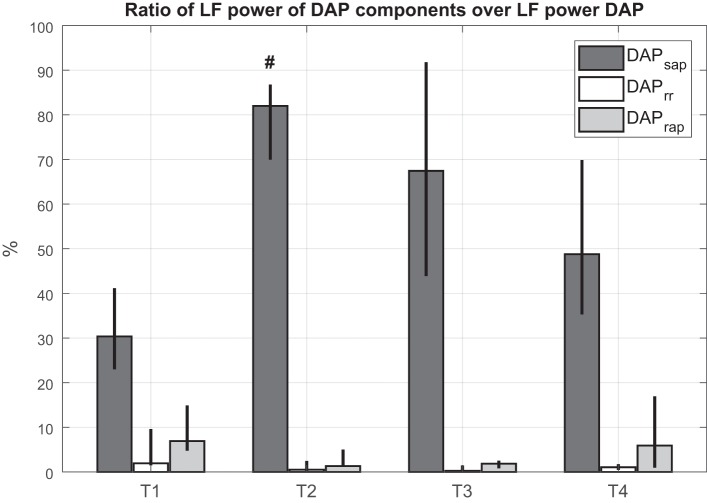
Autonomic control of blood pressure (BP) and heart rate (HR) is crucial during bleeding and hemorrhagic shock (HS) to compensate for hypotension and hypoxia. Previous works have observed that at the point of hemodynamic decompensation a marked suppression of BP and HR variability occurs, leading to irreversible shock. We hypothesized that recovery of the autonomic control may be decisive for effective resuscitation, along with restoration of mean BP. We computed cardiovascular indexes of baroreflex sensitivity and BP and HR variability by analyzing hemodynamic recordings collected from five pigs during a protocol of severe hemorrhage and resuscitation; three pigs were sham-treated controls. Moreover, we assessed the effects of severe hemorrhage on heart functionality by integrating the hemodynamic findings with measures of plasma high-sensitivity cardiac troponin T and metabolite concentrations in left ventricular (LV) tissue. Resuscitation was performed with fluids and norepinephrine and then by reinfusion of shed blood. After first resuscitation, mean BP reached the target value, but cardiovascular indexes were not fully restored, hinting at a partial recovery of the autonomic mechanisms. Moreover, cardiac troponins were still elevated, suggesting a persistent myocardial sufferance. After blood reinfusion all the indexes returned to baseline. In the harvested heart, LV metabolic profile confirmed the acute stress condition sensed by the cardiomyocytes. Variability indexes and baroreflex trends can be valuable tools to evaluate the severity of HS, and they may represent a more useful end point for resuscitation in combination with standard measures such as mean values and biological measures. NEW & NOTEWORTHY Autonomic control of blood pressure was highly impaired during hemorrhagic shock, and it was not completely recovered after resuscitation despite global restoration of mean pressures. Moreover, a persistent myocardial sufferance emerged from measured cardiac troponin T and metabolite concentrations of left ventricular tissue. We highlight the importance of combining global mean values and biological markers with measures of variability and autonomic control for a better characterization of the effectiveness of the resuscitation strategy.
血压 (BP) 和心率 (HR) 的自主控制对于出血和失血性休克 (HS) 期间至关重要,以补偿低血压和缺氧。以前的研究观察到,在血流动力学失代偿点,BP 和 HR 变异性明显受到抑制,导致不可逆转的休克。我们假设自主控制的恢复可能与平均 BP 的恢复一样,对有效复苏具有决定性意义。我们通过分析五只猪在严重出血和复苏方案期间收集的血流动力学记录,计算了心血管压力反射敏感性和 BP 及 HR 变异性的指数;三只猪作为假手术对照。此外,我们通过将血流动力学发现与左心室 (LV) 组织中高敏心肌肌钙蛋白 T 和代谢物浓度的测量相结合,评估了严重出血对心脏功能的影响。复苏采用液体和去甲肾上腺素进行,然后再输回失血。第一次复苏后,平均 BP 达到目标值,但心血管指数并未完全恢复,这表明自主机制部分恢复。此外,肌钙蛋白仍升高,提示心肌持续受损。输回血液后,所有指数均恢复到基线。在收获的心脏中,LV 代谢谱证实了心肌细胞感知到的急性应激状态。变异性指数和压力反射趋势可以作为评估 HS 严重程度的有价值工具,并且它们可能与平均指标和生物指标等标准指标相结合,成为复苏的更有用终点。
在失血性休克期间,血压的自主控制受到严重损害,尽管平均血压全面恢复,但复苏后并未完全恢复。此外,左心室组织中测量的肌钙蛋白 T 和代谢物浓度表明存在持续的心肌损伤。我们强调了将平均指标和生物标志物与变异性和自主控制指标相结合,以更好地描述复苏策略的有效性的重要性。