Department of Basic Pharmaceutical Sciences, School of Pharmacy, University of Louisiana at Monroe, Monroe, Louisiana, USA.
Department of Biomedical Sciences, School of Pharmacy, Texas Tech University Health Sciences Center, Lubbock, Texas, USA.
Sci Rep. 2018 Jul 12;8(1):10495. doi: 10.1038/s41598-018-28872-2.
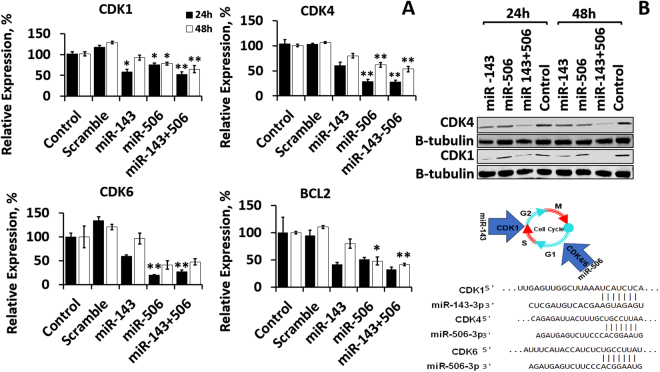
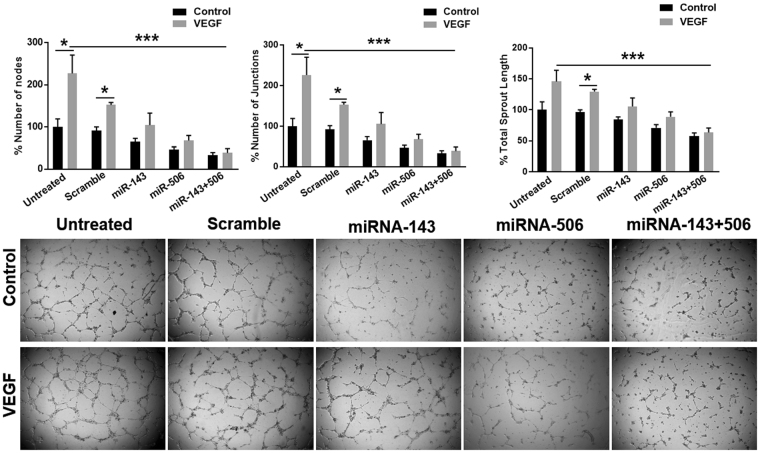
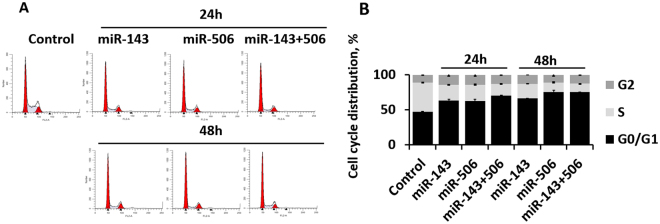
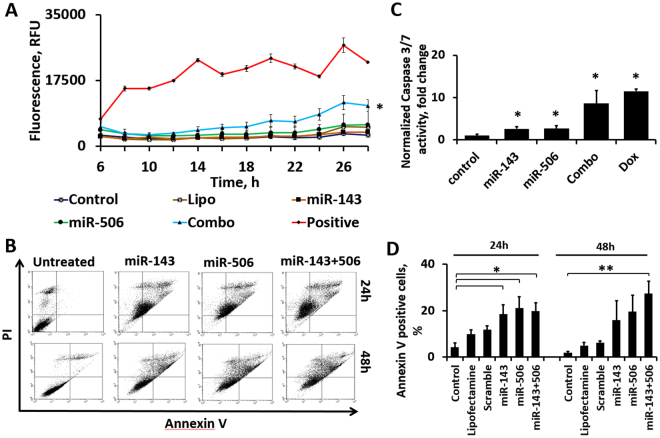
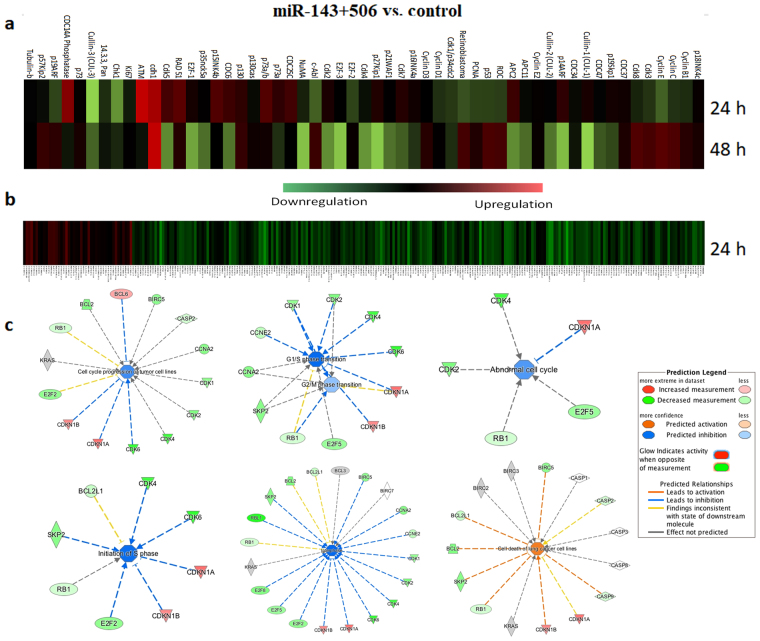
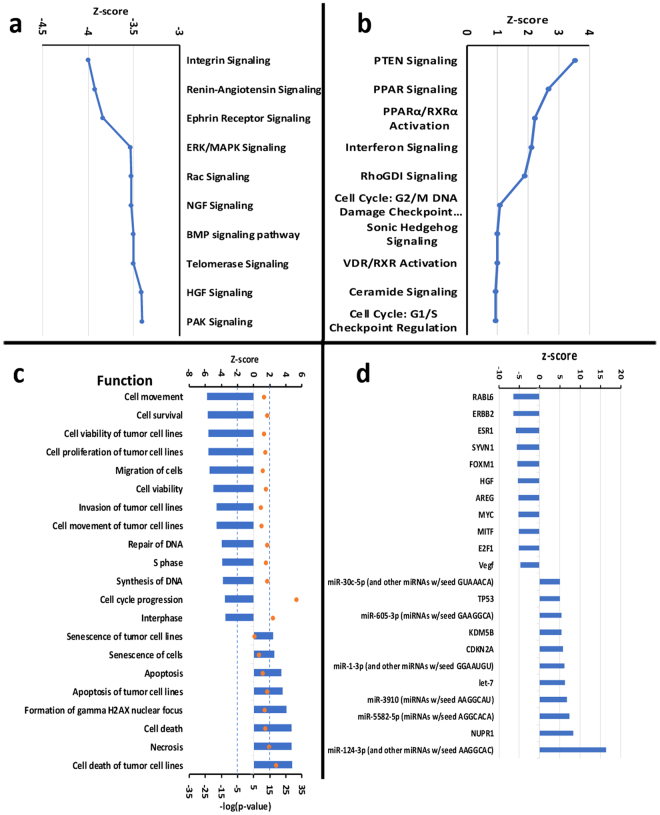
Lung cancer (LC) is the leading cause of cancer-related deaths. Downregulation of CDK1, 4 and 6, key regulators of cell cycle progression, correlates with decreased LC cell proliferation. Enforced expression of miRNAs (miRs) is a promising approach to regulate genes. Here, we study the combinatorial treatment of miR-143 and miR-506 to target the CDK1, 4/6 genes, respectively. We analyzed the differential expression of CDK genes by qPCR, and western blot, and evaluated changes in the cell cycle distribution upon combinatorial treatment. We used an antibody microarray analysis to evaluate protein expression, focusing on the cell cycle pathway, and performed RNA-sequencing for pathway analysis. The combinatorial miR treatment significantly downregulated CDK1, 4 and 6 expression, and induced a shift of the cell cycle populations, indicating a G1 and G2 cell cycle block. The two miRs induces strong cytotoxic activity, with potential synergism, and a significant Caspase 3/7 activation. We identified a strong inhibition of tube formation in the presence or absence VEGF in an in vitro angiogenesis model. Together with the pathways analysis of the RNA-sequencing data, our findings establish the combinatorial miR transfection as a viable strategy for lung cancer treatment that merits further investigation.
肺癌(LC)是癌症相关死亡的主要原因。细胞周期进程的关键调节因子 CDK1、4 和 6 的下调与 LC 细胞增殖减少相关。强制表达 microRNA(miRs)是一种有前途的调节基因的方法。在这里,我们研究了 miR-143 和 miR-506 的组合治疗,分别针对 CDK1 和 CDK4/6 基因。我们通过 qPCR 和 Western blot 分析了 CDK 基因的差异表达,并评估了组合治疗后细胞周期分布的变化。我们使用抗体微阵列分析评估了蛋白质表达,重点关注细胞周期途径,并进行了 RNA 测序以进行途径分析。组合 miR 处理显著下调 CDK1、4 和 6 的表达,并诱导细胞周期群体的转移,表明 G1 和 G2 细胞周期阻滞。这两种 miR 诱导强烈的细胞毒性活性,具有潜在的协同作用,并显著激活 Caspase 3/7。我们在体外血管生成模型中发现,无论是否存在 VEGF,都能强烈抑制管形成。结合 RNA 测序数据的通路分析,我们的研究结果确立了组合 miR 转染作为治疗肺癌的可行策略,值得进一步研究。