Kapałczyńska Marta, Kolenda Tomasz, Przybyła Weronika, Zajączkowska Maria, Teresiak Anna, Filas Violetta, Ibbs Matthew, Bliźniak Renata, Łuczewski Łukasz, Lamperska Katarzyna
Laboratory of Cancer Genetics, Greater Poland Cancer Centre, Poznan, Poland.
Postgraduate School of Molecular Medicine, University of Warsaw, Warsaw, Poland.
Arch Med Sci. 2018 Jun;14(4):910-919. doi: 10.5114/aoms.2016.63743. Epub 2016 Nov 18.
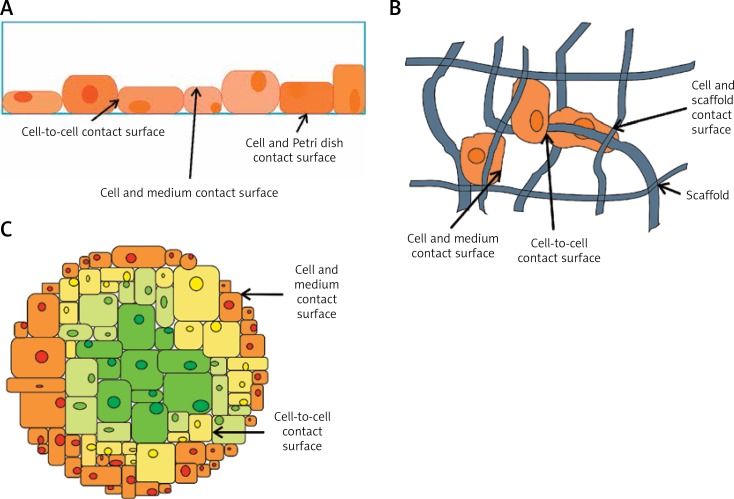
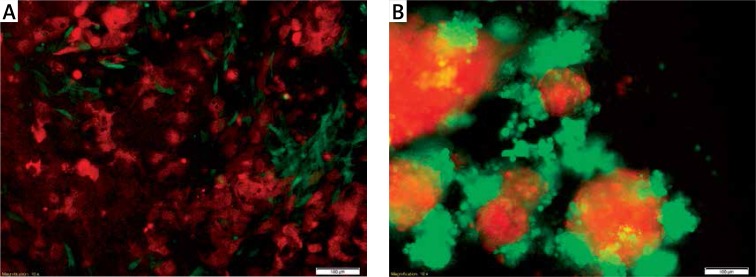
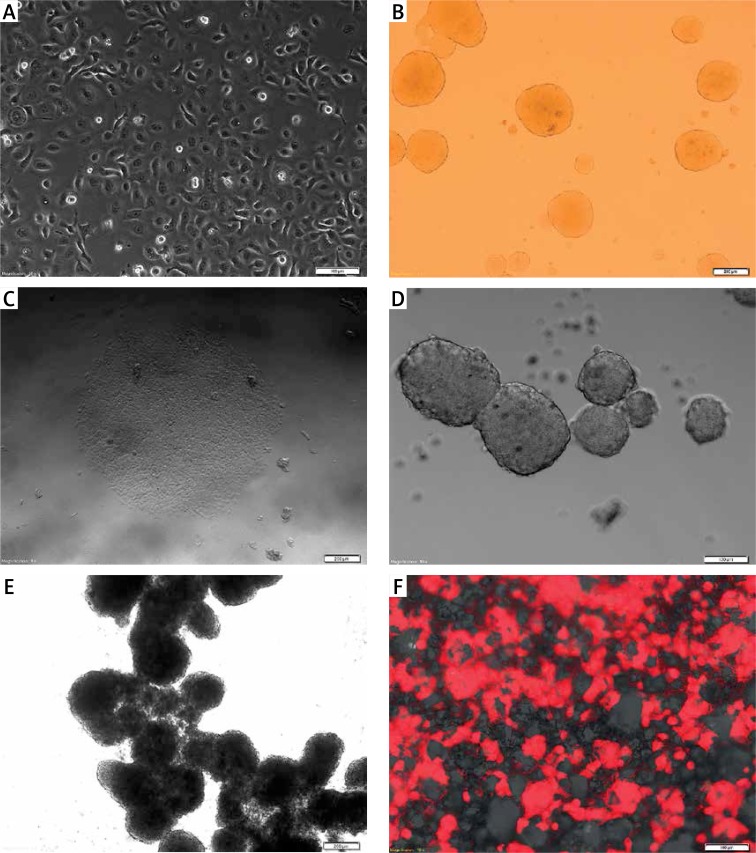
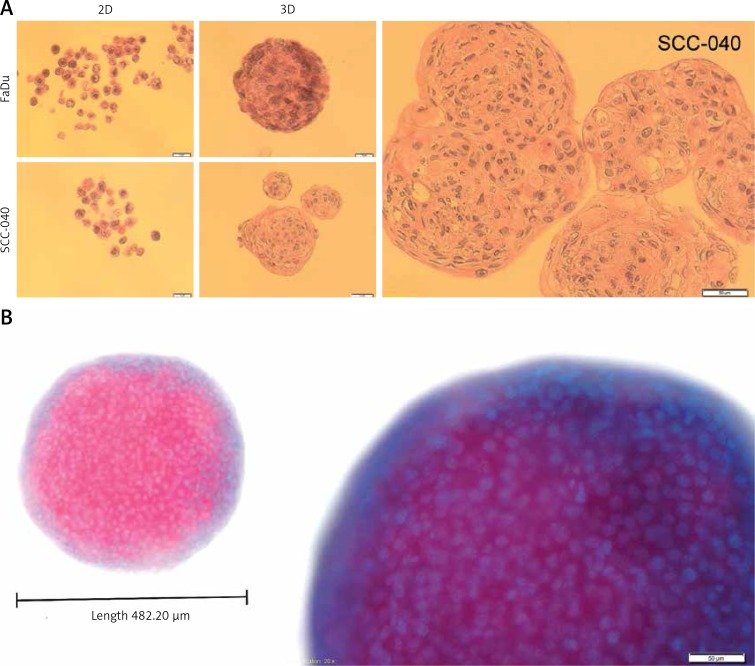
Cell culture is a widely used tool for improving our understanding of cell biology, tissue morphology, and mechanisms of diseases, drug action, protein production and the development of tissue engineering. Most research regarding cancer biology is based on experiments using two-dimensional (2D) cell cultures . However, 2D cultures have many limitations, such as the disturbance of interactions between the cellular and extracellular environments, changes in cell morphology, polarity, and method of division. These disadvantages led to the creation of models which are more closely able to mimic conditions . One such method is three-dimensional culture (3D). Optimisation of the culture conditions may allow for a better understanding of cancer biology and facilitate the study of biomarkers and targeting therapies. In this review, we compare 2D and 3D cultures as well as different versions of 3D cultures.
细胞培养是一种广泛应用的工具,有助于我们增进对细胞生物学、组织形态学以及疾病机制、药物作用、蛋白质生产和组织工程发展的理解。大多数关于癌症生物学的研究都基于使用二维(2D)细胞培养的实验。然而,二维培养有许多局限性,例如细胞与细胞外环境之间相互作用的干扰、细胞形态、极性和分裂方式的变化。这些缺点促使人们创建更能模拟实际情况的模型。三维培养(3D)就是这样一种方法。优化培养条件可能有助于更好地理解癌症生物学,并促进生物标志物和靶向治疗的研究。在这篇综述中,我们比较了二维和三维培养以及不同版本的三维培养。