Woldu Solomon L, Bagrodia Aditya
University of Texas Southwestern Medical Center, Dallas, Texas, USA.
Curr Opin Urol. 2018 Sep;28(5):440-447. doi: 10.1097/MOU.0000000000000532.
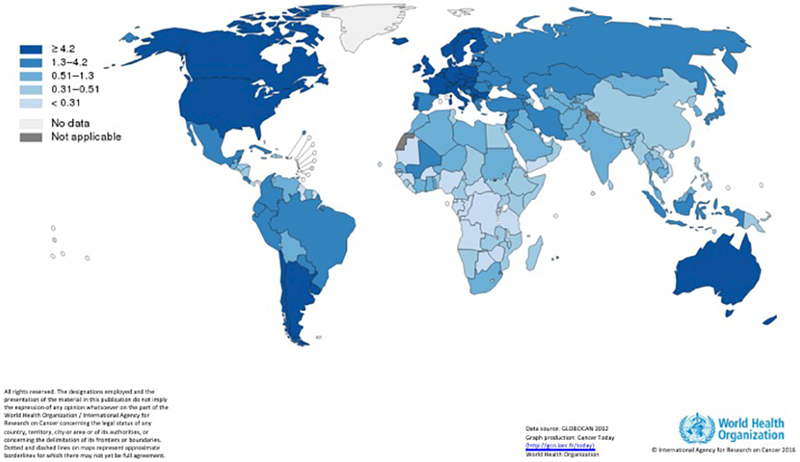
We aim to give an overview of the epidemiology and treatment trends of testicular germ cell tumors (TGCTs), with an emphasis on recent trends.
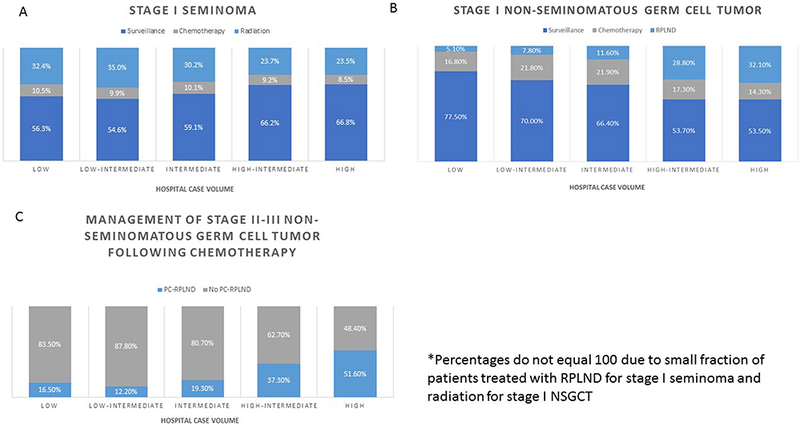
The incidence of TGCT appears to be increasing, particularly in developed countries, although the reasons are not well understood. There is evidence of racial differences in predisposition to TGCT, with white men having highest risk and men of African or Asian descent having lower risk. In the United States, the incidence of TGCT among Hispanics appears to be rising most quickly. A recent genomic analysis indicates there is no highly penetrant major TGCT susceptibility gene. Incorporation of multidisciplinary care has led to excellent long-term cure rates; however, access to care and insurance remains barriers in young men. Recent treatment trends have centered on maximizing oncologic outcomes while minimizing long-term morbidity.
Emerging population-level data provide critical insight into the evolving demographics of TGCT, which may allow for elucidation of biologic and environmental determinants of TGCT. Further, identification of socioeconomic barriers to excellent clinical outcomes will allow for targeted interventions to patients with unique demographic and socioeconomic considerations. Treatment trend analyses suggest that the field is moving toward minimizing treatment-related morbidity.
我们旨在概述睾丸生殖细胞肿瘤(TGCT)的流行病学和治疗趋势,重点关注近期趋势。
TGCT的发病率似乎在上升,尤其是在发达国家,尽管其原因尚不清楚。有证据表明,TGCT易感性存在种族差异,白人男性风险最高,非洲或亚洲血统男性风险较低。在美国,西班牙裔人群中TGCT的发病率上升似乎最快。最近的基因组分析表明,不存在高 penetrance的主要TGCT易感基因。多学科护理的纳入带来了出色的长期治愈率;然而,对于年轻男性来说,获得护理和保险仍然是障碍。近期的治疗趋势集中在最大化肿瘤治疗效果的同时,最小化长期发病率。
新出现的人群水平数据为TGCT不断变化的人口统计学提供了关键见解,这可能有助于阐明TGCT的生物学和环境决定因素。此外,识别影响卓越临床结果的社会经济障碍,将有助于针对具有独特人口统计学和社会经济特征的患者进行有针对性的干预。治疗趋势分析表明,该领域正在朝着最小化治疗相关发病率的方向发展。