Milagres Tamara, García-Arroyo Fernando E, Lanaspa Miguel A, Garcia Gabriela, Ishimoto Takuji, Andres-Hernando Ana, Kuwabara Masanari, Jensen Thomas, Sato Yuka, Glaser Jason, Sánchez-Lozada Laura G, Johnson Richard J, Roncal-Jimenez Carlos
Division of Renal Diseases and Hypertension, Nephrology Division, Mail Stop C281, University of Colorado Anschutz Medical Campus, 12700 East 19th Ave 7th Floor Offices, Aurora, CO, 80045, USA.
Laboratory of Renal Physiopathology, Instituto Nacional de Cardiologia, Ignacio Chavez, Mexico City, Mexico.
BMC Nephrol. 2018 Jul 13;19(1):180. doi: 10.1186/s12882-018-0963-9.
Increasing evidence suggests heat stress induced chronic kidney disease (CKD) may be mediated by endogenous fructose generation and may be exacerbated by rehydration by fructose-containing solutions. We have recently reported a model of CKD induced by heat stress. Here we test the hypothesis that rehydration with fructose may induce worse kidney injury than rehydration with equal amounts of water, and we also test if this fructose-induced injury is associated with activation of inflammasomes in the kidney.
Mice were recurrently exposed to heat (39.5 C for 30 min/h, 5 times daily for 5 wks) with rehydration consisting of 6 ml each night of water (Heat, n = 7) or fructose (Heat+F, 10%, n = 7), and were compared to control mice on water (Control, n = 7) or fructose (Fructose, n = 7). Various markers of renal injury were assessed.
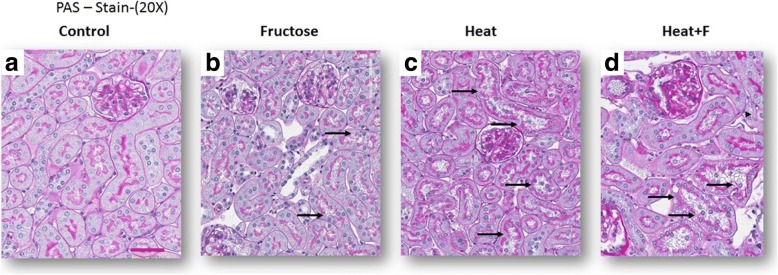
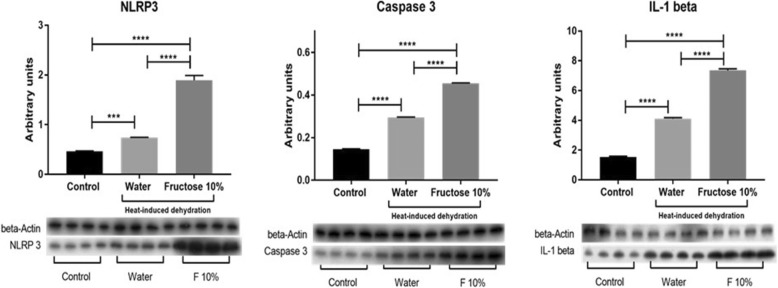
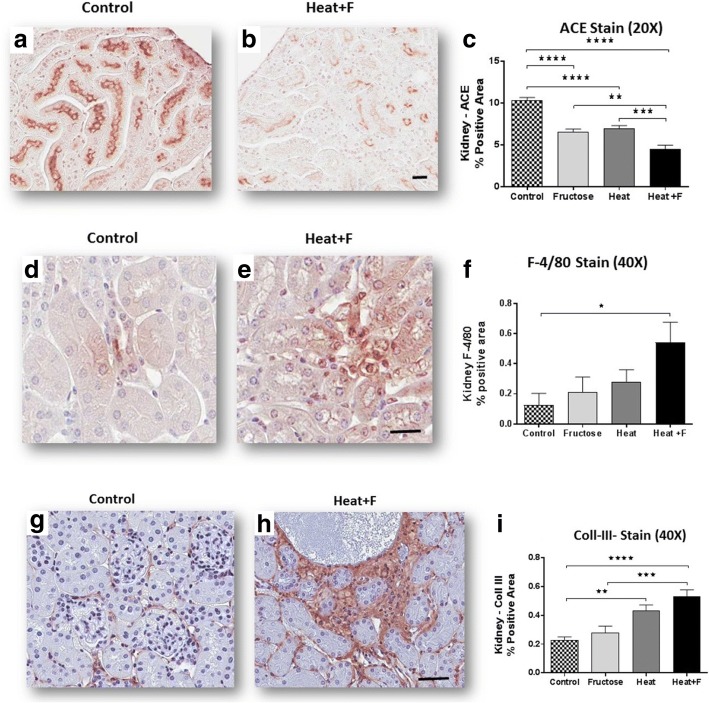
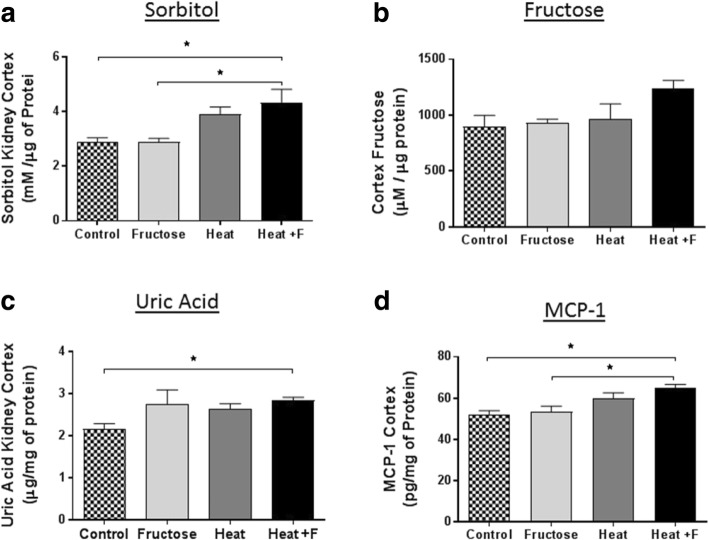
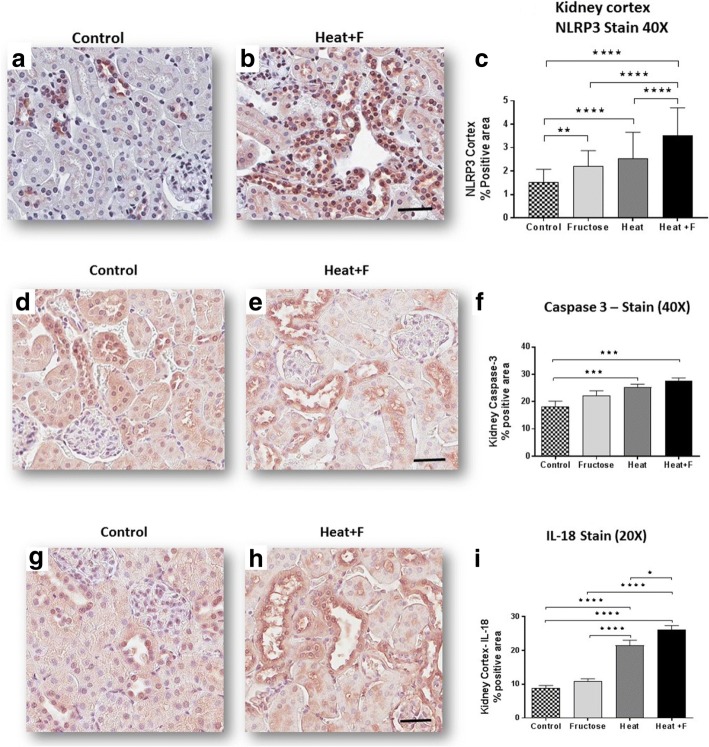
Compared to control animals, there was a progressive worsening of renal injury (inflammation and fibrosis) with fructose alone, heat stress alone, and heat stress with fructose rehydration (P < 0.01 by ANOVA). The combination of heat stress with rehydration with fructose was associated with increased intrarenal expression of the inflammasome markers, NLRP3 and IL-18, compared to heat stress alone. In addition, heat stress with or without fructose was associated with increased expression of caspase - 3 and monocyte chemoattractant protein-1 levels. Fructose administration was also associated with an increase in serum copeptin levels (a biomarker of vasopressin) and elevated copeptin was also observed in mice undergoing heat stress alone.
These studies suggest that heat stress may activate intrarenal inflammasomes leading to inflammation and renal injury, and provide evidence that rehydration with fructose may accelerate the renal injury and inflammatory response.
越来越多的证据表明,热应激诱导的慢性肾脏病(CKD)可能由内源性果糖生成介导,且含果糖溶液补液可能会加剧病情。我们最近报道了一种热应激诱导的CKD模型。在此,我们检验以下假设:与等量水补液相比,果糖补液可能导致更严重的肾损伤,并且我们还检验这种果糖诱导的损伤是否与肾脏中炎性小体的激活有关。
将小鼠反复暴露于热环境(39.5℃,30分钟/小时,每天5次,共5周),每晚分别用6毫升水(热应激组,n = 7)或果糖(热应激+果糖组,10%,n = 7)进行补液,并与饮用普通水的对照小鼠(对照组,n = 7)或饮用果糖的小鼠(果糖组,n = 7)进行比较。评估各种肾损伤标志物。
与对照动物相比,单独使用果糖、单独热应激以及热应激并用果糖补液时,肾损伤(炎症和纤维化)逐渐加重(方差分析,P < 0.01)。与单独热应激相比,热应激并用果糖补液与肾脏中炎性小体标志物NLRP3和IL - 18的肾内表达增加有关。此外,无论有无果糖,热应激均与caspase - 3表达增加和单核细胞趋化蛋白 - 1水平升高有关。给予果糖还与血清 copeptin 水平升高(血管加压素的生物标志物)有关,单独热应激的小鼠中也观察到copeptin升高。
这些研究表明,热应激可能激活肾内炎性小体,导致炎症和肾损伤,并提供证据表明果糖补液可能加速肾损伤和炎症反应。