Department of Microbiology and Immunology, Yong Loo Lin School of Medicine, National University of Singapore, 5 Science Drive 2, Singapore, 117545, Singapore.
Immunology Programme, Life Sciences Institute, National University of Singapore, 28 Medical Drive, Centre for Life Sciences, Level 3, Singapore, 117456, Singapore.
Nat Commun. 2018 Jul 13;9(1):2716. doi: 10.1038/s41467-018-05288-0.
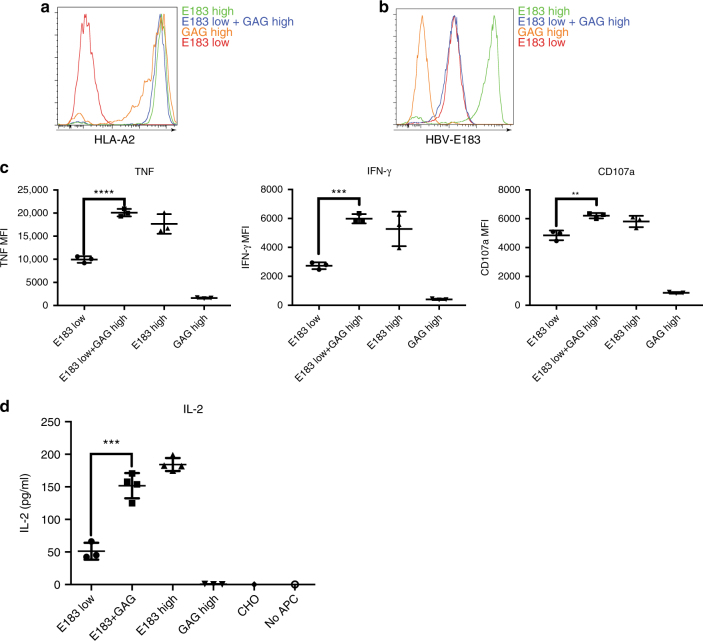
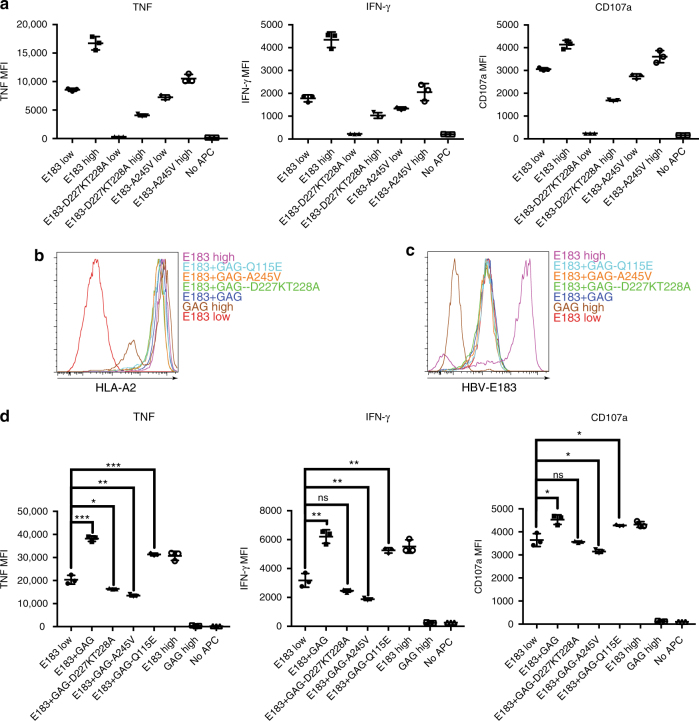
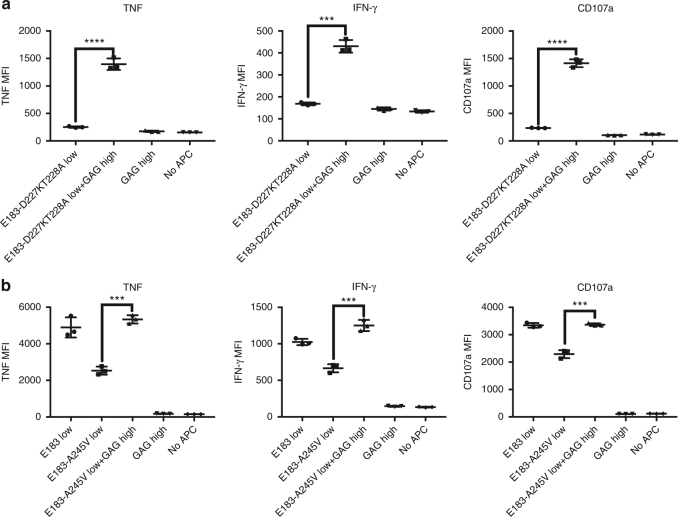
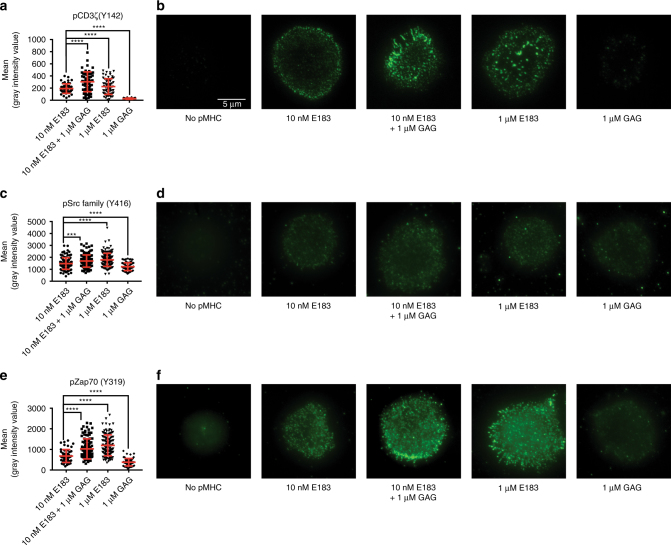
Foreign antigens are presented by antigen-presenting cells in the presence of abundant endogenous peptides that are nonstimulatory to the T cell. In mouse T cells, endogenous, nonstimulatory peptides have been shown to enhance responses to specific peptide antigens, a phenomenon termed coagonism. However, whether coagonism also occurs in human T cells is unclear, and the molecular mechanism of coagonism is still under debate since CD4 and CD8 coagonism requires different interactions. Here we show that the nonstimulatory, HIV-derived peptide GAG enhances a specific human cytotoxic T lymphocyte response to HBV-derived epitopes presented by HLA-A*02:01. Coagonism in human T cells requires the CD8 coreceptor, but not T-cell receptor (TCR) binding to the nonstimulatory peptide-MHC. Coagonists enhance the phosphorylation and recruitment of several molecules involved in the TCR-proximal signaling pathway, suggesting that coagonists promote T-cell responses to antigenic pMHC by amplifying TCR-proximal signaling.
外来抗原在抗原呈递细胞中呈现,同时存在大量对 T 细胞无刺激作用的内源性肽。在小鼠 T 细胞中,内源性非刺激性肽已被证明可增强对特定肽抗原的反应,这种现象称为共激动作用。然而,共激动作用是否也发生在人类 T 细胞中尚不清楚,由于 CD4 和 CD8 共激动作用需要不同的相互作用,因此共激动作用的分子机制仍存在争议。在这里,我们表明,非刺激性的 HIV 衍生肽 GAG 增强了人类细胞毒性 T 淋巴细胞对 HLA-A*02:01 呈递的 HBV 衍生表位的特异性反应。人类 T 细胞中的共激动作用需要 CD8 核心受体,但不需要 TCR 与非刺激性肽-MHC 的结合。共激动剂增强了几个参与 TCR 近端信号通路的分子的磷酸化和募集,这表明共激动剂通过放大 TCR 近端信号来促进 T 细胞对抗原 pMHC 的反应。