Ren Yuxin, Zhu Fuqiang, Liu Zhendong
Department of Spinal Surgery, Dezhou People's Hospital, Dezhou, Shandong 253014, P.R. China.
Department of Orthopedics, Dezhou People's Hospital, Dezhou, Shandong 253014, P.R. China.
Oncol Lett. 2018 Aug;16(2):1405-1410. doi: 10.3892/ol.2018.8821. Epub 2018 May 29.
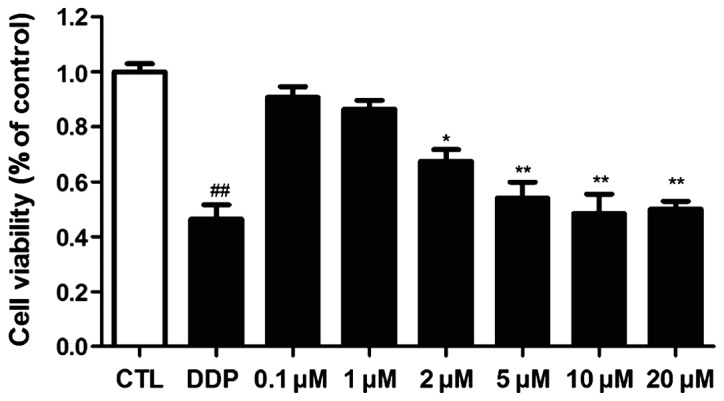
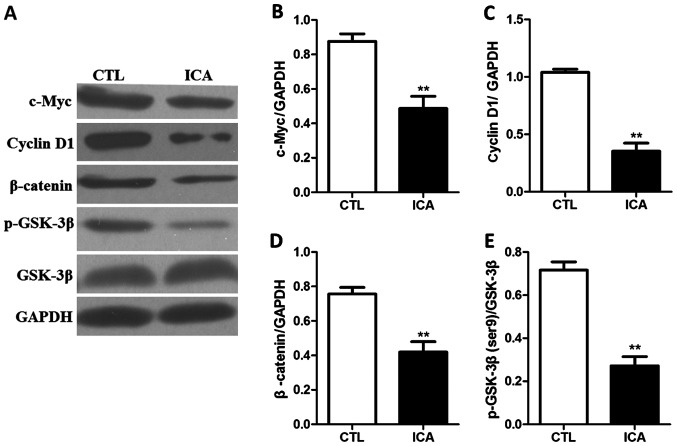
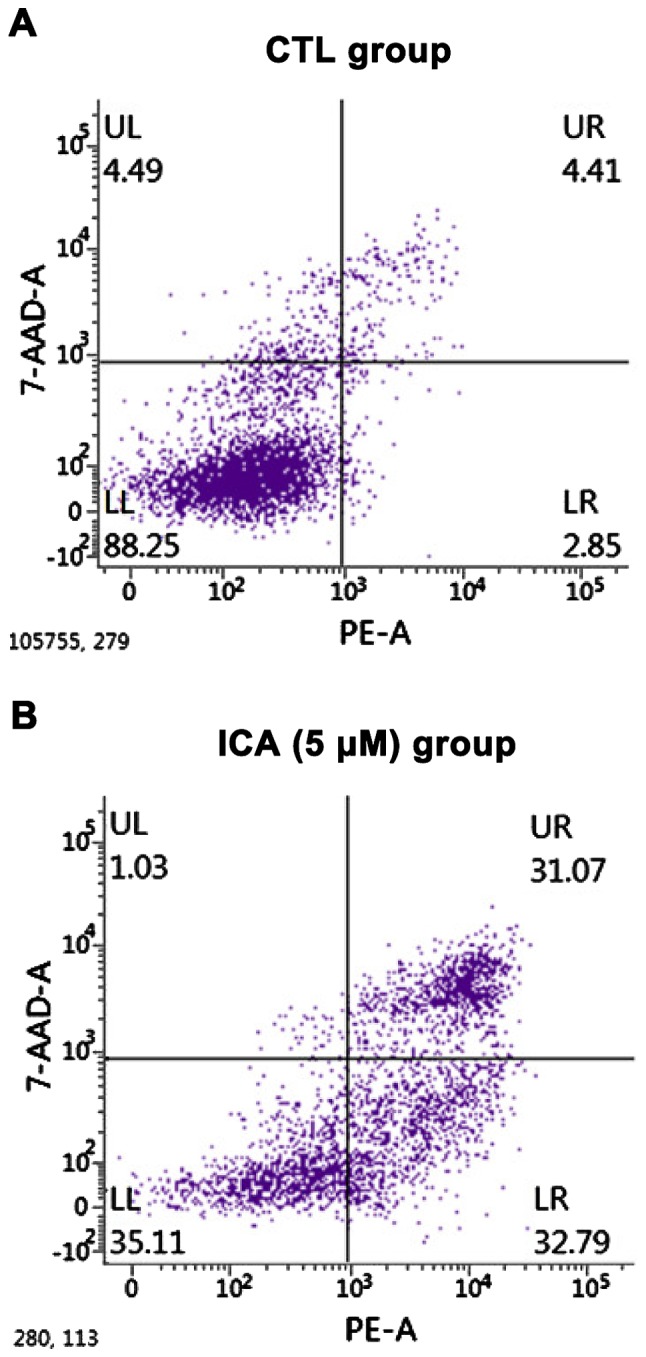
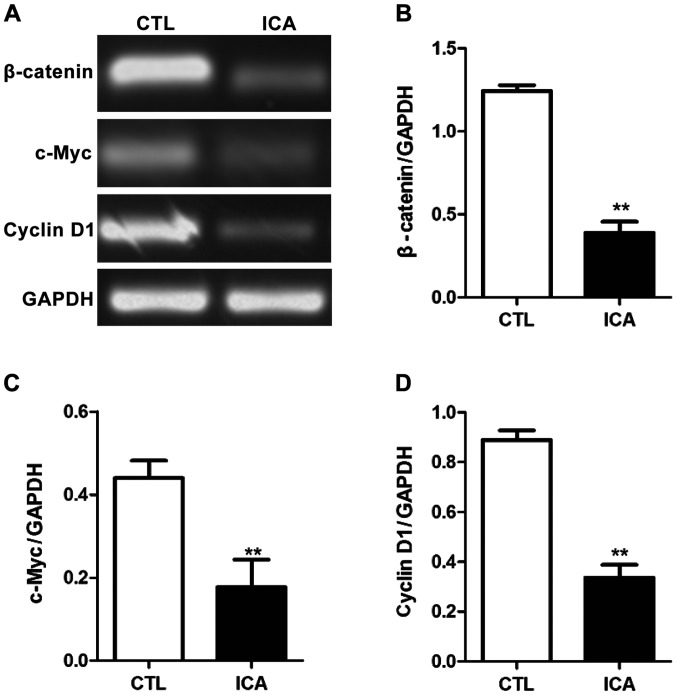
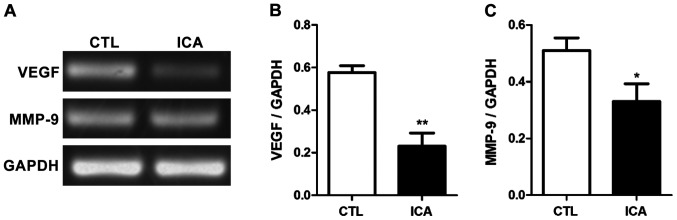
Osteosarcoma, is a kind of malignant tumor derived from malignant interstitial cells. The pathogenesis of osteosarcoma remains unclear and despite use of chemotherapy drugs, resistance to these drugs affects the success of treatment. The present study was conducted to investigate the effects of icariin (ICA) on osteosarcoma cell proliferation and to investigate the role of the Wnt/β-catenin signaling pathway in the inhibition process of ICA on osteosarcoma cell proliferation. Different concentrations of ICA were selected to treat the osteosarcoma cell line 143B for 24 h, and then the onset concentration of ICA when it inhibited the growth of osteosarcoma cancer cell line 143B was detected via an MTT assay. The effect of ICA on the apoptosis of colon cancer cell line 143B under this concentration was detected using a flow cytometer. RNA in osteosarcoma cell line 143B was extracted, followed by reverse transcription. The expression levels of related and apoptotic proteins in the Wnt/β-catenin signaling pathway using ICA were detected by semi-quantitative PCR and western blot analysis, respectively. The expression quantities of vascular endothelial growth factor (VEGF) and MMP-9 were detected by ELISA. MTT assay showed that ICA inhibited the growth of 143B when its concentration was 5 µM (p<0.01). Flow cytometry showed that the number of apoptotic cells after ICA treatment was significantly higher than that in control group (p<0.01). RNA in osteosarcoma cell line 143B was extracted, followed by reverse transcription. Semi-quantitative PCR and western blot analysis revealed that the expression levels of p-GSK3β, β-catenin, c-Myc and cyclin D1 in cells after ICA treatment were significantly downregulated (p<0.01), while the expression level of caspase-3 was significantly increased (p<0.01). ELISA showed that the expression quantities of VEGF and MMP-9 were significantly decreased (p<0.01). Thus, ICA can significantly inhibit osteosarcoma cell proliferation and promote osteosarcoma cell apoptosis, which may be realized by affecting the expression of the Wnt/β-catenin signaling pathway and blocking the expression of related proteins.
骨肉瘤是一种起源于恶性间质细胞的恶性肿瘤。骨肉瘤的发病机制尚不清楚,尽管使用了化疗药物,但对这些药物的耐药性影响了治疗效果。本研究旨在探讨淫羊藿苷(ICA)对骨肉瘤细胞增殖的影响,并研究Wnt/β-连环蛋白信号通路在ICA抑制骨肉瘤细胞增殖过程中的作用。选择不同浓度的ICA处理骨肉瘤细胞系143B 24小时,然后通过MTT法检测ICA抑制骨肉瘤癌细胞系143B生长的起始浓度。使用流式细胞仪检测在此浓度下ICA对结肠癌细胞系143B凋亡的影响。提取骨肉瘤细胞系143B中的RNA,然后进行逆转录。分别通过半定量PCR和蛋白质免疫印迹分析检测使用ICA后Wnt/β-连环蛋白信号通路中相关蛋白和凋亡蛋白的表达水平。通过酶联免疫吸附测定(ELISA)检测血管内皮生长因子(VEGF)和基质金属蛋白酶-9(MMP-9)的表达量。MTT法显示,当ICA浓度为5μM时可抑制143B的生长(p<0.01)。流式细胞术显示,ICA处理后凋亡细胞数量明显高于对照组(p<0.01)。提取骨肉瘤细胞系143B中的RNA,然后进行逆转录。半定量PCR和蛋白质免疫印迹分析显示,ICA处理后细胞中p-GSK3β、β-连环蛋白、c-Myc和细胞周期蛋白D1的表达水平显著下调(p<0.01),而半胱天冬酶-3的表达水平显著升高(p<0.01)。ELISA显示,VEGF和MMP-9的表达量显著降低(p<0.01)。因此,ICA可显著抑制骨肉瘤细胞增殖并促进骨肉瘤细胞凋亡,这可能是通过影响Wnt/β-连环蛋白信号通路的表达并阻断相关蛋白的表达来实现的。