Choudhary Shanti, Li Wenli, Bickhart Derek, Verma Ramneek, Sethi R S, Mukhopadhyay C S, Choudhary Ratan K
1School of Animal Biotechnology, Guru Angad Dev Veterinary and Animal Sciences University, Ludhiana, Punjab 101004 India.
2Cell Wall Biology and Utilization Research, USDA-ARS, Madison, WI 53706 USA.
J Anim Sci Technol. 2018 Jul 13;60:18. doi: 10.1186/s40781-018-0177-5. eCollection 2018.
Xanthosine treatment has been previously reported to increase mammary stem cell population and milk production in cattle and goats. However, the underlying molecular mechanisms associated with the increase in stem cell population and milk production remain unclear.
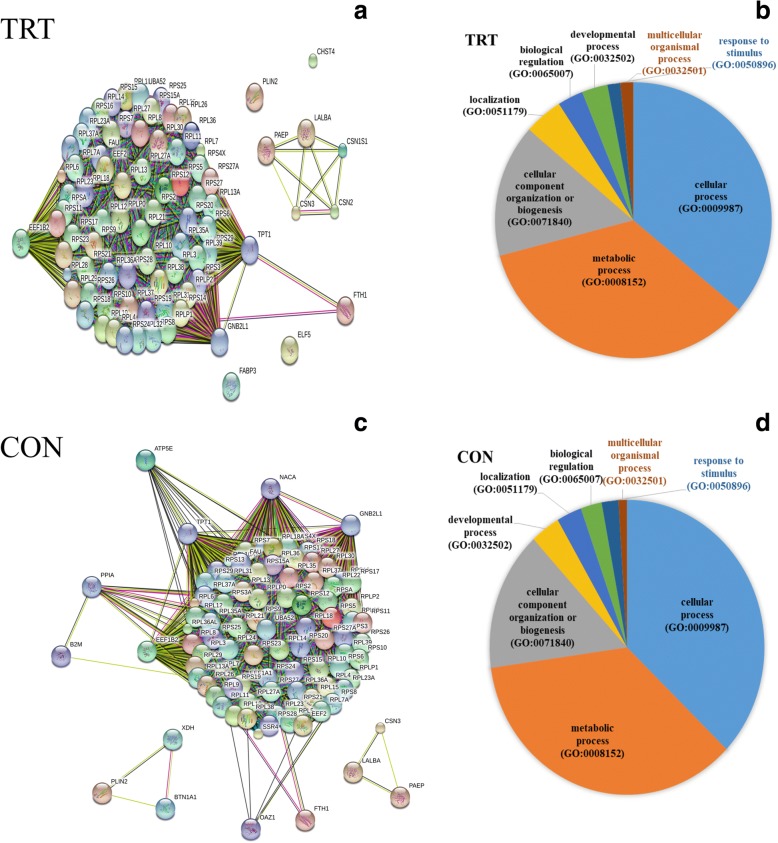
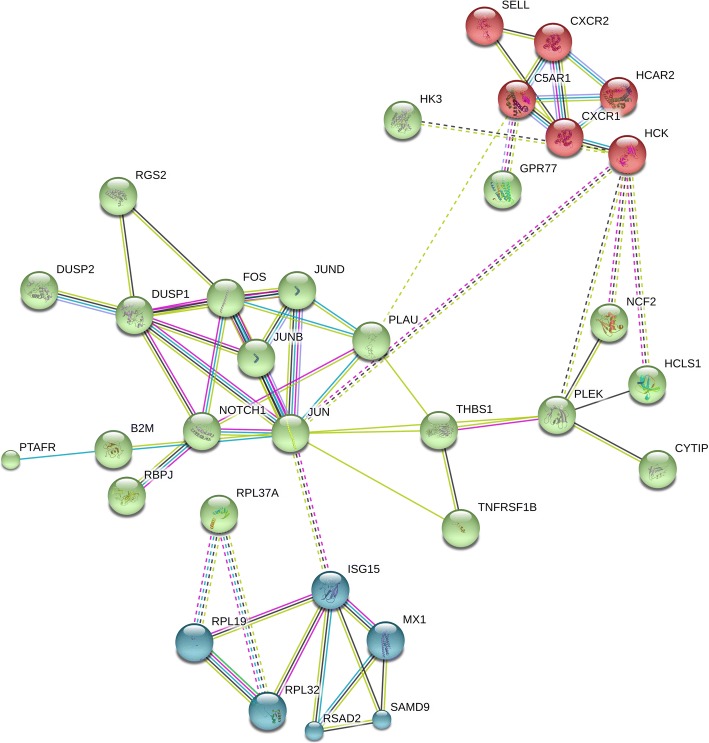
Primiparous Beetal goats were assigned to the study. Five days post-partum, one mammary gland of each goat was infused with xanthosine (TRT) twice daily (2×) for 3 days consecutively, and the other gland served as a control (CON). Milk samples from the TRT and CON glands were collected on the 10th day after the last xanthosine infusion and the total RNA was isolated from milk fat globules (MEGs). Total RNA in MFGs was mainly derived from the milk epithelial cells (MECs) as evidenced by expression of milk synthesis genes. Significant differentially expressed genes (DEGs) were subjected to Gene Ontology (GO) terms using PANTHER and gene networks were generated using STRING db.
Preliminary analysis indicated that each individual goat responded to xanthosine treatment differently, with this trend being correlated with specific DEGs within the same animal's mammary gland. Several pathways are impacted by these DEGs, including cell communication, cell proliferation and anti-microbials.
This study provides valuable insights into transcriptomic changes in milk producing epithelial cells in response to xanthosine treatment. Further characterization of DEGs identified in this study is likely to delineate the molecular mechanisms of increased milk production and stem or progenitor cell population by the xanthosine treatment.
先前有报道称,黄苷处理可增加牛和山羊的乳腺干细胞数量及产奶量。然而,与干细胞数量增加和产奶量增加相关的潜在分子机制仍不清楚。
选择初产的比塔尔山羊进行研究。产后5天,每只山羊的一个乳腺每天两次注入黄苷(TRT),连续3天,另一个乳腺作为对照(CON)。在最后一次注入黄苷后的第10天,收集来自TRT和CON乳腺的乳汁样本,并从乳脂肪球(MEG)中分离总RNA。乳脂肪球中的总RNA主要来源于乳腺上皮细胞(MEC),这可通过乳汁合成基因的表达得到证明。使用PANTHER对显著差异表达基因(DEG)进行基因本体论(GO)分析,并使用STRING数据库生成基因网络。
初步分析表明,每只山羊对黄苷处理的反应不同,这种趋势与同一动物乳腺内的特定DEG相关。这些DEG影响了几个途径,包括细胞通讯、细胞增殖和抗菌。
本研究为产奶上皮细胞对黄苷处理的转录组变化提供了有价值的见解。进一步表征本研究中鉴定的DEG可能会阐明黄苷处理增加产奶量和干细胞或祖细胞数量的分子机制。