Rehberger Kristina, Kropf Christian, Segner Helmut
Centre for Fish and Wildlife Health, Department of Infectious Diseases and Pathobiology, Vetsuisse Faculty, University of Bern, P O Box, 3001 Bern, Switzerland.
Environ Sci Eur. 2018;30(1):23. doi: 10.1186/s12302-018-0151-3. Epub 2018 Jun 26.
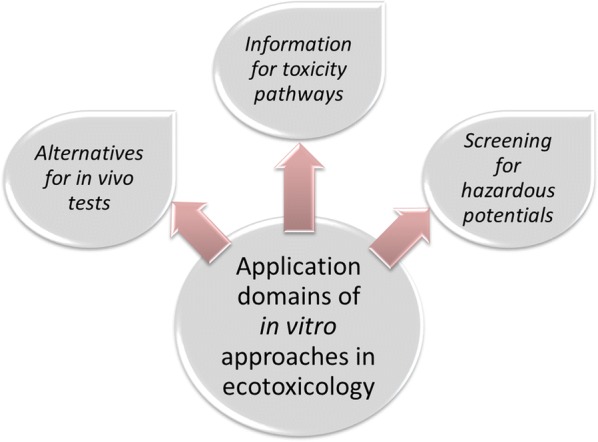
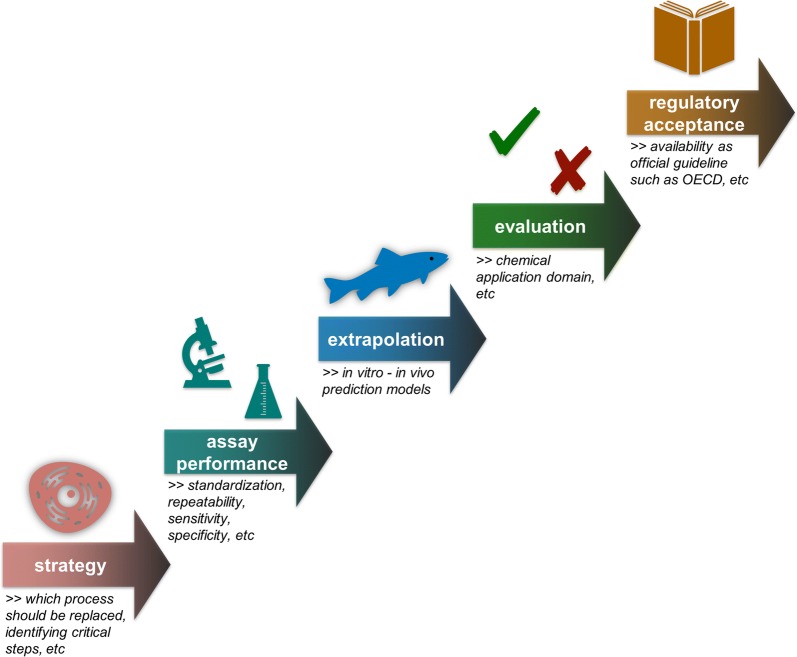
The aim of ecotoxicology is to study toxic effects on constituents of ecosystems, with the protection goal being populations and communities rather than individual organisms. In this ecosystem perspective, the use of in vitro methodologies measuring cellular and subcellular endpoints at a first glance appears to be odd. Nevertheless, more recently in vitro approaches gained momentum in ecotoxicology. In this article, we will discuss important application domains of in vitro methods in ecotoxicology. One area is the use of in vitro assays to replace, reduce, and refine (3R) in vivo tests. Research in this field has focused mainly on the use of in vitro cytotoxicity assays with fish cells as non-animal alternative to the in vivo lethality test with fish and on in vitro biotransformation assays as part of an alternative testing strategy for bioaccumulation testing with fish. Lessons learned from this research include the importance of a critical evaluation of the sensitivity, specificity and exposure conditions of in vitro assays, as well as the availability of appropriate in vitro-in vivo extrapolation models. In addition to this classical 3R application, other application domains of in vitro assays in ecotoxicology include the screening and prioritization of chemical hazards, the categorization of chemicals according to their modes of action and the provision of mechanistic information for the pathway-based prediction of adverse outcomes. The applications discussed in this essay may highlight the potential of in vitro technologies to enhance the environmental hazard assessment of single chemicals and complex mixtures at a reduced need of animal testing.
生态毒理学的目的是研究对生态系统组成部分的毒性影响,其保护目标是种群和群落,而非个体生物。从这个生态系统的角度来看,乍一看使用体外方法来测量细胞和亚细胞水平的终点似乎有些奇怪。然而,最近体外方法在生态毒理学中获得了发展势头。在本文中,我们将讨论体外方法在生态毒理学中的重要应用领域。一个领域是使用体外试验来替代、减少和优化(3R)体内试验。该领域的研究主要集中在使用鱼类细胞的体外细胞毒性试验作为鱼类体内致死性试验的非动物替代方法,以及使用体外生物转化试验作为鱼类生物累积试验替代测试策略的一部分。从这项研究中吸取的经验教训包括对体外试验的敏感性、特异性和暴露条件进行批判性评估的重要性,以及合适的体外-体内外推模型的可用性。除了这种经典的3R应用外,体外试验在生态毒理学中的其他应用领域还包括化学危害的筛选和优先级排序、根据化学物质的作用模式对其进行分类,以及为基于途径的不良后果预测提供机制信息。本文讨论的应用可能突出了体外技术在减少动物试验需求的情况下增强对单一化学物质和复杂混合物的环境危害评估的潜力。