Nikolaev Konstantin G, Ermolenko Yury E, Offenhäusser Andreas, Ermakov Sergey S, Mourzina Yulia G
Institute of Complex Systems ICS-8, Forschungszentrum Jülich GmbH, Jülich, Germany.
JARA-FIT, Jülich, Germany.
Front Chem. 2018 Jun 29;6:256. doi: 10.3389/fchem.2018.00256. eCollection 2018.
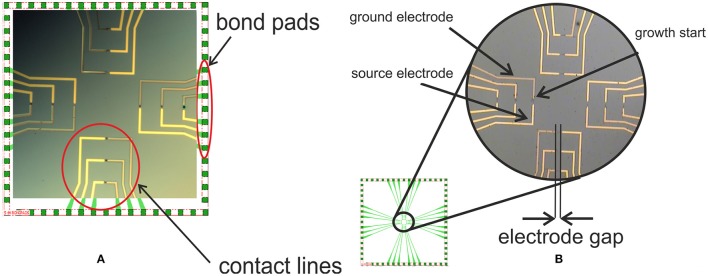
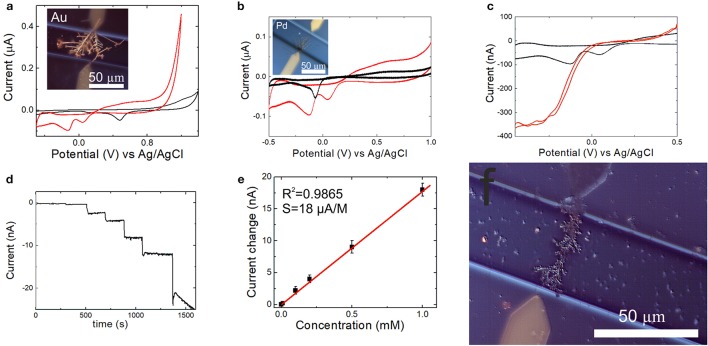
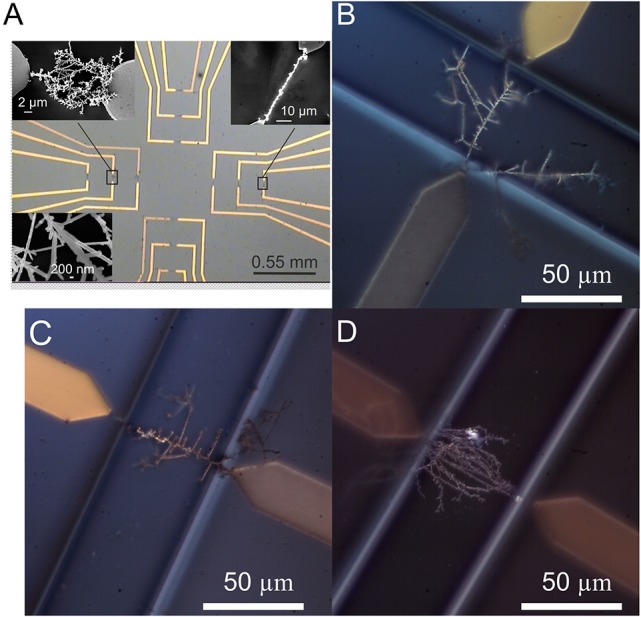
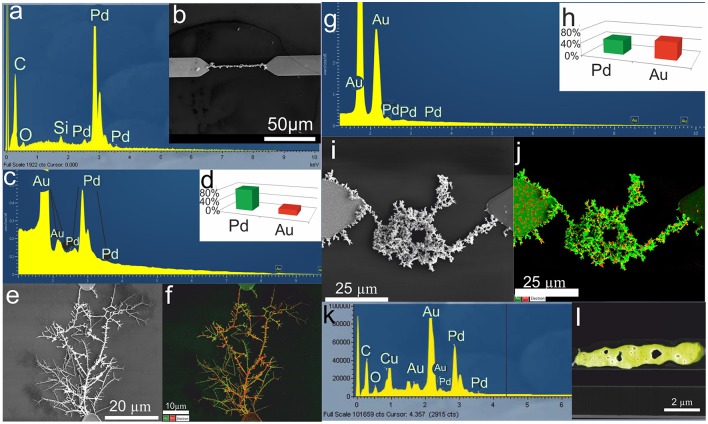
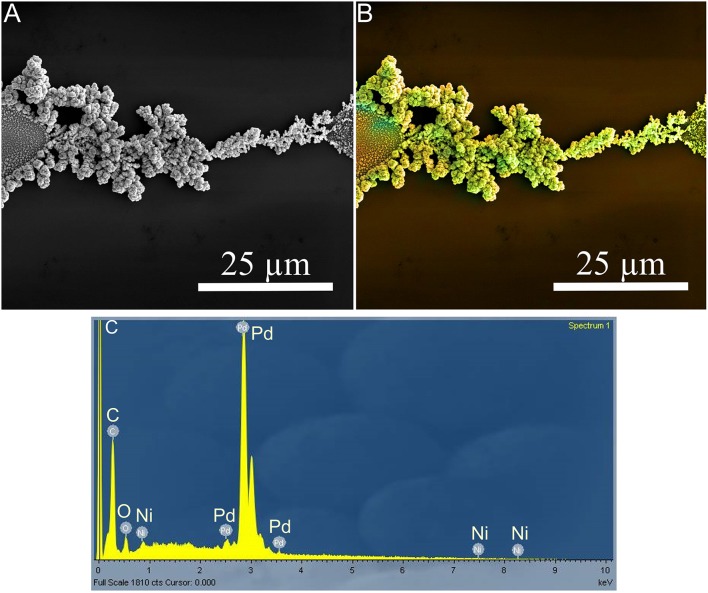
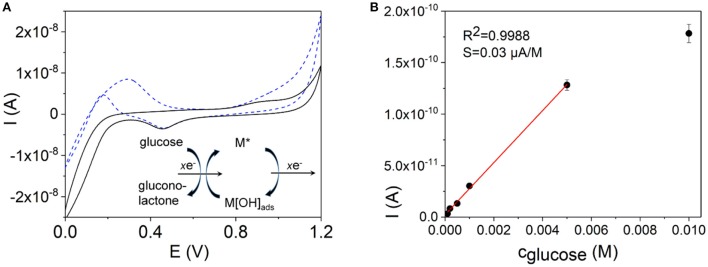
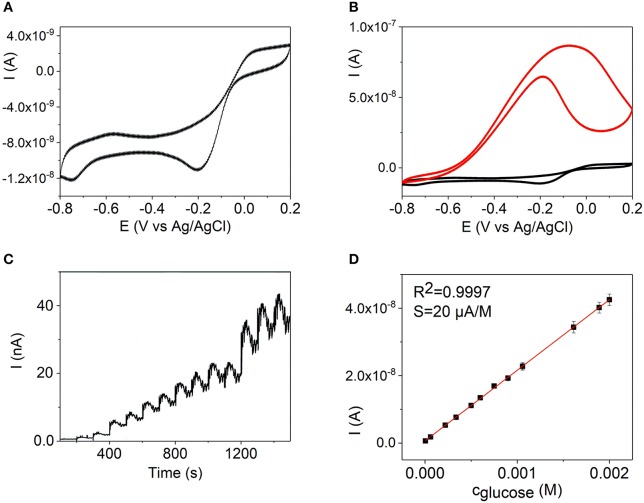
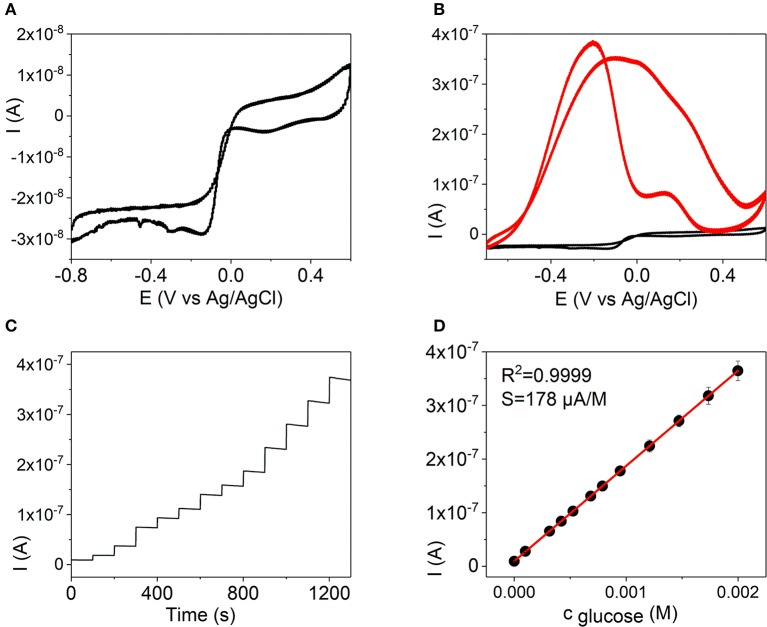
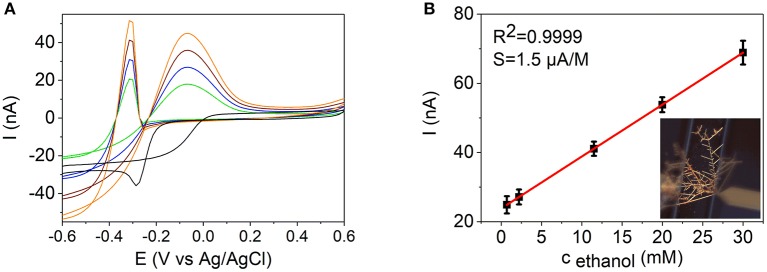
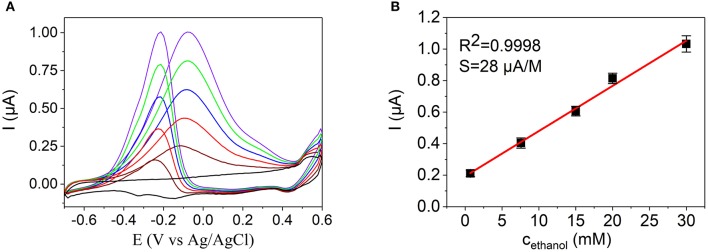
The development of electrochemical multisensor systems is driven by the need for fast, miniature, inexpensive, analytical devices, and advanced interdisciplinary based on both chemometric and (nano)material approaches. A multicomponent analysis of complex mixtures in environmental and technological monitoring, biological samples, and cell culture requires chip-based multisensor systems with high-stability sensors. In this paper, we describe the development, characterization, and applications of chip-based nanoelectrochemical sensor arrays prepared by the directed electrochemical nanowire assembly (DENA) of noble metals and metal alloys to analyze aqueous solutions. A synergic action of the electrode transducer function and electrocatalytic activity of the nanostructured surface toward analytes is achieved in the assembled metal nanowire (NW) sensors. Various sensor nanomaterials (Pd, Ni, Au, and their multicomponent compositions) can be electrochemically assembled on a single chip without employing multiple cycles of photolithography process to realize multi-analyte sensing applications as well as spatial resolution of sensor analysis by this single-chip multisensor system. For multi-analyte electrochemical sensing, individual amperometric signals of two or more nanowires can be acquired, making use of the specific electrocatalytic surface properties of the individual nanowire sensors of the array toward analytes. To demonstrate the application of a new electrochemical multisensor platform, Pd-Au, Pd-Ni, Pd, and Au NW electrode arrays on a single chip were employed for the non-enzymatic analysis of hydrogen peroxide, glucose, and ethanol. The analytes are determined at low absolute values of the detection potentials with linear concentration ranges of 1.0 × 10 - 1.0 × 10 M (HO), 1.5 × 10 - 2.0 × 10 M (glucose), and 0.7 × 10 - 3.0 × 10 M (ethanol), detection limits of 2 × 10 M (HO), 4 × 10 M (glucose), and 5.2 × 10 M (ethanol), and sensitivities of 18 μA M (HO), 178 μA M (glucose), and 28 μA M (ethanol), respectively. The sensors demonstrate a high level of stability due to the non-enzymatic detection mode. Based on the DENA-assembled nanowire electrodes of a compositional diversity, we propose a novel single-chip electrochemical multisensor platform, which is promising for acquiring complex analytical signals for advanced data processing with chemometric techniques aimed at the development of electronic tongue-type multisensor systems for flexible multi-analyte monitoring and healthcare applications.
电化学多传感器系统的发展是由对快速、微型、廉价的分析设备以及基于化学计量学和(纳米)材料方法的先进跨学科技术的需求所驱动的。在环境和技术监测、生物样品及细胞培养中对复杂混合物进行多组分分析,需要具有高稳定性传感器的基于芯片的多传感器系统。在本文中,我们描述了通过贵金属和金属合金的定向电化学纳米线组装(DENA)制备的基于芯片的纳米电化学传感器阵列的开发、表征及应用,用于分析水溶液。在组装的金属纳米线(NW)传感器中,实现了电极换能器功能与纳米结构表面对分析物的电催化活性的协同作用。各种传感器纳米材料(钯、镍、金及其多组分组合物)可在不采用多个光刻工艺循环的情况下电化学组装在单个芯片上,以通过该单芯片多传感器系统实现多分析物传感应用以及传感器分析的空间分辨率。对于多分析物电化学传感,利用阵列中各个纳米线传感器对分析物的特定电催化表面特性,可以获取两根或更多纳米线的单个安培信号。为了展示一种新型电化学多传感器平台的应用,在单个芯片上的钯 - 金、钯 - 镍、钯和金纳米线电极阵列被用于过氧化氢、葡萄糖和乙醇的非酶分析。分析物在低检测电位绝对值下测定,过氧化氢的线性浓度范围为1.0×10⁻⁶ - 1.0×10⁻³ M,葡萄糖为1.5×10⁻⁶ - 2.0×10⁻³ M,乙醇为0.7×10⁻⁶ - 3.0×10⁻³ M;检测限分别为2×10⁻⁷ M(过氧化氢)、4×10⁻⁷ M(葡萄糖)和5.2×10⁻⁷ M(乙醇);灵敏度分别为18 μA mM⁻¹(过氧化氢)、178 μA mM⁻¹(葡萄糖)和28 μA mM⁻¹(乙醇)。由于采用非酶检测模式,这些传感器表现出高水平的稳定性。基于具有成分多样性的DENA组装纳米线电极,我们提出了一种新型单芯片电化学多传感器平台,该平台有望获取复杂分析信号,用于采用化学计量学技术进行高级数据处理,旨在开发用于灵活多分析物监测和医疗保健应用的电子舌型多传感器系统。