Ben-Porat T, DeMarchi J, Pendrys J, Veach R A, Kaplan A S
J Virol. 1986 Jan;57(1):191-6. doi: 10.1128/JVI.57.1.191-196.1986.
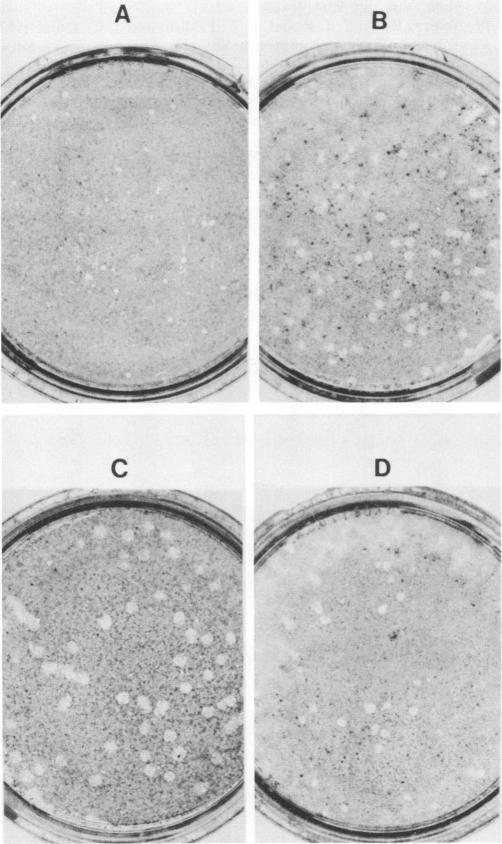
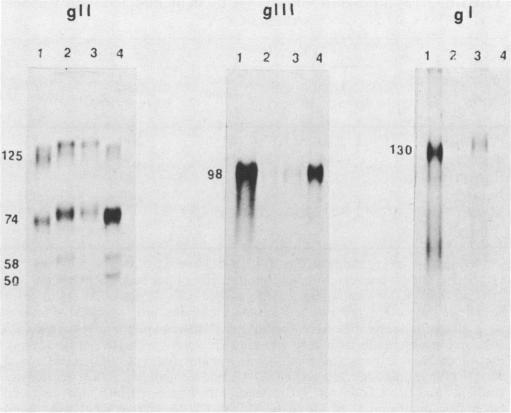
Two pseudorabies virus vaccine strains (Bartha and Norden) that have a similar deletion in the short unique (Us) region of the genome have been identified previously (B. Lomniczi, M. L. Blankenship, and T. Ben-Porat, J. Virol. 49:970-979, 1984). These strains do not code for the glycoprotein gI, a glycoprotein that has been mapped on the wild type virus genome by T. C. Mettenleiter, N. Lukacs, and H. J. Rziha (J. Virol. 53:52-57, 1985) to the sequences deleted from the vaccine strain. Restoration of these deleted sequences to the Bartha strain genome restores to the virus the ability to specify the gI glycoprotein. The Bartha vaccine strain grows as well as wild-type virus in pig kidney and in rabbit kidney (RK) cells, but is not released efficiently from and forms small plaques in RK cells. The rescued Bartha 43/25a strain (which has an intact Us) is released considerably more efficiently than the Bartha vaccine strain, but less efficiently than wild-type virus from RK cells; it also forms larger plaques on RK cells than does the parental Bartha vaccine strain. The Norden vaccine strain, which has a deletion in the Us, is released better from RK cells than is the Bartha strain, but not as well as is wild-type virus. We conclude that whereas the sequences in the Us that are deleted from the Bartha and Norden strain genomes specify functions that play a role in the release of virions from some cell types, at least one other function (which is defective in the Bartha strain but not in the Norden strain) also affects release of virus from these cells. Since restoration to the Bartha strain of an intact Us restores to the virus both the ability to grow in chicken brains (B. Lomniczi, S. Watanabe, T. Ben-Porat, and A. S. Kaplan, J. Virol. 52:198-205, 1984) and to be released from RK cells, the possibility that the lack of virulence of the Bartha vaccine strain may be related to its limited release from some target cells is discussed.
之前已鉴定出两种伪狂犬病病毒疫苗株(Bartha株和Norden株),它们在基因组的短独特(Us)区域有类似的缺失(B. Lomniczi、M. L. Blankenship和T. Ben-Porat,《病毒学杂志》49:970 - 979,1984年)。这些毒株不编码糖蛋白gI,T. C. Mettenleiter、N. Lukacs和H. J. Rziha(《病毒学杂志》53:52 - 57,1985年)已将该糖蛋白定位到野生型病毒基因组中从疫苗株中缺失的序列上。将这些缺失序列恢复到Bartha株基因组可使病毒恢复产生gI糖蛋白的能力。Bartha疫苗株在猪肾细胞和兔肾(RK)细胞中的生长情况与野生型病毒相同,但在RK细胞中不能有效释放且形成小斑块。拯救后的Bartha 43/25a株(其Us区域完整)从RK细胞中的释放效率比Bartha疫苗株高得多,但比野生型病毒低;它在RK细胞上形成的斑块也比亲本Bartha疫苗株大。Norden疫苗株的Us区域有缺失,其从RK细胞中的释放情况比Bartha株好,但不如野生型病毒。我们得出结论,虽然从Bartha株和Norden株基因组中缺失的Us区域序列所指定的功能在病毒粒子从某些细胞类型中释放过程中起作用,但至少还有一种其他功能(在Bartha株中有缺陷但在Norden株中没有)也会影响病毒从这些细胞中的释放。由于将完整的Us区域恢复到Bartha株可使病毒恢复在鸡脑中生长的能力(B. Lomniczi、S. Watanabe、T. Ben-Porat和A. S. Kaplan,《病毒学杂志》52:198 - 205,1984年)以及从RK细胞中释放的能力,因此讨论了Bartha疫苗株毒力缺乏可能与其从某些靶细胞中释放受限有关的可能性。