1Winterthur Institute of Health Economics,Zurich University of Applied Sciences,Winterthur,Switzerland.
2Institute of Food,Nutrition and Health,Swiss Federal Institute of Technology Zurich,Zurich,Switzerland.
Public Health Nutr. 2018 Oct;21(15):2893-2906. doi: 10.1017/S1368980018001660. Epub 2018 Jul 18.
To estimate the cost-effectiveness of price subsidies on fortified packaged complementary foods (FPCF) in reducing iodine deficiency, iron-deficiency anaemia and vitamin A deficiency in Pakistani children.
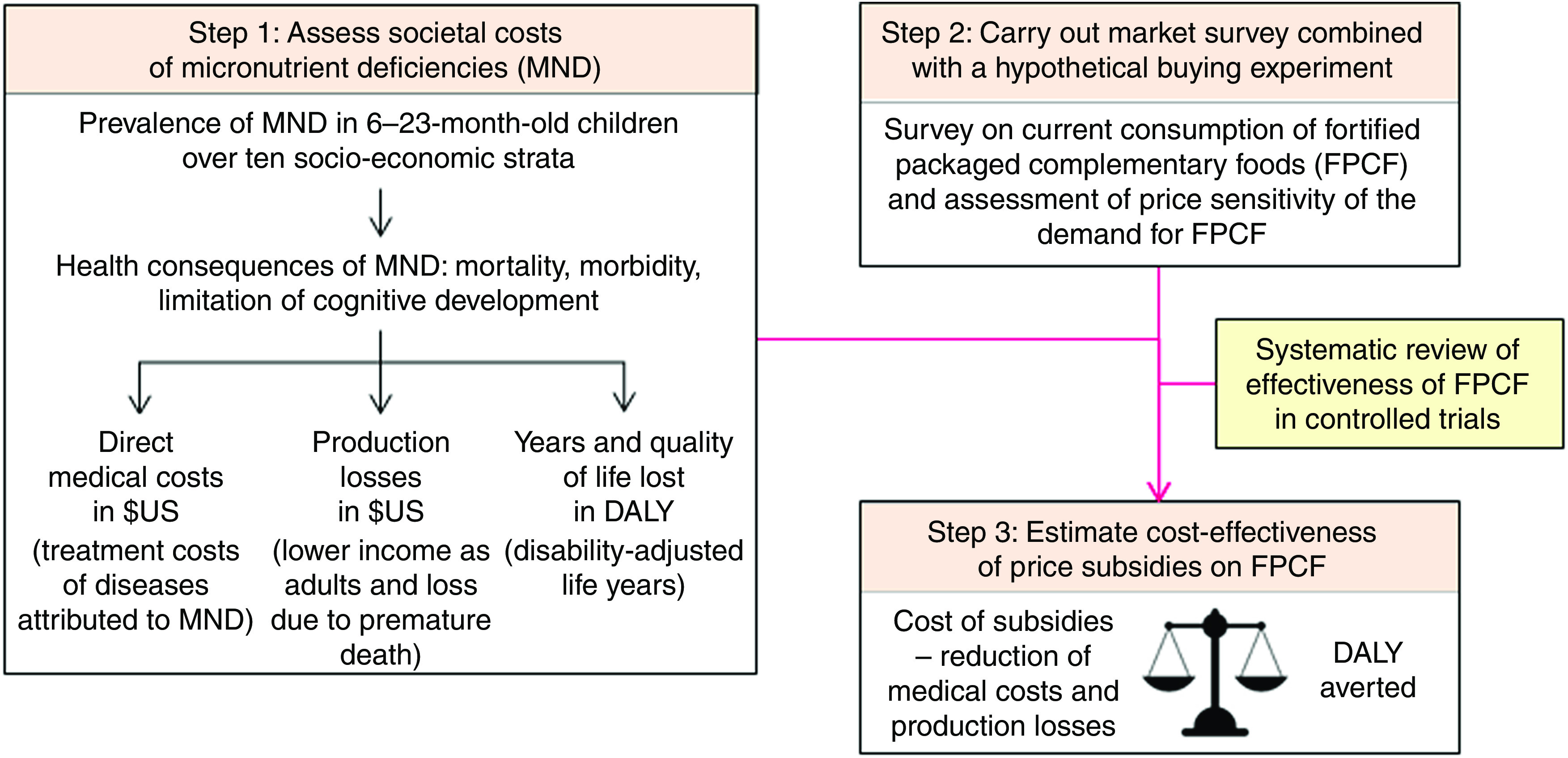
The study proceeded in three steps: (i) we determined the current lifetime costs of the three micronutrient deficiencies with a health economic model; (ii) we assessed the price sensitivity of demand for FPCF with a market survey in two Pakistani districts; (iii) we combined the findings of the first two steps with the results of a systematic review on the effectiveness of FPCF in reducing micronutrient deficiencies. The cost-effectiveness was estimated by comparing the net social cost of price subsidies with the disability-adjusted life years (DALY) averted.
Districts of Faisalabad and Hyderabad in Pakistan.
Households with 6-23-month-old children stratified by socio-economic strata.
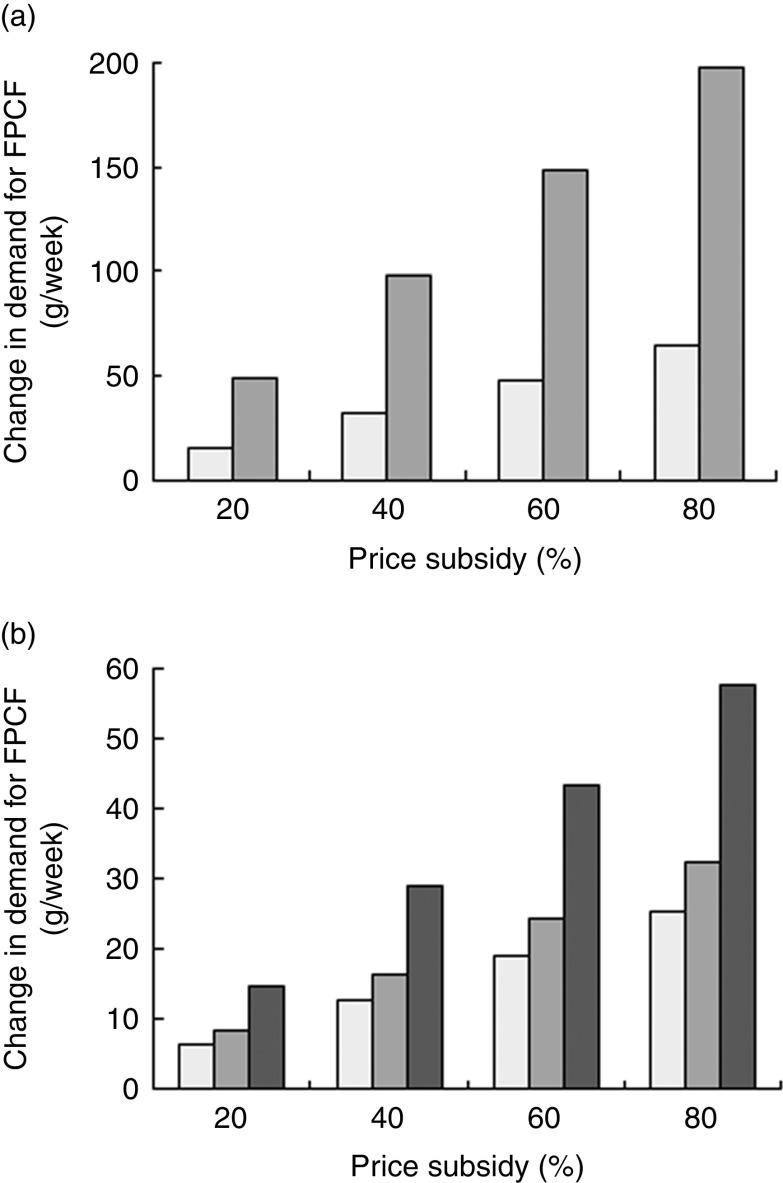
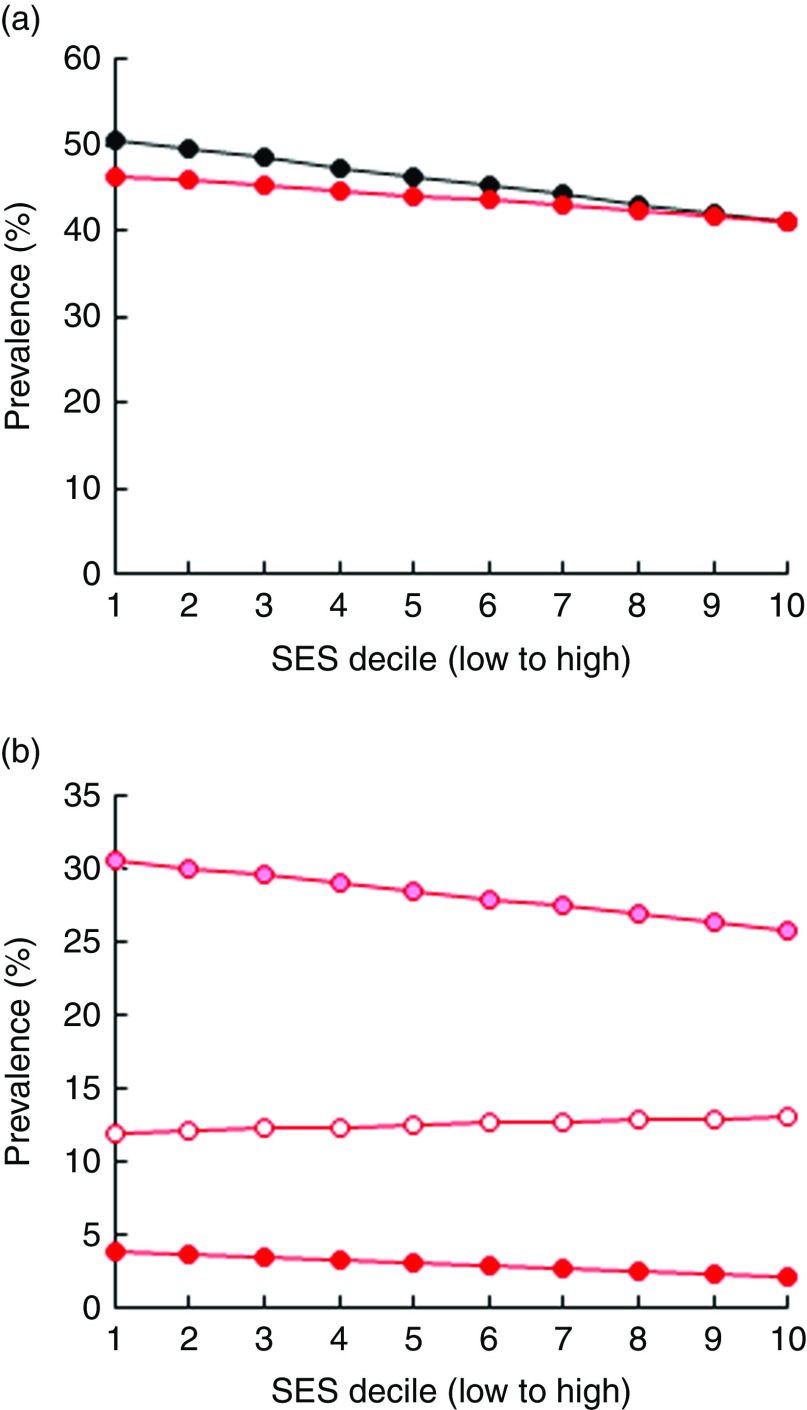
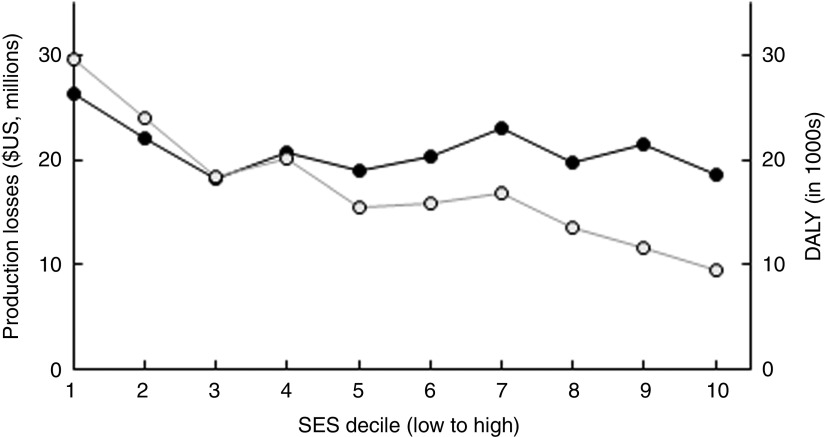
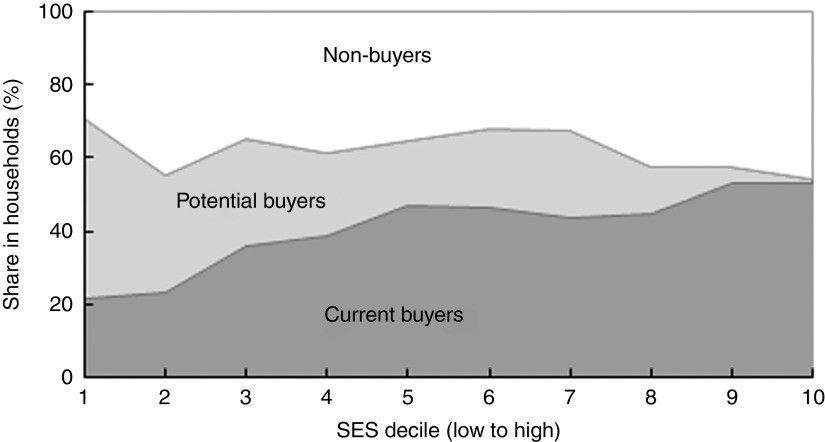
The lifetime social costs of iodine deficiency, iron-deficiency anaemia and vitamin A deficiency in 6-23-month-old children amounted to production losses of $US 209 million and 175 000 DALY. Poor households incurred the highest costs, yet even wealthier households suffered substantial losses. Wealthier households were more likely to buy FPCF. The net cost per DALY of the interventions ranged from a return per DALY averted of $US 783 to $US 65. Interventions targeted at poorer households were most cost-effective.
Price subsidies on FPCF might be a cost-effective way to reduce the societal costs of micronutrient deficiencies in 6-23-month-old children in Pakistan. Interventions targeting poorer households are especially cost-effective.
评估强化包装补充食品(FPCF)价格补贴在减少巴基斯坦儿童碘缺乏、缺铁性贫血和维生素 A 缺乏方面的成本效益。
该研究分三步进行:(i)我们使用健康经济模型确定了三种微量营养素缺乏症的当前终身成本;(ii)我们在巴基斯坦的两个地区进行了市场调查,评估了 FPCF 的价格敏感性需求;(iii)我们将前两步的发现与 FPCF 减少微量营养素缺乏有效性的系统评价结果相结合。通过比较价格补贴的净社会成本与避免的残疾调整生命年(DALY),来评估成本效益。
巴基斯坦费萨拉巴德和海得拉巴德地区。
按社会经济阶层分层的 6-23 个月大儿童的家庭。
6-23 个月大儿童碘缺乏、缺铁性贫血和维生素 A 缺乏的终身社会成本为 2.09 亿美元的生产损失和 17.5 万 DALY。贫困家庭承担的成本最高,但即使是富裕家庭也遭受了巨大的损失。富裕家庭更有可能购买 FPCF。干预措施的每 DALY 净成本从每避免一个 DALY 的回报 783 美元到 65 美元不等。针对贫困家庭的干预措施最具成本效益。
FPCF 的价格补贴可能是减少巴基斯坦 6-23 个月大儿童微量营养素缺乏症社会成本的一种具有成本效益的方法。针对贫困家庭的干预措施特别具有成本效益。