Department of Neurology, Beth Israel-Deaconess Medical Center, Harvard Medical School, Blackfan Circle, Boston, MA 02215, USA; Department of Physiology and Biophysics, Federal University of Minas Gerais, Antonio Carlos Avenue, Belo Horizonte 31270-901, Brazil.
Department of Neurology, Beth Israel-Deaconess Medical Center, Harvard Medical School, Blackfan Circle, Boston, MA 02215, USA; Department of Pharmacology, University of Virginia, Jefferson Park Avenue, Charlottesville, VA 22908, USA.
Curr Biol. 2018 Jul 23;28(14):2291-2301.e5. doi: 10.1016/j.cub.2018.05.064. Epub 2018 Jul 12.
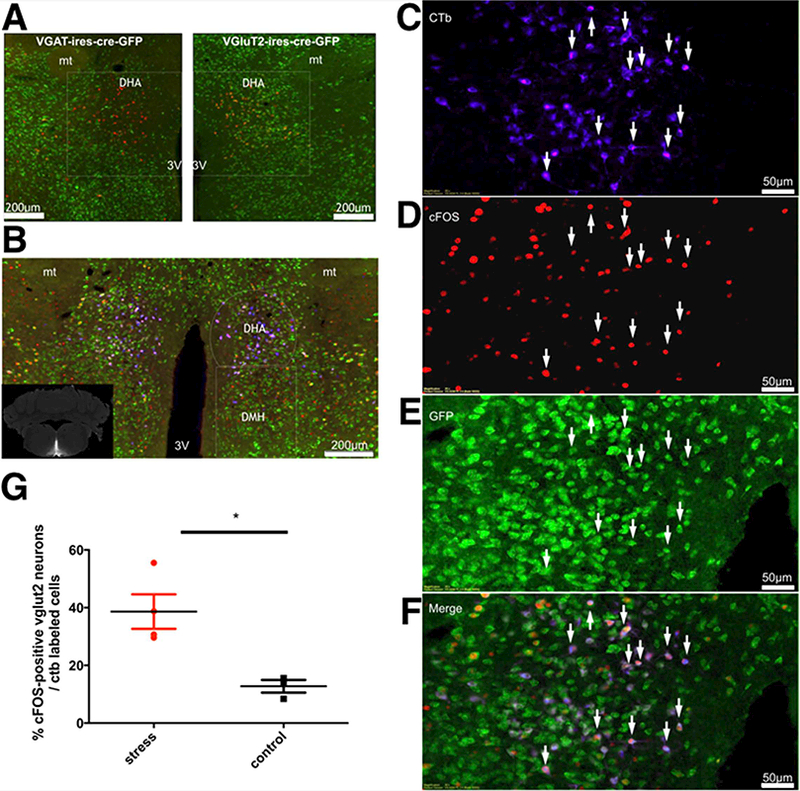
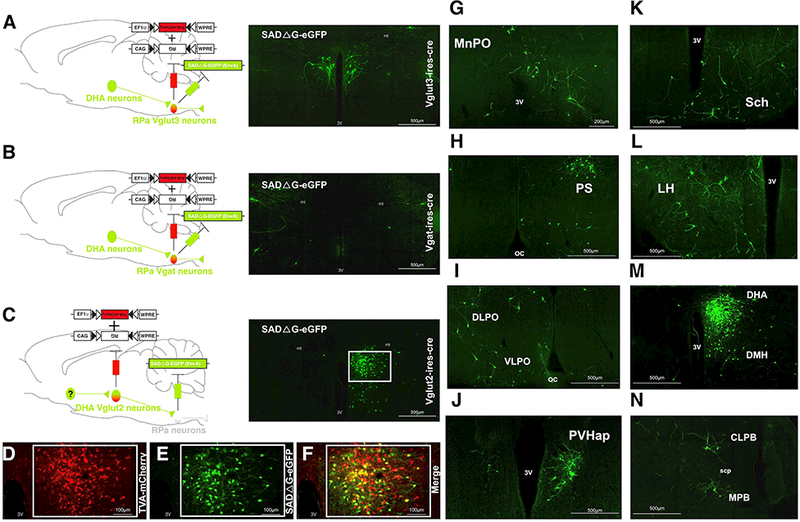
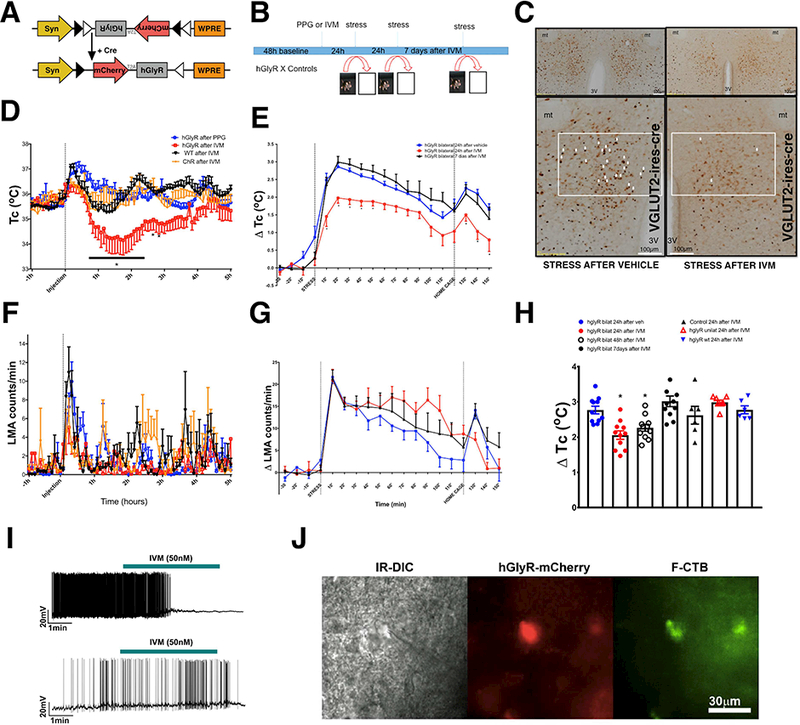
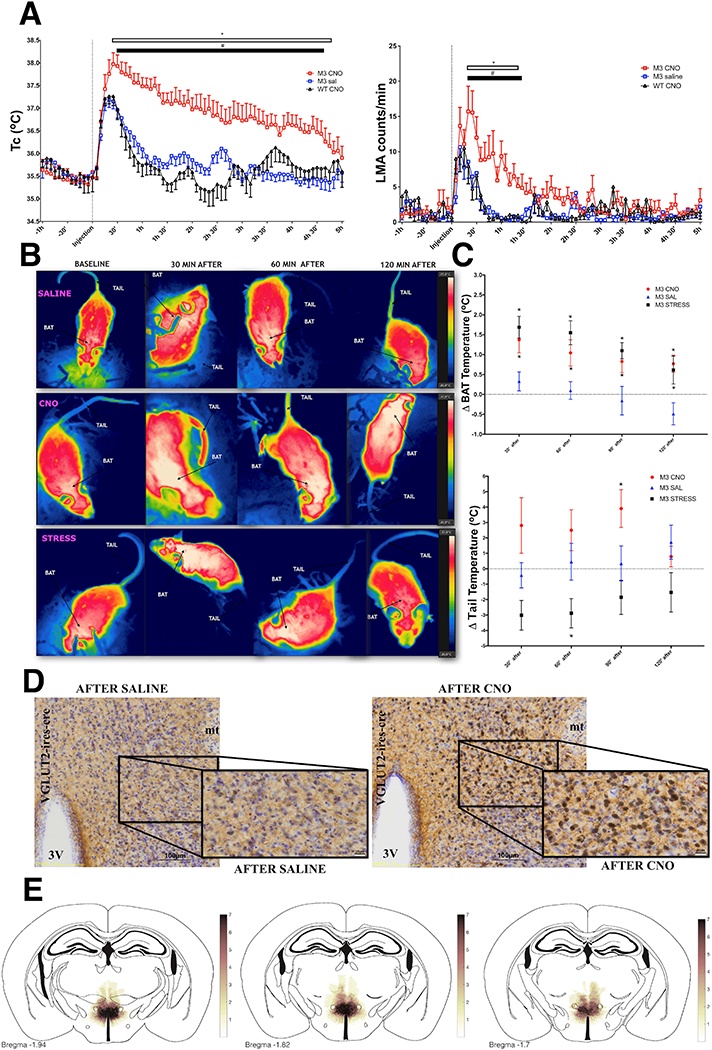
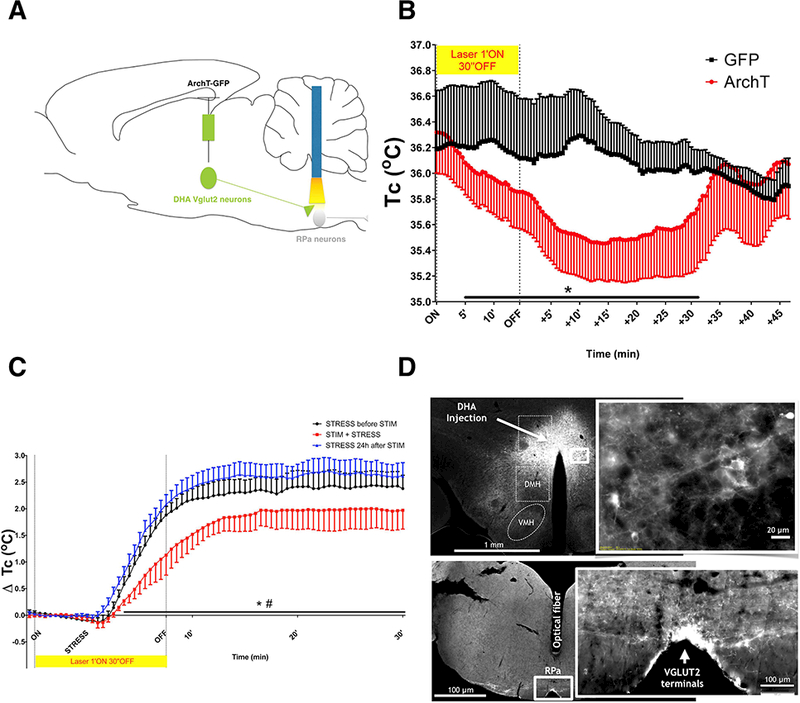
Stress elicits a variety of autonomic responses, including hyperthermia (stress fever) in humans and animals. In this present study, we investigated the circuit basis for thermogenesis and heat conservation during this response. We first demonstrated the glutamatergic identity of the dorsal hypothalamic area (DHA) neurons that innervate the raphe pallidus nucleus (RPa) to regulate core temperature (Tc) and mediate stress-induced hyperthermia. Then, using chemogenetic and optogenetic methods to manipulate this hypothalamomedullary circuit, we found that activation of DHA neurons potently drove an increase in Tc, but surprisingly, stress-induced hyperthermia was only reduced by about one-third when they were inhibited. Further investigation showed that DHA neurons activate brown adipose tissue (BAT) but do not cause vasoconstriction, instead allowing reflex tail artery vasodilation as a response to BAT-induced hyperthermia. Retrograde rabies virus tracing revealed projections from DHA neurons to RPa, but not to RPa neurons, and identified a set of inputs to DHA → RPa neurons that are likely to mediate BAT activation. The dissociation of the DHA thermogenic pathway from the thermoregulatory vasoconstriction (heat-conserving) pathway may explain stress flushing (skin vasodilation but a feeling of being too hot) during stressful times.
应激会引起各种自主反应,包括人类和动物的体温升高(应激性发热)。在本研究中,我们研究了在这种反应期间产热和热量保存的回路基础。我们首先证明了支配中缝苍白核(RPa)以调节核心温度(Tc)并介导应激性发热的背侧下丘脑区域(DHA)神经元的谷氨酸能特性。然后,使用化学遗传和光遗传方法来操纵这个下丘脑-延髓回路,我们发现激活 DHA 神经元可强力驱动 Tc 的增加,但令人惊讶的是,当它们被抑制时,应激性发热仅减少约三分之一。进一步的研究表明,DHA 神经元激活棕色脂肪组织(BAT),但不会引起血管收缩,而是允许反射尾动脉扩张作为对 BAT 诱导的发热的反应。逆行狂犬病毒追踪显示 DHA 神经元投射到 RPa,但不投射到 RPa 神经元,并鉴定出一组可能介导 BAT 激活的 DHA→RPa 神经元输入。DHA 产热途径与体温调节性血管收缩(热量保存)途径的分离可能解释了在应激期间出现的应激性脸红(皮肤血管扩张但感觉过热)。