Stubbe Janine H, Richardson Angelo, van Rijn Rogier M
Codarts, University of the Arts, Rotterdam, The Netherlands.
Performing Artist and Athlete Research Lab (PEARL), Rotterdam, The Netherlands.
BMJ Open Sport Exerc Med. 2018 Jun 26;4(1):e000327. doi: 10.1136/bmjsem-2017-000327. eCollection 2018.
The amount of injuries, illnesses and mental health problems was calculated among circus arts students, using a method designed to capture more than just time-loss and/or medical injuries. Furthermore, injury incidence rate, injury incidence proportions, anatomical injury location and severity of injuries were assessed.
A total of 44 first-year, second-year and third-year circus arts students were prospectively followed during one academic year. Every month, all students were asked to complete questionnaires by using the online Performing Artist and Athlete Health Monitor, which includes the Oslo Sports Trauma Research Centre Questionnaire on Health Problems.
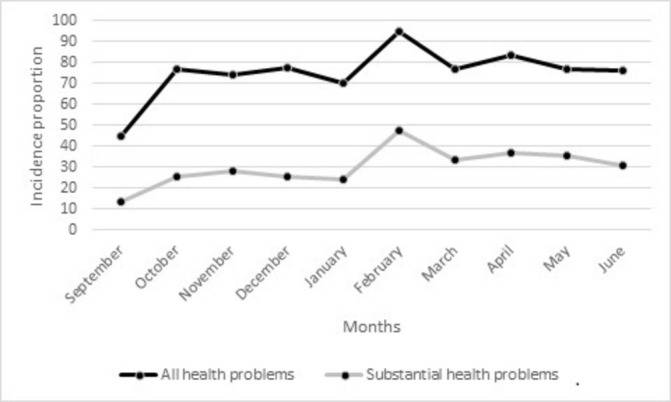
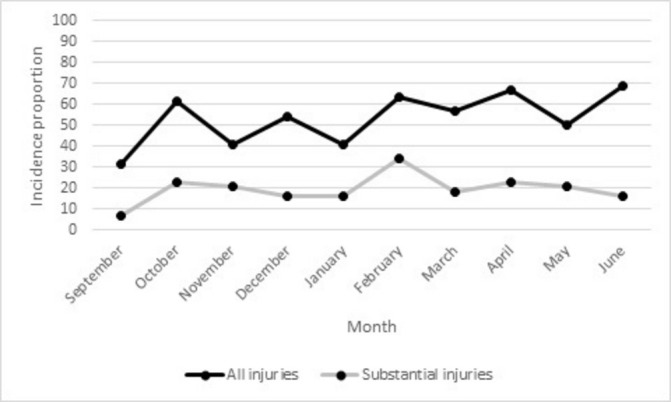
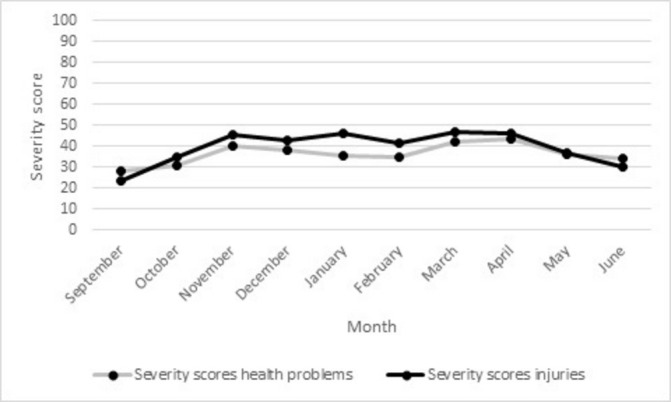
In total, 41 students completed the entire follow-up period. The response rate was 82.9%. During the academic year, all (100%) students reported a health problem. A total of 261 health problems were reported consisting of 184 injuries (70.5%), 51 illnesses (19.5%), 15 mental problems (5.0%) and 11 other health problems (3.1%). The injury incidence rate was 3.3 injuries per 1000 hours (95% CI 2.7 to 3.9). Monthly incidence proportion for substantial injuries (ie, problems leading to moderate or severe reductions in training volume or in performance or complete inability to participate in activities) ranged from 6.8% to 34.1%. Shoulder (n=51; 27.7%), lower back (n=29; 15.8%), wrist (n=26; 14.1%) and ankle (n=17; 9.2%) were the most reported injuries. The average duration of the injuries was 6.9 days (median=2.0; SD=15.0).
We implemented a new registration method for circus artists, which captures a complete picture of the burden of health problems in circus students. Our study showed that the burden of injuries is high in this population.
采用一种旨在不仅捕捉误工和/或工伤的方法,计算马戏艺术专业学生的受伤、患病及心理健康问题数量。此外,还评估了损伤发生率、损伤发生率比例、解剖学损伤部位及损伤严重程度。
在一个学年内对44名一年级、二年级和三年级的马戏艺术专业学生进行前瞻性跟踪研究。每月,要求所有学生通过在线表演艺术家和运动员健康监测器填写问卷,该监测器包括奥斯陆体育创伤研究中心关于健康问题的问卷。
共有41名学生完成了整个随访期。应答率为82.9%。在该学年,所有(100%)学生均报告有健康问题。共报告了261个健康问题,其中包括184起损伤(70.5%)、51起疾病(19.5%)、15起心理问题(5.0%)和11起其他健康问题(3.1%)。损伤发生率为每1000小时3.3起损伤(95%置信区间2.7至3.9)。严重损伤(即导致训练量或表现中度或严重下降或完全无法参加活动的问题)的月度发生率比例在6.8%至34.1%之间。肩部(n = 51;27.7%)、下背部(n = 29;15.8%)、腕部(n = 26;14.1%)和踝部(n = 17;9.2%)是报告最多的损伤部位。损伤的平均持续时间为6.9天(中位数 = 2.0;标准差 = 15.0)。
我们为马戏艺术家实施了一种新的登记方法,该方法全面反映了马戏专业学生的健康问题负担。我们的研究表明,该人群的损伤负担较高。