Ashraf Muhammad Aqeel, Peng Wanxi, Zare Yasser, Rhee Kyong Yop
School of Forestry, Henan Agricultural University, Zhengzhou, 450002, China.
Faculty of Science, Department of Geology, University of Malaya, 50603, Kuala Lumpur, Malaysia.
Nanoscale Res Lett. 2018 Jul 17;13(1):214. doi: 10.1186/s11671-018-2624-0.
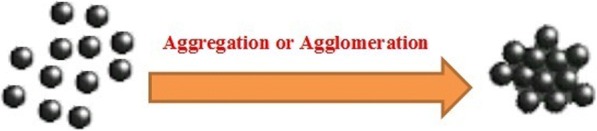
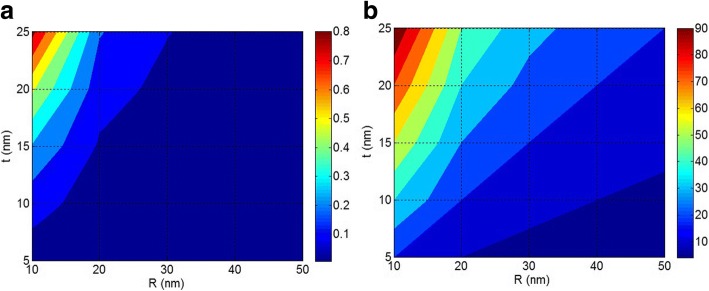
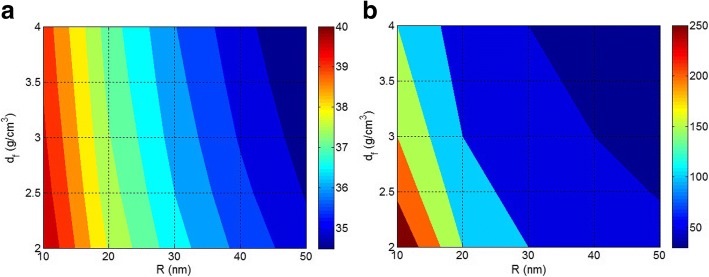
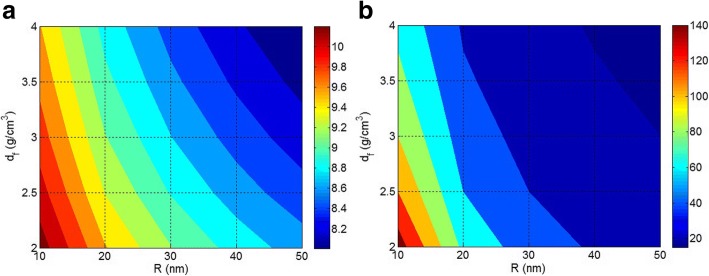
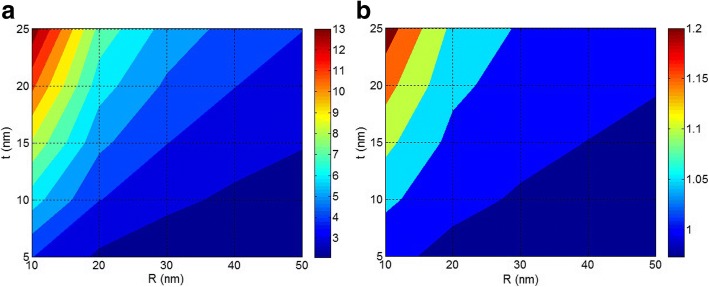
In this study, several simple equations are suggested to investigate the effects of size and density on the number, surface area, stiffening efficiency, and specific surface area of nanoparticles in polymer nanocomposites. In addition, the roles of nanoparticle size and interphase thickness in the interfacial/interphase properties and tensile strength of nanocomposites are explained by various equations. The aggregates/agglomerates of nanoparticles are also assumed as large particles in nanocomposites, and their influences on the nanoparticle characteristics, interface/interphase properties, and tensile strength are discussed. The small size advantageously affects the number, surface area, stiffening efficiency, and specific surface area of nanoparticles. Only 2 g of isolated and well-dispersed nanoparticles with radius of 10 nm (R = 10 nm) and density of 2 g/cm produce the significant interfacial area of 250 m with polymer matrix. Moreover, only a thick interphase cannot produce high interfacial/interphase parameters and significant mechanical properties in nanocomposites because the filler size and aggregates/agglomerates also control these terms. It is found that a thick interphase (t = 25 nm) surrounding the big nanoparticles (R = 50 nm) only improves the B interphase parameter to about 4, while B = 13 is obtained by the smallest nanoparticles and the thickest interphase.
在本研究中,提出了几个简单的方程式来研究尺寸和密度对聚合物纳米复合材料中纳米颗粒的数量、表面积、增强效率和比表面积的影响。此外,通过各种方程式解释了纳米颗粒尺寸和界面相厚度在纳米复合材料的界面/界面相性能和拉伸强度中的作用。纳米颗粒的聚集体/团聚体在纳米复合材料中也被视为大颗粒,并讨论了它们对纳米颗粒特性、界面/界面相性能和拉伸强度的影响。小尺寸对纳米颗粒的数量、表面积、增强效率和比表面积有有利影响。仅2克半径为10纳米(R = 10纳米)、密度为2克/立方厘米的分离且分散良好的纳米颗粒就能与聚合物基体产生250平方米的显著界面面积。此外,仅靠厚的界面相并不能在纳米复合材料中产生高的界面/界面相参数和显著的机械性能,因为填料尺寸和聚集体/团聚体也控制着这些因素。研究发现,围绕大纳米颗粒(R = 50纳米)的厚界面相(t = 25纳米)仅将B界面相参数提高到约4,而最小的纳米颗粒和最厚的界面相可得到B = 13。