Stiefel Constanze, Schubert Tina, Morlock Gertrud E
Chair of Food Science, Institute of Nutritional Science, and Interdisciplinary Research Center (IFZ), Justus Liebig University Giessen, Heinrich-Buff-Ring 26-32, 35392 Giessen, Germany.
ACS Omega. 2017 Aug 31;2(8):5242-5250. doi: 10.1021/acsomega.7b00562.
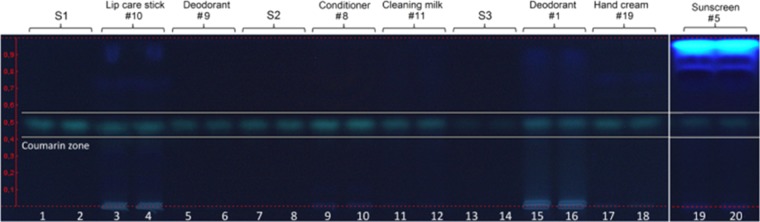
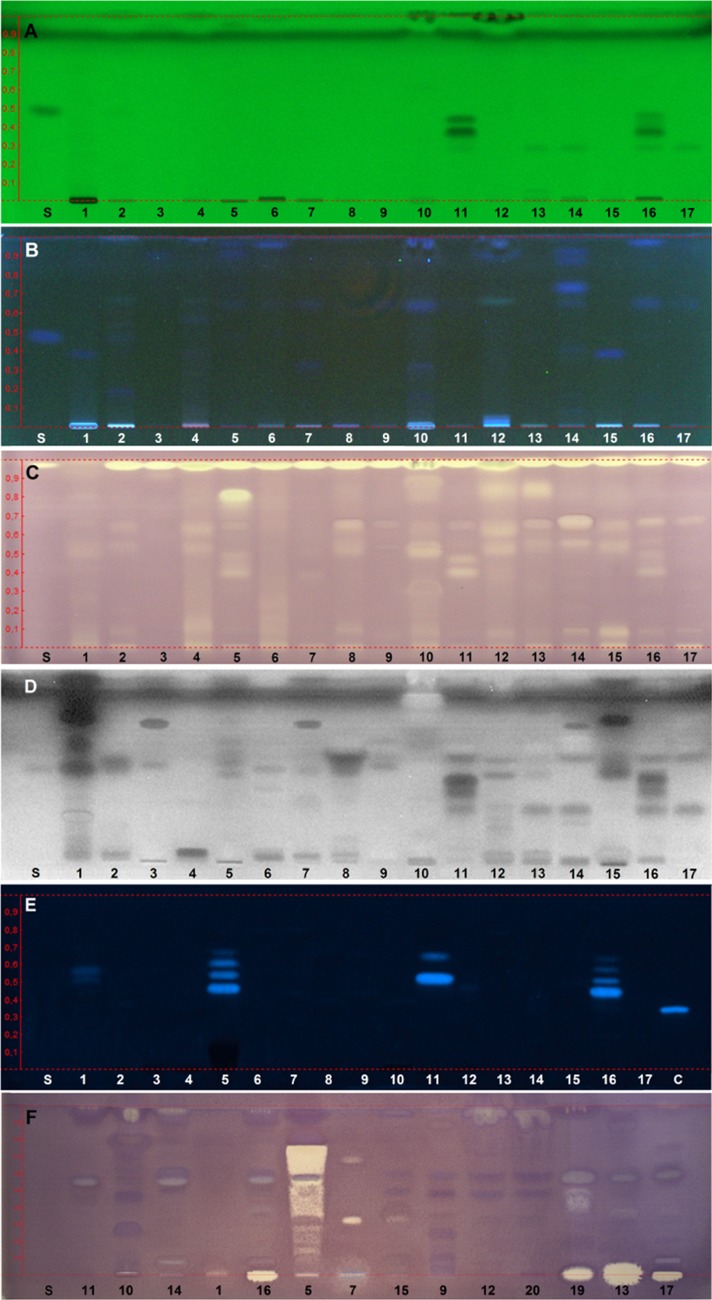
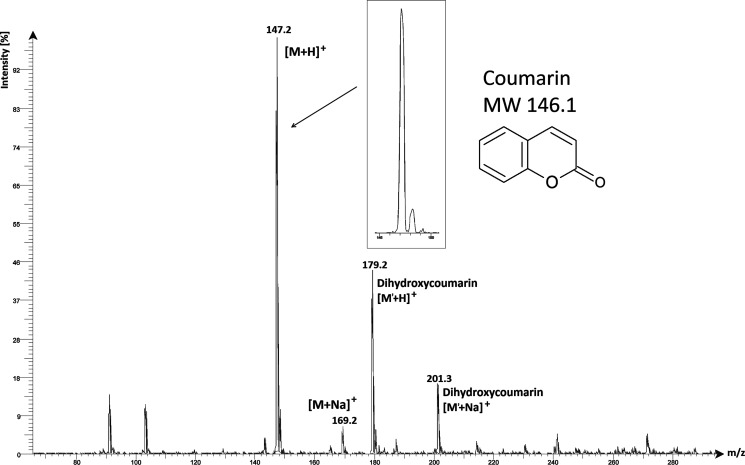
Facing the widespread use of cosmetic products in daily use and recognizing the very limited information obtained by target analysis, a method suited for comprehensive characterization of cosmetics was aimed at. The biological activity of ingredients of 20 cosmetics taken from 16 different product groups and their coumarin contents were investigated via chromatography linked to bioassays (direct bioautography) and mass spectrometry. It allows for screening a large number of cosmetic products within a short time to generate a more valid database on their coumarin content and their contribution to the overall exposure. Bioactivity profiling of cosmetics with regard to bioactive ingredients opens new avenues for a comprehensive characterization of important substances in products of daily use, helpful for the legally required safety and risk assessment of cosmetic products, especially for multiple product usage. As for coumarin, a ubiquitary fragrance compound of allergenic potential, which is under recurrent discussion due to its hepatoxic properties, it is necessary to be able to estimate the regular intake via cosmetics for a valid risk assessment. This newly developed bioprofiling method allowed a selective determination of coumarin down to 1.3 mg kg, even for very matrix-rich cosmetics despite minimalism in sample preparation. The declaration limits according to European Cosmetics Regulation were completely covered. Mean coumarin contents of 20 cosmetic products reached up to 2218 mg kg. The repeatabilities (%RSD, = 3) were between 1.1 and 2.9%, and the mean recoveries ( = 5) were between 96 and 102% for the different cosmetic matrices.
鉴于化妆品在日常使用中的广泛应用,同时认识到目标分析所获信息非常有限,旨在开发一种适用于全面表征化妆品的方法。通过与生物测定(直接生物自显影)和质谱联用的色谱法,对来自16个不同产品组的20种化妆品成分的生物活性及其香豆素含量进行了研究。该方法能够在短时间内筛选大量化妆品,以生成关于其香豆素含量及其对总体暴露贡献的更有效数据库。对化妆品中生物活性成分进行生物活性分析,为全面表征日常用品中的重要物质开辟了新途径,有助于对化妆品进行法定要求的安全性和风险评估,特别是对于多种产品的使用情况。至于香豆素,一种具有潜在致敏性的普遍存在的香料化合物,因其肝毒性特性而经常受到讨论,为了进行有效的风险评估,有必要能够估算通过化妆品的常规摄入量。这种新开发的生物分析方法能够选择性地测定低至1.3 mg/kg的香豆素,即使对于基质非常丰富的化妆品,样品制备也极为简单。完全涵盖了欧洲化妆品法规规定的申报限量。20种化妆品的香豆素平均含量高达2218 mg/kg。不同化妆品基质的重复性(%RSD,n = 3)在1.1%至2.9%之间,平均回收率(n = 5)在96%至102%之间。