Department of Neurology, University of Groningen, University Medical Center Groningen, The Netherlands.
Department of Neurology, University of Groningen, University Medical Center Groningen, The Netherlands.
Neuroimage Clin. 2018 Mar 29;19:90-97. doi: 10.1016/j.nicl.2018.03.038. eCollection 2018.
We aimed to uncover the pattern of network-level changes in neuronal function in Spinocerebellar ataxia type 3 (SCA3).
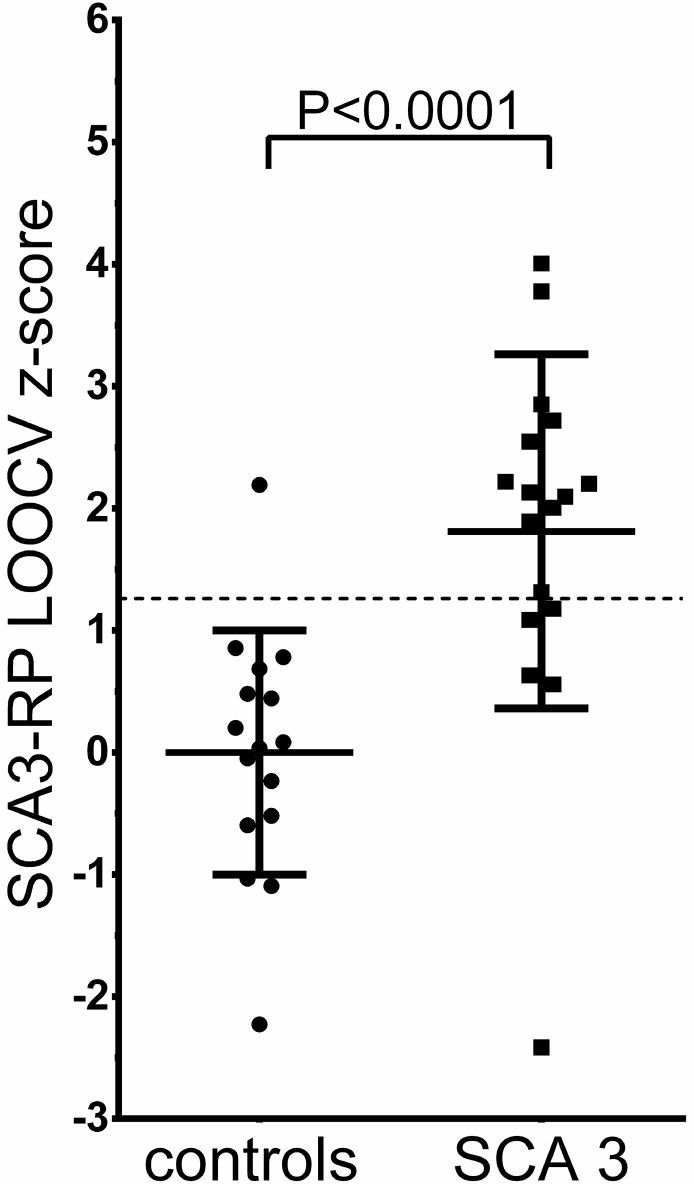
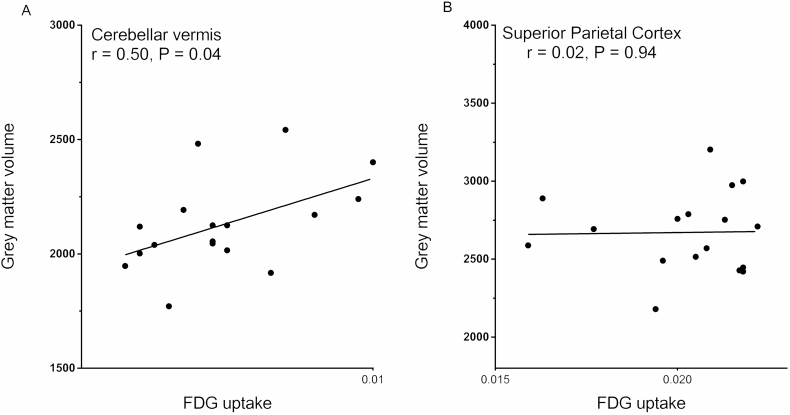
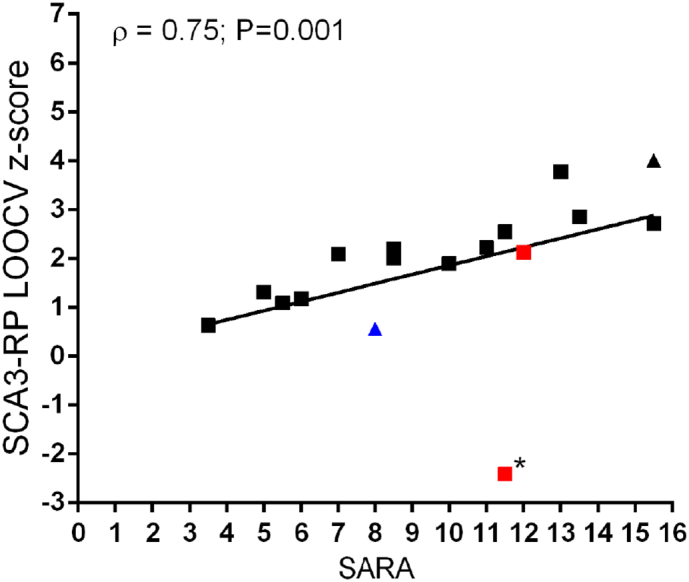
17 genetically-confirmed SCA3 patients and 16 controls underwent structural MRI and static resting-state [F]‑Fluoro‑deoxyglucose Positron Emission Tomography (FDG-PET) imaging. A SCA3-related pattern (SCA3-RP) was identified using a multivariate method (scaled subprofile model and principal component analysis (SSM PCA)). Participants were evaluated with the Scale for Assessment and Rating of Ataxia (SARA) and with neuropsychological examination including tests for language, executive dysfunction, memory, and information processing speed. The relationships between SCA3-RP expression and clinical scores were explored. Voxel based morphology (VBM) was applied on MRI-T1 images to assess possible correlations between FDG reduction and grey matter atrophy.
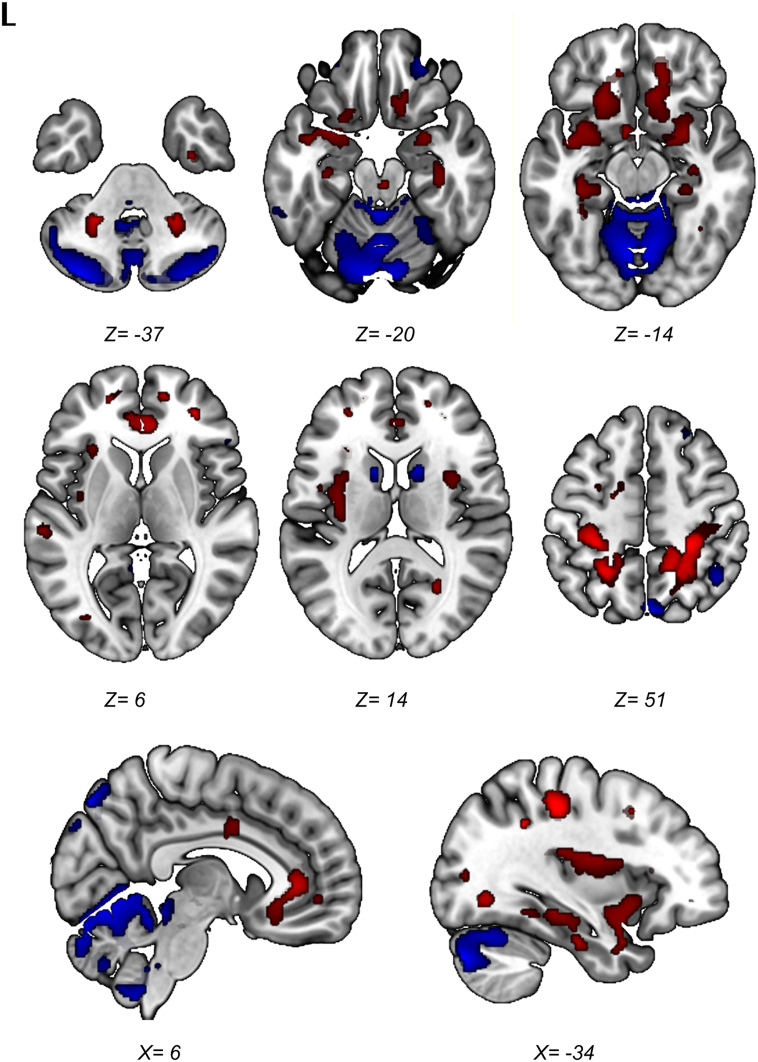
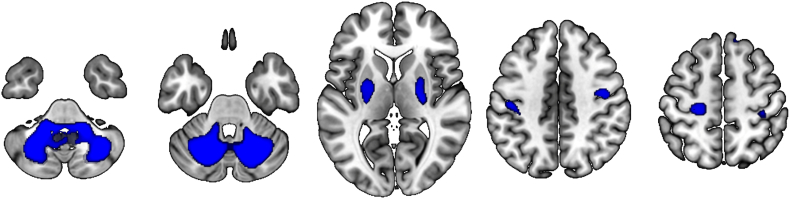
The SCA3-RP disclosed relative hypometabolism of the cerebellum, caudate nucleus and posterior parietal cortex, and relatively increased metabolism in somatosensory areas and the limbic system. This topography, which was not explained by regional atrophy, correlated significantly with ataxia (SARA) scores (ρ = 0.72; = 0.001). SCA3 patients showed significant deficits in executive function and information processing speed, but only letter fluency correlated with SCA3-RP expression (ρ = 0.51; = 0.04, uncorrected for multiple comparisons).
The SCA3 metabolic profile reflects network-level alterations which are primarily associated with the motor features of the disease. Striatum decreases additional to cerebellar hypometabolism underscores an intrinsic extrapyramidal involvement in SCA3. Cerebellar-posterior parietal hypometabolism together with anterior parietal (sensory) cortex hypermetabolism may reflect a shift from impaired feedforward to compensatory feedback processing in higher-order motor control. The demonstrated SCA3-RP provides basic insight in cerebral network changes in this disease.
我们旨在揭示脊髓小脑共济失调 3 型(SCA3)患者神经元功能的网络水平变化模式。
17 名经基因确认的 SCA3 患者和 16 名对照接受了结构 MRI 和静息态 [F]-氟代脱氧葡萄糖正电子发射断层扫描(FDG-PET)成像。使用多元方法(比例子模型和主成分分析(SSM PCA))识别 SCA3 相关模式(SCA3-RP)。使用 Scale for Assessment and Rating of Ataxia(SARA)和包括语言、执行功能、记忆和信息处理速度测试在内的神经心理学检查对参与者进行评估。探讨了 SCA3-RP 表达与临床评分之间的关系。在 MRI-T1 图像上应用体素形态学(VBM)以评估 FDG 减少与灰质萎缩之间的可能相关性。
SCA3-RP 揭示了小脑、尾状核和顶后皮质的相对代谢低下,以及感觉区域和边缘系统的相对代谢增加。这种分布模式不能用区域性萎缩来解释,与共济失调(SARA)评分显著相关(ρ=0.72;p=0.001)。SCA3 患者在执行功能和信息处理速度方面存在显著缺陷,但只有字母流畅性与 SCA3-RP 表达相关(ρ=0.51;p=0.04,未校正多重比较)。
SCA3 的代谢谱反映了网络水平的改变,这些改变主要与疾病的运动特征有关。除了小脑代谢低下外,纹状体的减少突出了 SCA3 中固有锥体外系的参与。小脑-顶后皮质代谢低下与前顶叶(感觉)皮质代谢亢进可能反映了在高级运动控制中从受损的前馈到代偿性反馈处理的转变。所展示的 SCA3-RP 为了解该疾病中大脑网络的变化提供了基本的见解。