Kabir Mohammad Faujul, Mohd Ali Johari, Haji Hashim Onn
Department of Molecular Medicine, Faculty of Medicine, University of Malaya, Kuala Lumpur, Malaysia.
PeerJ. 2018 Jul 18;6:e5203. doi: 10.7717/peerj.5203. eCollection 2018.
We have previously reported anticancer activities of (MP) leaf extracts on four different cancer cell lines. However, the underlying mechanisms of actions have yet to be deciphered. In the present study, the anticancer activity of MP hexane extract (MP-HX) on colorectal (HCT116) and hepatocellular carcinoma (HepG2) cell lines was characterized through microarray gene expression profiling.
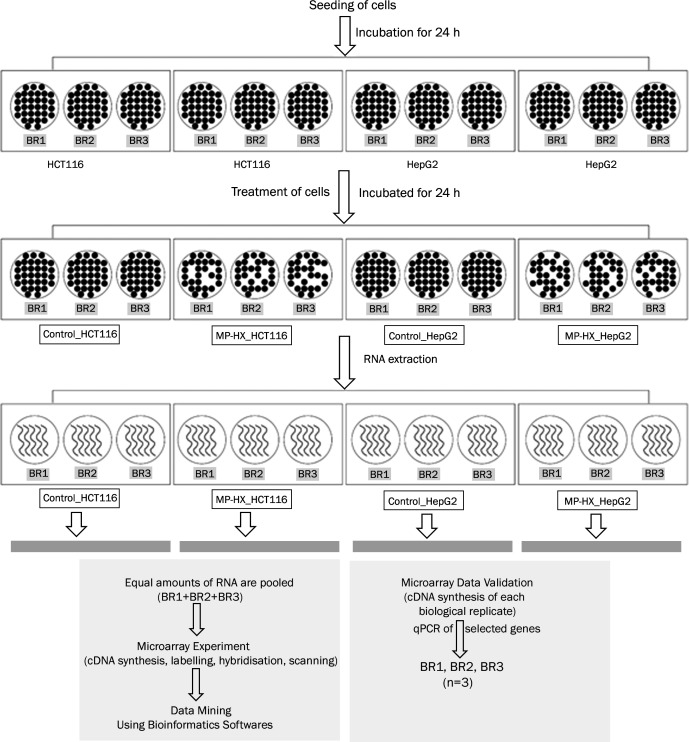
HCT116 and HepG2 cells were treated with MP-HX for 24 hr. Total RNA was extracted from the cells and used for transcriptome profiling using Applied Biosystem GeneChip™ Human Gene 2.0 ST Array. Gene expression data was analysed using an Applied Biosystems Expression Console and Transcriptome Analysis Console software. Pathway enrichment analyses was performed using Ingenuity Pathway Analysis (IPA) software. The microarray data was validated by profiling the expression of 17 genes through quantitative reverse transcription PCR (RT-qPCR).
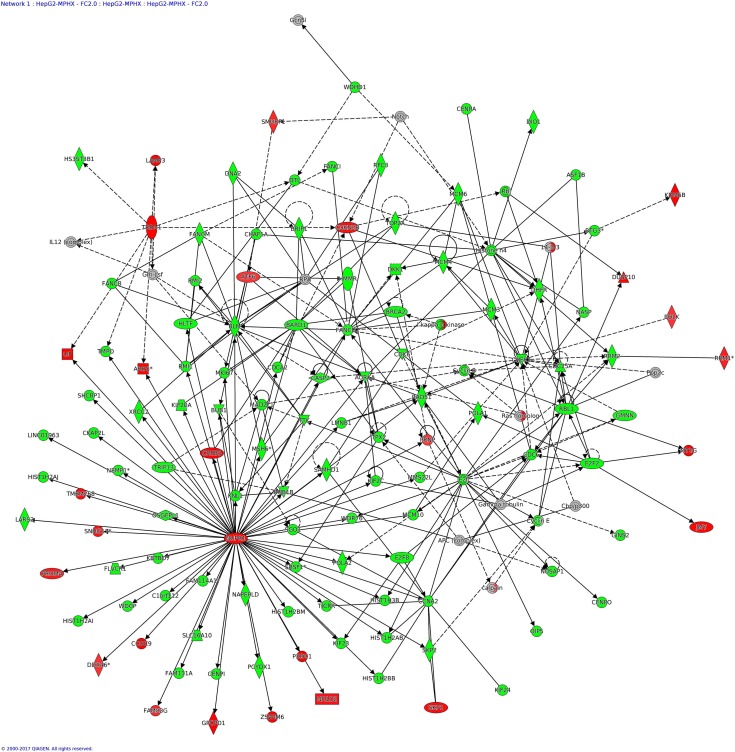
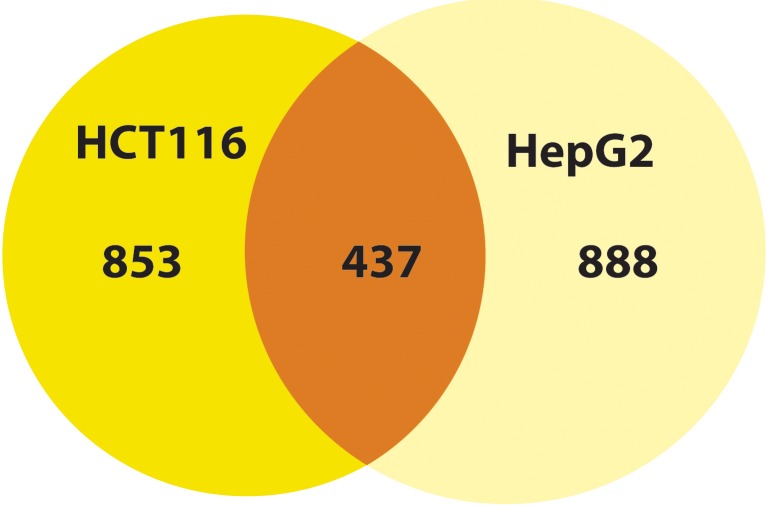
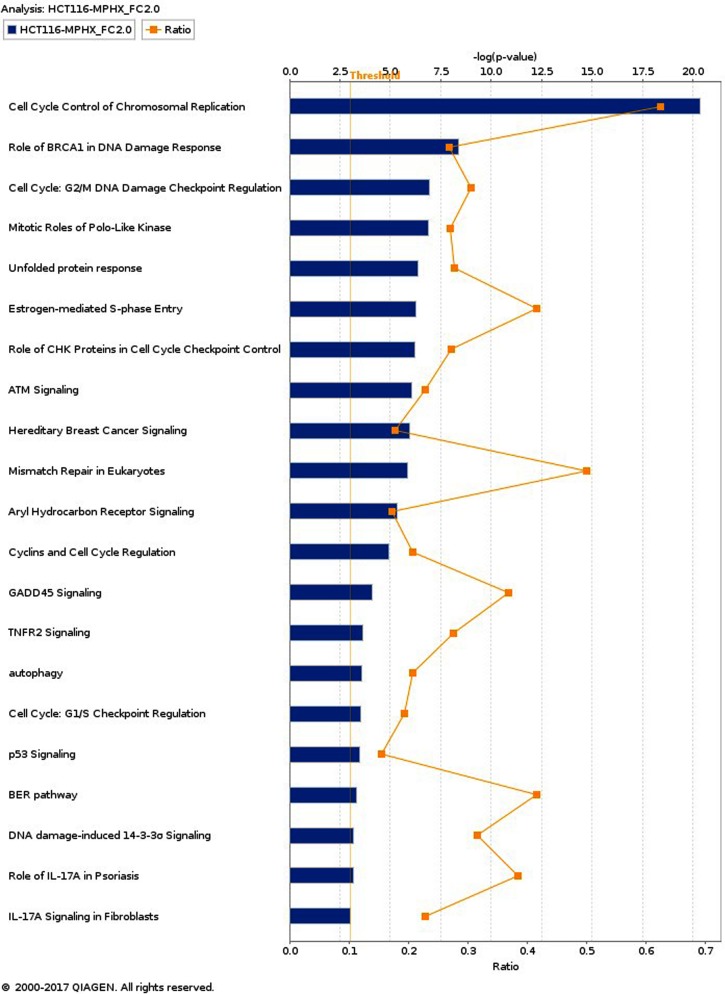
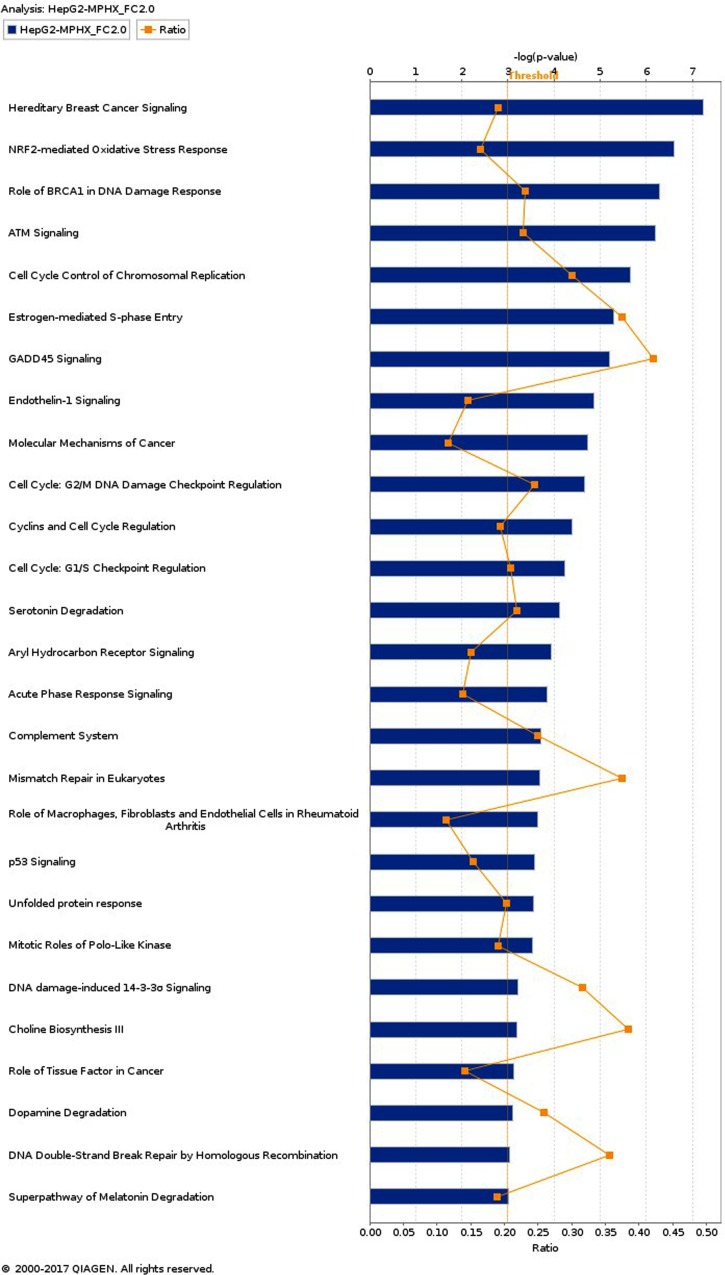
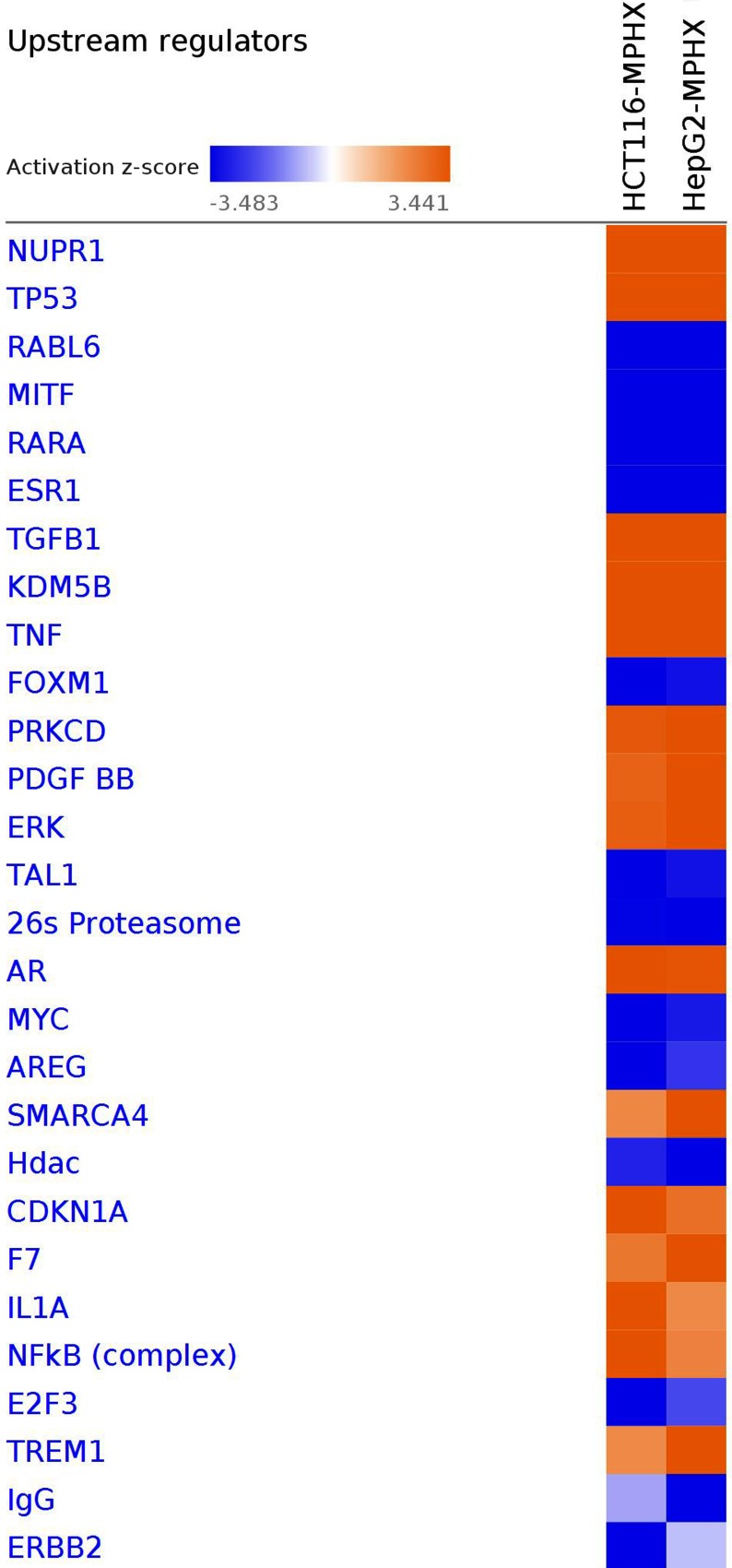
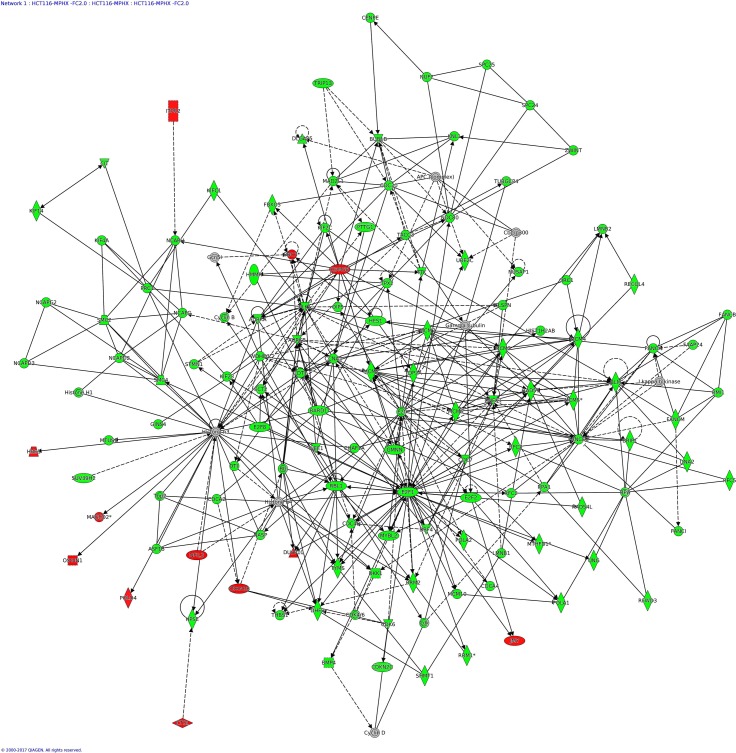
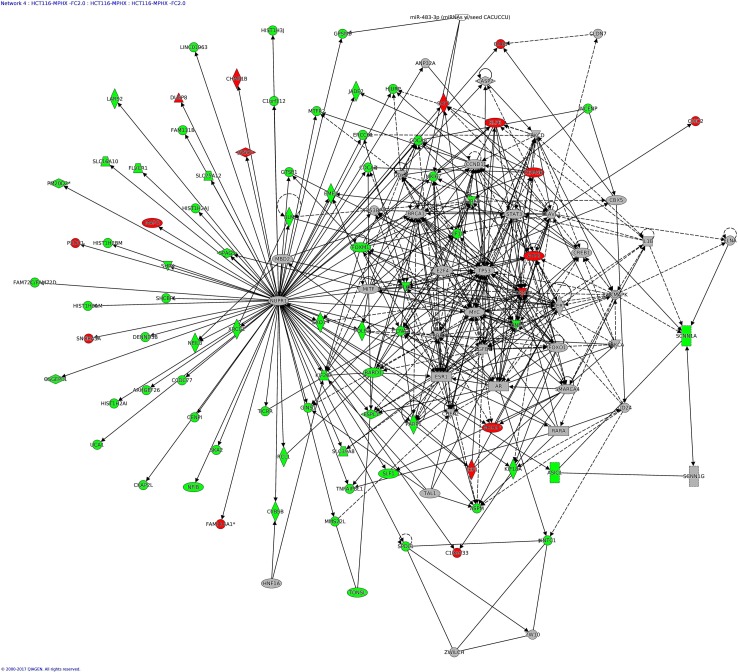
MP-HX induced differential expression of 1,290 and 1,325 genes in HCT116 and HepG2 cells, respectively (microarray data fold change, MA_FC ≥ ±2.0). The direction of gene expression change for the 17 genes assayed through RT-qPCR agree with the microarray data. In both cell lines, MP-HX modulated the expression of many genes in directions that support antiproliferative activity. IPA software analyses revealed MP-HX modulated canonical pathways, networks and biological processes that are associated with cell cycle, DNA replication, cellular growth and cell proliferation. In both cell lines, upregulation of genes which promote apoptosis, cell cycle arrest and growth inhibition were observed, while genes that are typically overexpressed in diverse human cancers or those that promoted cell cycle progression, DNA replication and cellular proliferation were downregulated. Some of the genes upregulated by MP-HX include pro-apoptotic genes (DDIT3, BBC3, JUN), cell cycle arresting (CDKN1A, CDKN2B), growth arrest/repair (TP53, GADD45A) and metastasis suppression (NDRG1). MP-HX downregulated the expression of genes that could promote anti-apoptotic effect, cell cycle progression, tumor development and progression, which include BIRC5, CCNA2, CCNB1, CCNB2, CCNE2, CDK1/2/6, GINS2, HELLS, MCM2/10 PLK1, RRM2 and SKP2. It is interesting to note that all six top-ranked genes proposed to be cancer-associated (PLK1, MCM2, MCM3, MCM7, MCM10 and SKP2) were downregulated by MP-HX in both cell lines.
The present study showed that the anticancer activities of MP-HX are exerted through its actions on genes regulating apoptosis, cell proliferation, DNA replication and cell cycle progression. These findings further project the potential use of MP as a nutraceutical agent for cancer therapeutics.
我们之前报道了(MP)叶提取物对四种不同癌细胞系的抗癌活性。然而,其潜在的作用机制尚未阐明。在本研究中,通过微阵列基因表达谱分析了MP己烷提取物(MP-HX)对结肠直肠癌(HCT116)和肝癌(HepG2)细胞系的抗癌活性。
用MP-HX处理HCT116和HepG2细胞24小时。从细胞中提取总RNA,并使用Applied Biosystem GeneChip™人类基因2.0 ST阵列进行转录组分析。使用Applied Biosystems Expression Console和转录组分析控制台软件分析基因表达数据。使用Ingenuity Pathway Analysis(IPA)软件进行通路富集分析。通过定量逆转录PCR(RT-qPCR)分析17个基因的表达来验证微阵列数据。
MP-HX分别在HCT116和HepG2细胞中诱导了1290个和1325个基因的差异表达(微阵列数据倍数变化,MA_FC≥±2.0)。通过RT-qPCR检测的17个基因的表达变化方向与微阵列数据一致。在两种细胞系中,MP-HX均以支持抗增殖活性的方向调节许多基因的表达。IPA软件分析显示,MP-HX调节了与细胞周期、DNA复制、细胞生长和细胞增殖相关的经典通路、网络和生物学过程。在两种细胞系中,均观察到促进细胞凋亡、细胞周期停滞和生长抑制的基因上调,而在多种人类癌症中通常过度表达的基因或促进细胞周期进程、DNA复制和细胞增殖的基因下调。MP-HX上调的一些基因包括促凋亡基因(DDIT3、BBC3、JUN)、细胞周期停滞基因(CDKN1A、CDKN2B)、生长停滞/修复基因(TP53、GADD45A)和转移抑制基因(NDRG1)。MP-HX下调了可促进抗凋亡作用、细胞周期进程、肿瘤发生和进展的基因的表达,这些基因包括BIRC5、CCNA2、CCNB1、CCNB2、CCNE2、CDK1/2/6、GINS2、HELLS、MCM2/10、PLK1、RRM2和SKP2。有趣的是,在两种细胞系中,MP-HX均下调了所有六个被认为与癌症相关的排名靠前的基因(PLK1、MCM2、MCM3、MCM7、MCM10和SKP2)。
本研究表明,MP-HX的抗癌活性是通过其对调节细胞凋亡、细胞增殖、DNA复制和细胞周期进程的基因的作用来发挥的。这些发现进一步突出了MP作为癌症治疗营养剂的潜在用途。