Zhang Xiaoyu, Wen Jianzhong, Zhang Zhiqiang
Department of General Rehabilitation, Capital Medical University School of Rehabilitation Medicine, China Rehabilitation Research Center, Beijing Boai Hospital, Beijing Department of Anesthesiology, Second Affiliated Hospital of Shanxi Medical University, Taiyuan, Shanxi Department of Community Chronic Disease Research Center, Institute of Chinese Basic Clinical Medicine, China Academy of Chinese Medical Sciences, Beijing, China.
Medicine (Baltimore). 2018 Jul;97(30):e11304. doi: 10.1097/MD.0000000000011304.
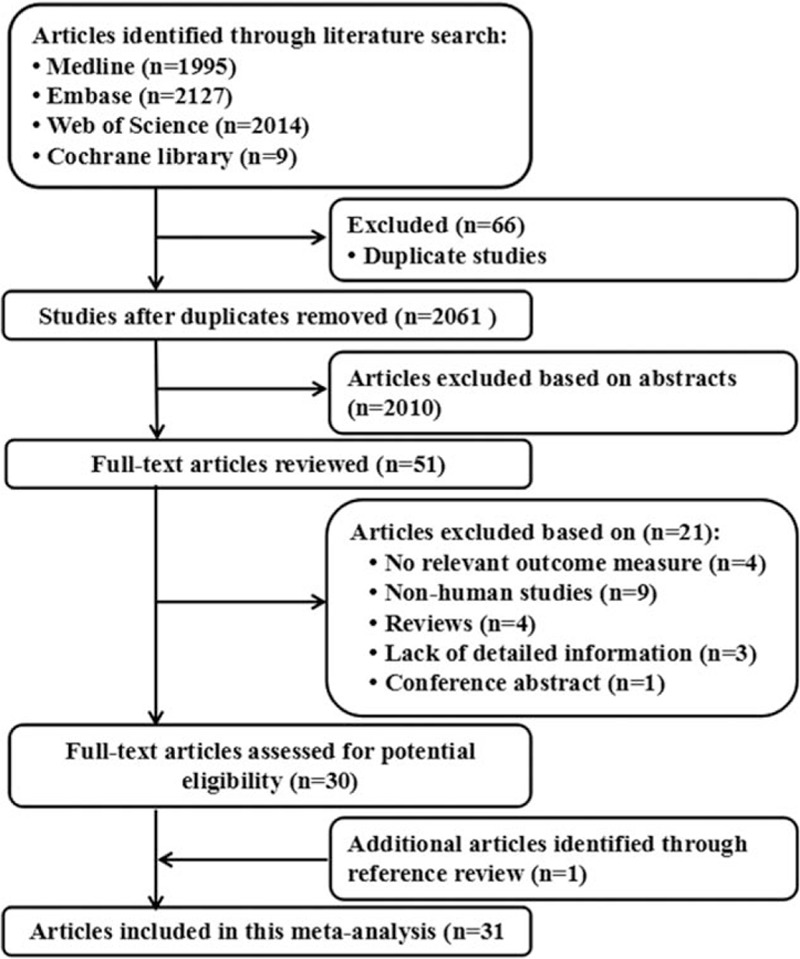
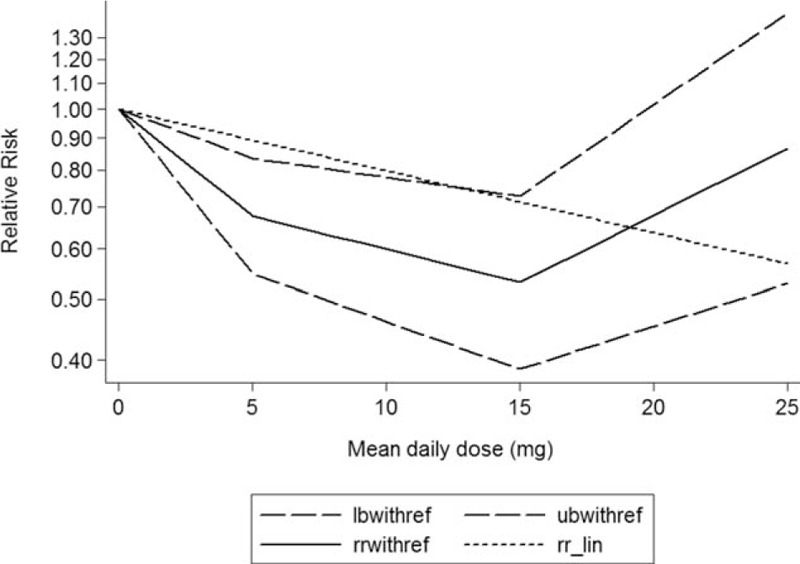
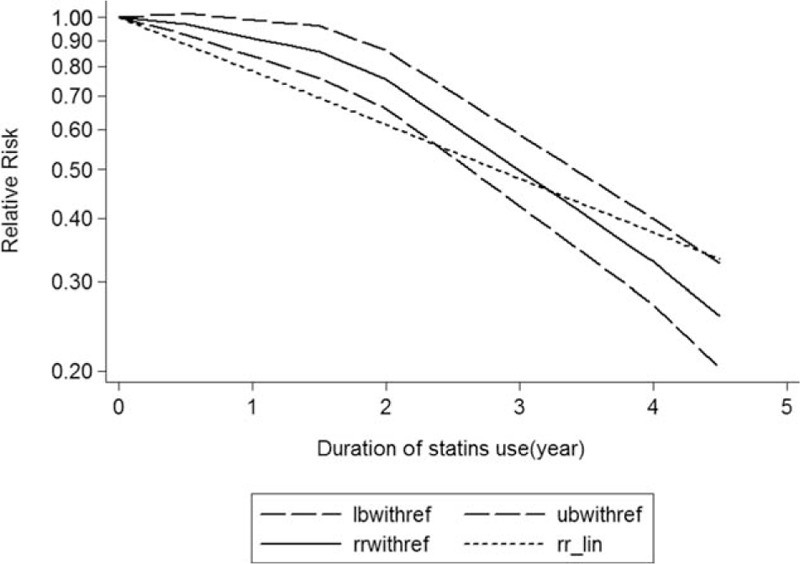
Previous studies have indicated that statins use is associated with risk of dementia, but presented controversial results. Medline, Embase, Web of Science, and the Cochrane Database were searched update to November 2017 to identify the potential relationship between statins use and dementia. Thirty-one eligible studies involving a total of 3332,706 participants with 184,666 incident cases were included in this meta-analysis. Statins use was associated with dementia risk decrement (relevant risk [RR]: 0.85; 95% confidence interval [CI], 0.80-0.89). Subgroup analysis showed statins use was associated with Alzheimer disease (AD) (RR: 0.81; 95% CI, 0.73-0.89) and non-AD dementia (RR: 0.81; 95% CI, 0.73-0.89) risk decrement. Furthermore, statins use was associated with dementia risk decrement in female (RR: 0.89; 95% CI, 0.80-0.98) and male (RR: 0.88; 95% CI, 0.83-0.93). In addition, a dose-response showed per 1 year of duration of statins use incremental increase was associated with 20% dementia risk decrement (RR: 0.80; 95% CI, 0.73-0.87), and per 5-mg mean daily dose incremental increase in statins use was associated with 11% dementia risk decrement (RR: 0.89; 95% CI, 0.83-0.96). Statins use was associated with dementia risk decrement. The potency and the cumulative duration of statin utilized played critical roles.
先前的研究表明,使用他汀类药物与患痴呆症的风险相关,但结果存在争议。检索了截至2017年11月的Medline、Embase、Web of Science和Cochrane数据库,以确定使用他汀类药物与痴呆症之间的潜在关系。本荟萃分析纳入了31项符合条件的研究,共涉及3332706名参与者,其中有184666例新发病例。使用他汀类药物与痴呆症风险降低相关(相对风险[RR]:0.85;95%置信区间[CI],0.80 - 0.89)。亚组分析显示,使用他汀类药物与阿尔茨海默病(AD)(RR:0.81;95% CI,0.73 - 0.89)和非AD痴呆症(RR:0.81;95% CI,0.73 - 0.89)风险降低相关。此外,使用他汀类药物与女性(RR:0.89;95% CI,0.80 - 0.98)和男性(RR:0.88;95% CI,0.83 - 0.93)的痴呆症风险降低相关。此外,剂量反应显示,他汀类药物使用每增加1年,痴呆症风险降低20%(RR:0.80;95% CI,0.73 - 0.87),他汀类药物使用平均每日剂量每增加5毫克,痴呆症风险降低11%(RR:0.89;95% CI,0.83 - 0.96)。使用他汀类药物与痴呆症风险降低相关。所使用他汀类药物的效力和累积持续时间起着关键作用。