Li Yidan, Wang Yidan, Yang Yuanhua, Liu Mingxi, Meng Xiangli, Shi Yanping, Zhu Weiwei, Lu Xiuzhang
Department of Echocardiography, Heart Center Department of Respiratory and Critical Care Medicine Department of Radiology, Beijing Chao Yang Hospital, Capital Medical University, Beijing, China.
Medicine (Baltimore). 2018 Jul;97(30):e11710. doi: 10.1097/MD.0000000000011710.
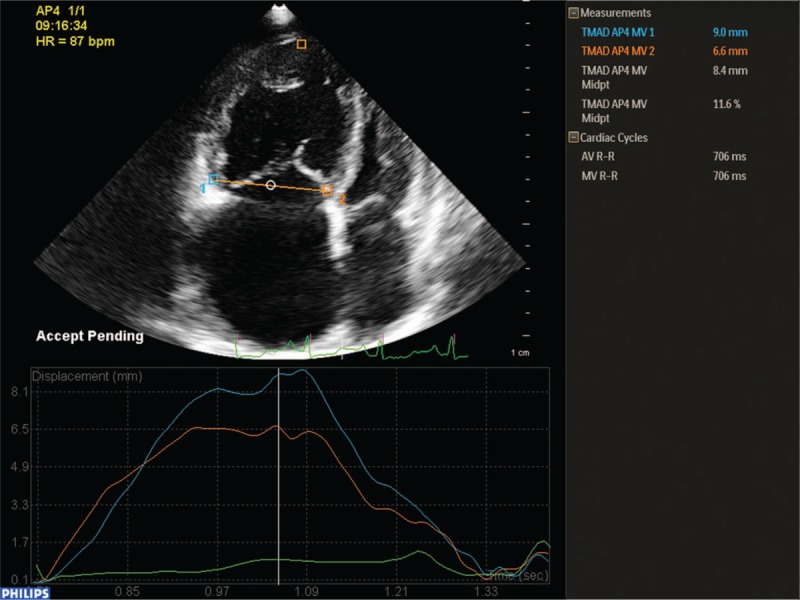
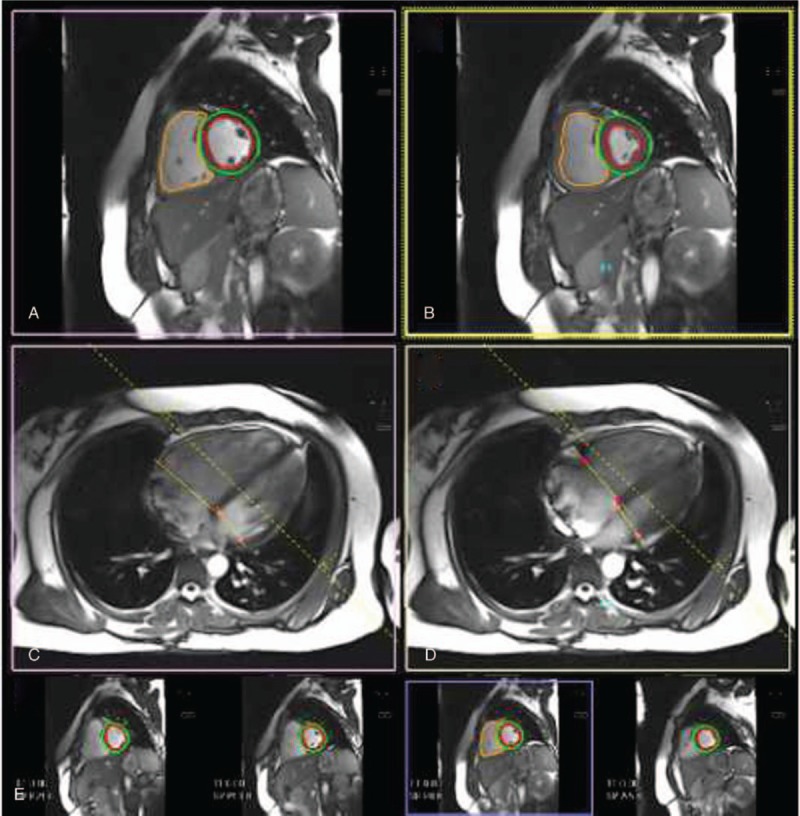
This study aimed to determine the ability of tricuspid annular displacement measured by 2-dimensional speckle tracking echocardiography (STE) to predict right ventricular (RV) dysfunction in pulmonary hypertension (PH) patients. Here, we present a new method for assessing RV function that also employs STE and is based on measurement of tricuspid annular displacement.A total of 225 patients were divided into 2 groups according to the pulmonary artery systolic blood pressure (PASP), estimated by echocardiographic measurement of tricuspid regurgitation: group I (PASP ≥50 mm Hg) and group II (36 mm Hg ≤ PASP <50 mm Hg). The tricuspid annular plane systolic excursion (TAPSE), RV index of myocardial performance (RIMP), RV fractional area change (RVFAC), tissue Doppler-derived tricuspid lateral annular systolic velocity (s'), and the tricuspid annular longitudinal displacement (TMAD) parameters were measured. Thirty patients underwent cardiac magnetic resonance (CMR) examination, and right ventricular ejection fraction (RVEF) was calculated.The conventional parameters as well as the TMAD parameters differed significantly between the 2 groups (all P < .01). Good correlation was observed between the TMAD parameters and CMR-derived RVEF (all P < .01). The TMAD parameters had moderate predictive value for predicting RV dysfunction in PH patients (all P < .01). From receiver operating characteristic curves, we determined the optimal cut-off values for TMAD parameters for detecting RV dysfunction with good sensitivity and specificity.The TMAD parameters can predict the decline of RV function in patients with PH and thus provide new diagnostic indices for clinical management of these patients.
本研究旨在确定二维斑点追踪超声心动图(STE)测量的三尖瓣环位移预测肺动脉高压(PH)患者右心室(RV)功能障碍的能力。在此,我们提出一种评估RV功能的新方法,该方法同样采用STE,且基于三尖瓣环位移的测量。根据经超声心动图测量三尖瓣反流估计的肺动脉收缩压(PASP),将225例患者分为2组:I组(PASP≥50 mmHg)和II组(36 mmHg≤PASP<50 mmHg)。测量三尖瓣环平面收缩期位移(TAPSE)、RV心肌性能指数(RIMP)、RV面积变化分数(RVFAC)、组织多普勒衍生的三尖瓣侧环收缩速度(s')以及三尖瓣环纵向位移(TMAD)参数。30例患者接受了心脏磁共振(CMR)检查,并计算右心室射血分数(RVEF)。两组之间的传统参数以及TMAD参数存在显著差异(均P<0.01)。观察到TMAD参数与CMR衍生的RVEF之间具有良好的相关性(均P<0.01)。TMAD参数对预测PH患者的RV功能障碍具有中等预测价值(均P<0.01)。通过受试者工作特征曲线,我们确定了TMAD参数用于检测RV功能障碍的具有良好敏感性和特异性的最佳截断值。TMAD参数可以预测PH患者RV功能的下降,从而为这些患者的临床管理提供新的诊断指标。