Shraga Segal Department of Microbiology, Immunology and Genetics, Faculty of Health Sciences, Ben-Gurion University of the Negev, Be'er Sheva, Israel.
Michael Smith Laboratories, University of British Columbia, Vancouver, British Columbia, Canada.
mSphere. 2018 Jul 25;3(4):e00162-18. doi: 10.1128/mSphere.00162-18.
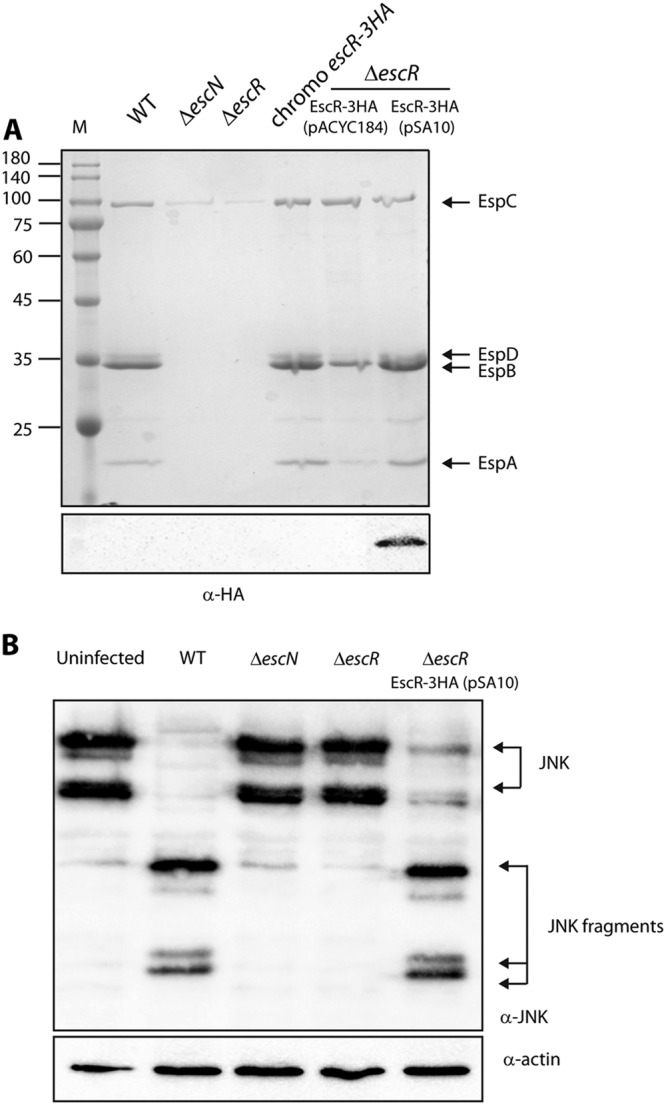
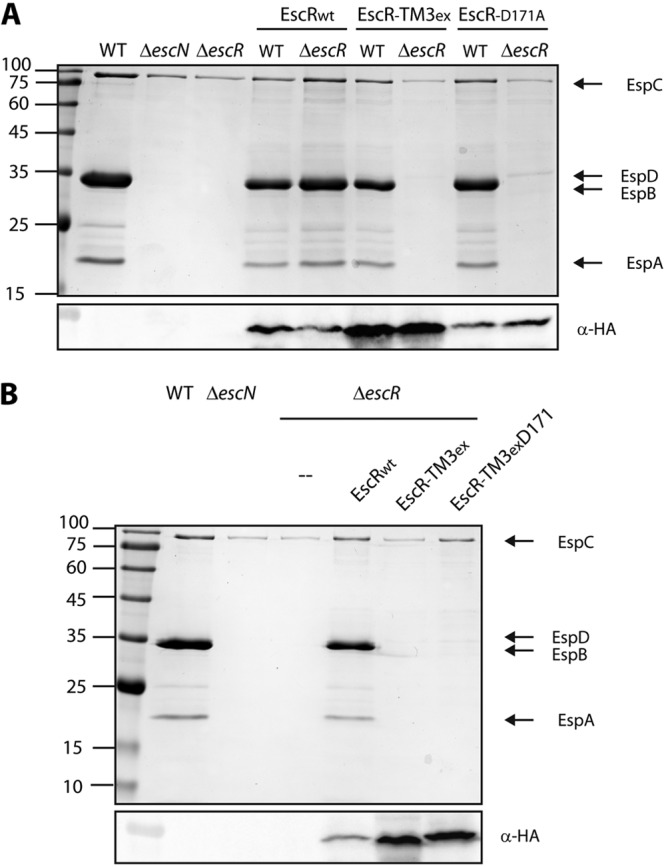
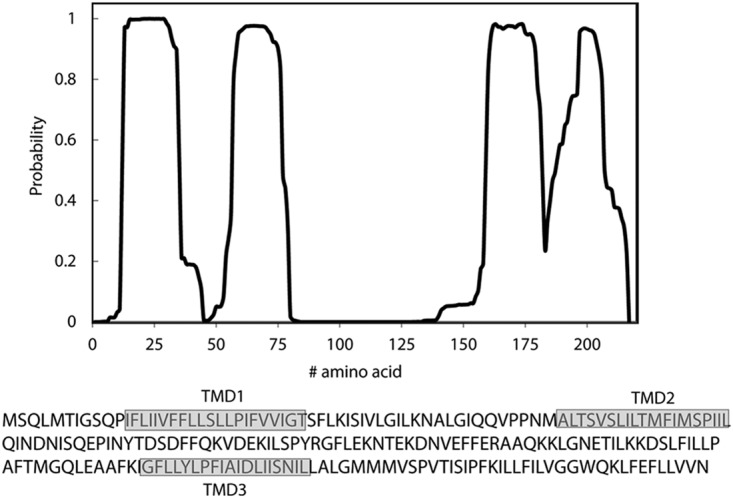
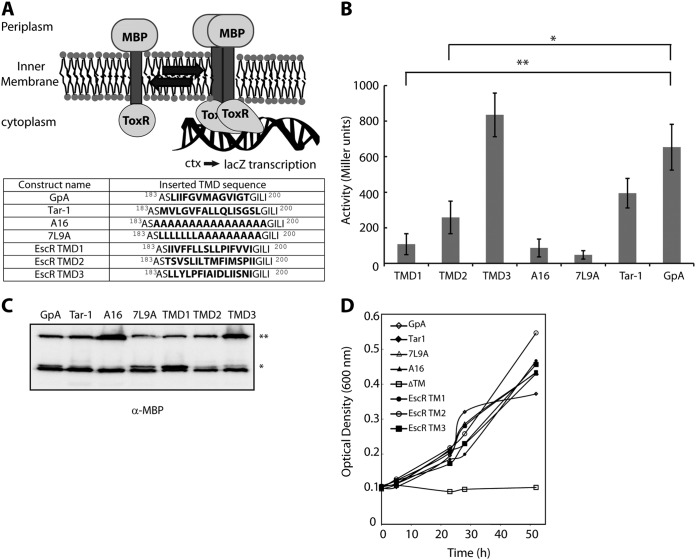
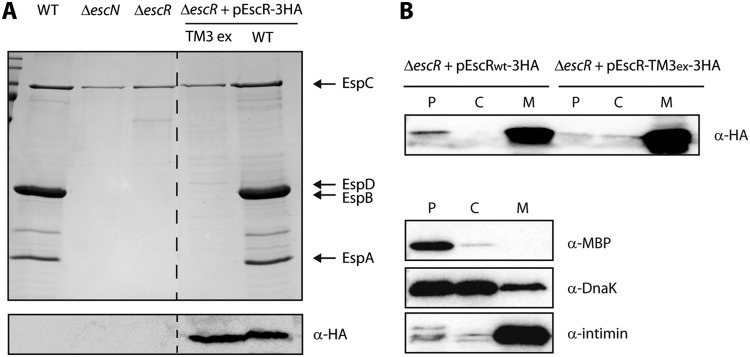
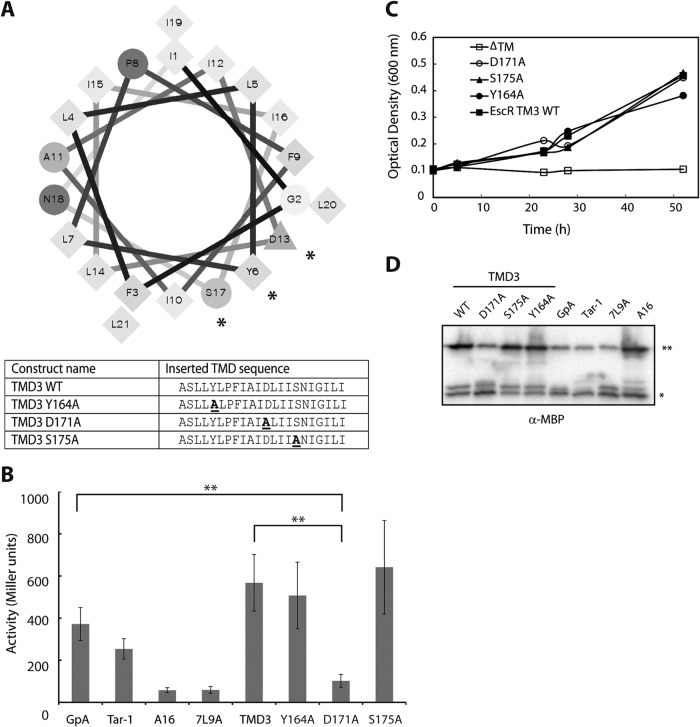
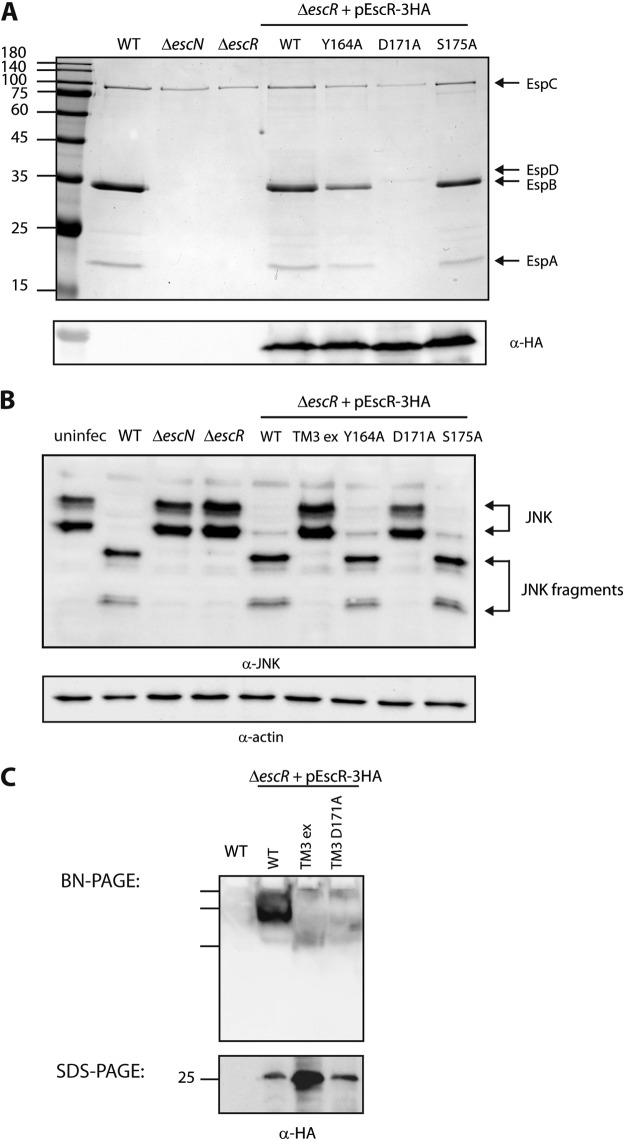
Many Gram-negative bacterial pathogens utilize a specialized protein delivery system, called the type III secretion system (T3SS), to translocate effector proteins into the host cells. The translocated effectors are crucial for bacterial infection and survival. The base of the T3SS transverses both bacterial membranes and contains an export apparatus that comprises five membrane proteins. Here, we study the export apparatus of enteropathogenic (EPEC) and characterize its central component, called the EscR protein. We found that the third transmembrane domain (TMD) of EscR mediates strong self-oligomerization in an isolated genetic reporter system. Replacing this TMD sequence with an alternative hydrophobic sequence within the full-length protein resulted in a complete loss of function of the T3SS, further suggesting that the EscR TMD3 sequence has another functional role in addition to its role as a membrane anchor. Moreover, we found that an aspartic acid residue, located at the core of EscR TMD3, is important for the oligomerization propensity of TMD3 and that a point mutation of this residue within the full-length protein abolishes the T3SS activity and the ability of the bacteria to translocate effectors into host cells. Many Gram-negative bacterial pathogens that cause life-threatening diseases employ a type III secretion system (T3SS) for their virulence. The T3SS comprises several proteins that assemble into a syringe-like structure dedicated to the injection of bacterial virulence factors into the host cells. Although many T3SS proteins are transmembrane proteins, our knowledge of these proteins is limited mostly to their soluble domains. In this study, we found that the third transmembrane domain (TMD) of EscR, a central protein of the T3SS in enteropathogenic , contributes to protein self-oligomerization. Moreover, we demonstrated that a single aspartic acid residue, located at the core of this TMD, is critical for the activity of the full-length protein and the function of the entire T3SS, possibly due to its involvement in mediating TMD-TMD interactions. Our findings should encourage the mapping of the entire interactome of the T3SS components, including interactions mediated through their TMDs.
许多革兰氏阴性细菌病原体利用一种专门的蛋白质输送系统,称为 III 型分泌系统(T3SS),将效应蛋白易位到宿主细胞中。易位的效应蛋白对于细菌感染和存活至关重要。T3SS 的基础穿过细菌的内外膜,并包含一个由五个膜蛋白组成的出口装置。在这里,我们研究了肠致病性(EPEC)的出口装置,并对其核心成分称为 EscR 蛋白进行了表征。我们发现,EscR 的第三个跨膜结构域(TMD)在独立的遗传报告系统中介导强烈的自寡聚化。用全长蛋白中的替代疏水序列替换此 TMD 序列会导致 T3SS 的完全功能丧失,这进一步表明 EscR TMD3 序列除了作为膜锚定之外还有另一种功能作用。此外,我们发现位于 EscR TMD3 核心的天冬氨酸残基对于 TMD3 的寡聚倾向很重要,并且全长蛋白中该残基的点突变会使 T3SS 活性和细菌将效应蛋白易位到宿主细胞的能力丧失。许多导致危及生命疾病的革兰氏阴性细菌病原体利用 III 型分泌系统(T3SS)来发挥其毒性。T3SS 由几种蛋白质组成,这些蛋白质组装成一种注射器状结构,专门用于将细菌毒力因子注入宿主细胞。尽管许多 T3SS 蛋白是跨膜蛋白,但我们对这些蛋白的了解主要局限于它们的可溶性结构域。在这项研究中,我们发现肠致病性 T3SS 的中心蛋白 EscR 的第三个跨膜结构域(TMD)有助于蛋白质的自寡聚化。此外,我们证明位于该 TMD 核心的单个天冬氨酸残基对于全长蛋白的活性和整个 T3SS 的功能至关重要,这可能是由于其参与介导 TMD-TMD 相互作用。我们的发现应该鼓励对 T3SS 组件的整个互作组进行映射,包括通过它们的 TMD 介导的相互作用。