Sett Scarlett, Schulz Kai G, Bach Lennart T, Riebesell Ulf
GEOMAR Helmholtz Centre for Ocean Research Kiel, Düsternbrooker Weg 20, Kiel, Germany.
Centre for Coastal Biogeochemistry, School of Environment, Science and Engineering, Southern Cross University, P.O. Box 157, Lismore, NSW, Australia.
J Plankton Res. 2018 Jul;40(4):391-406. doi: 10.1093/plankt/fby018. Epub 2018 May 29.
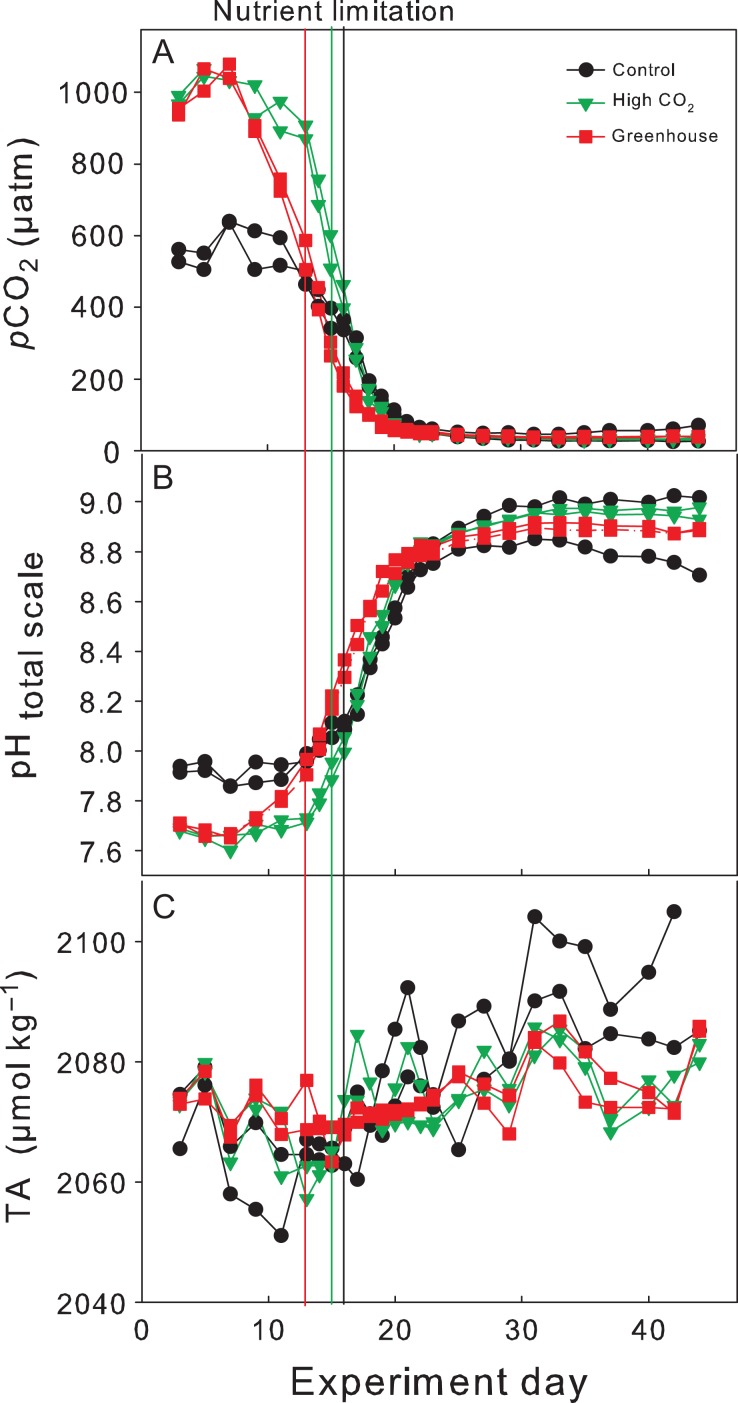
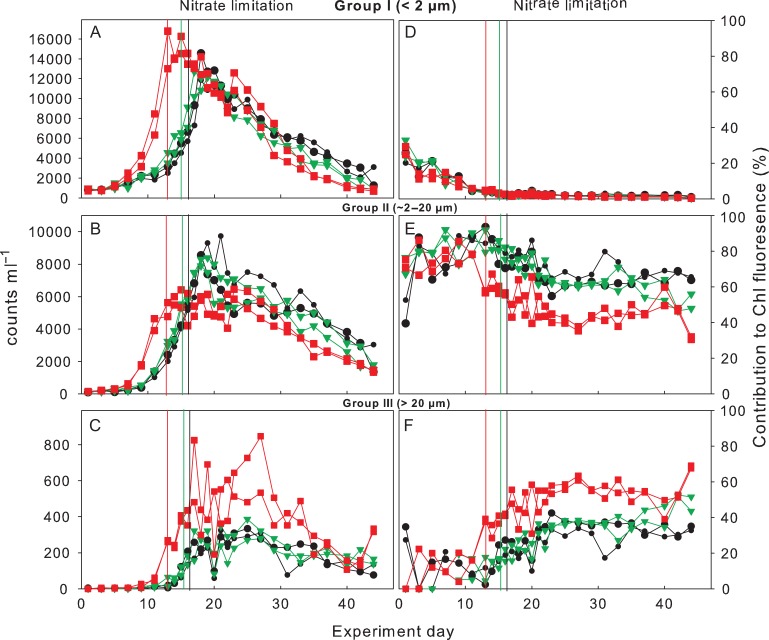
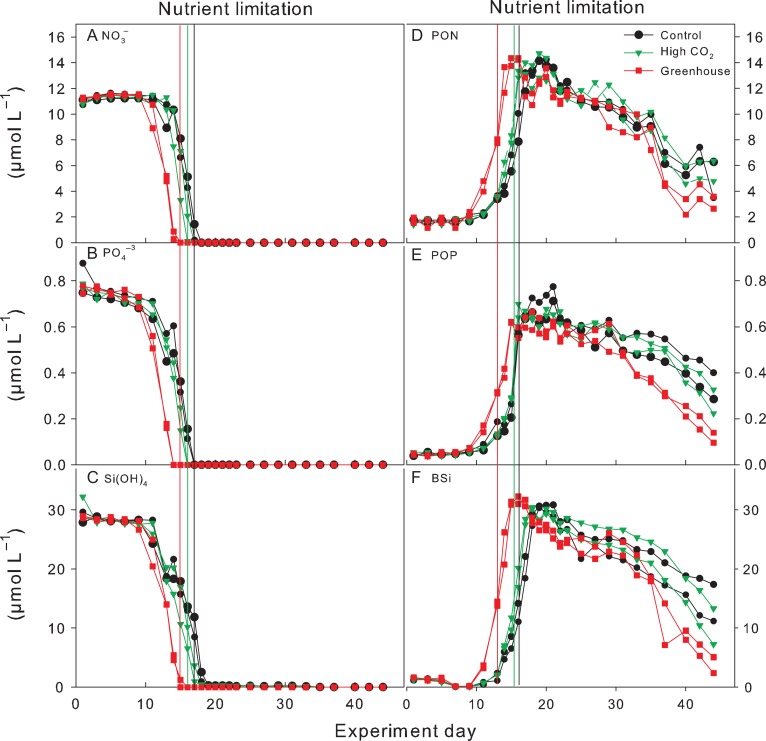
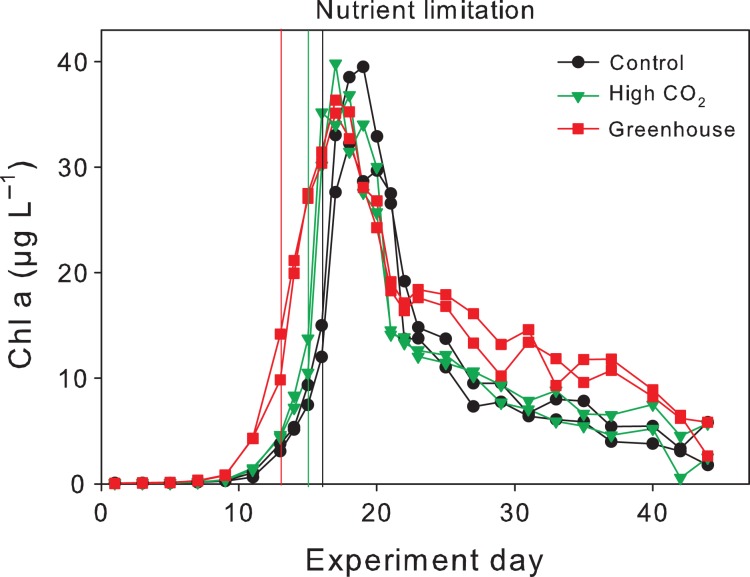
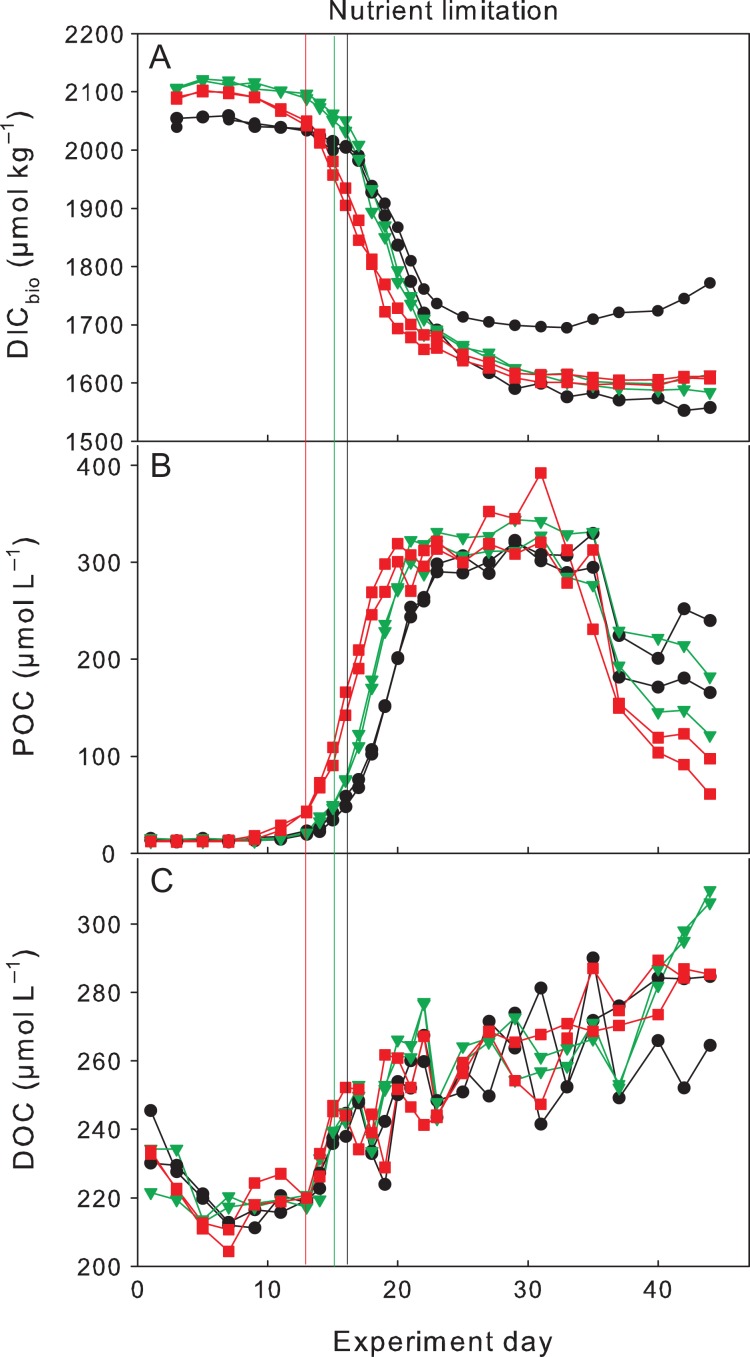
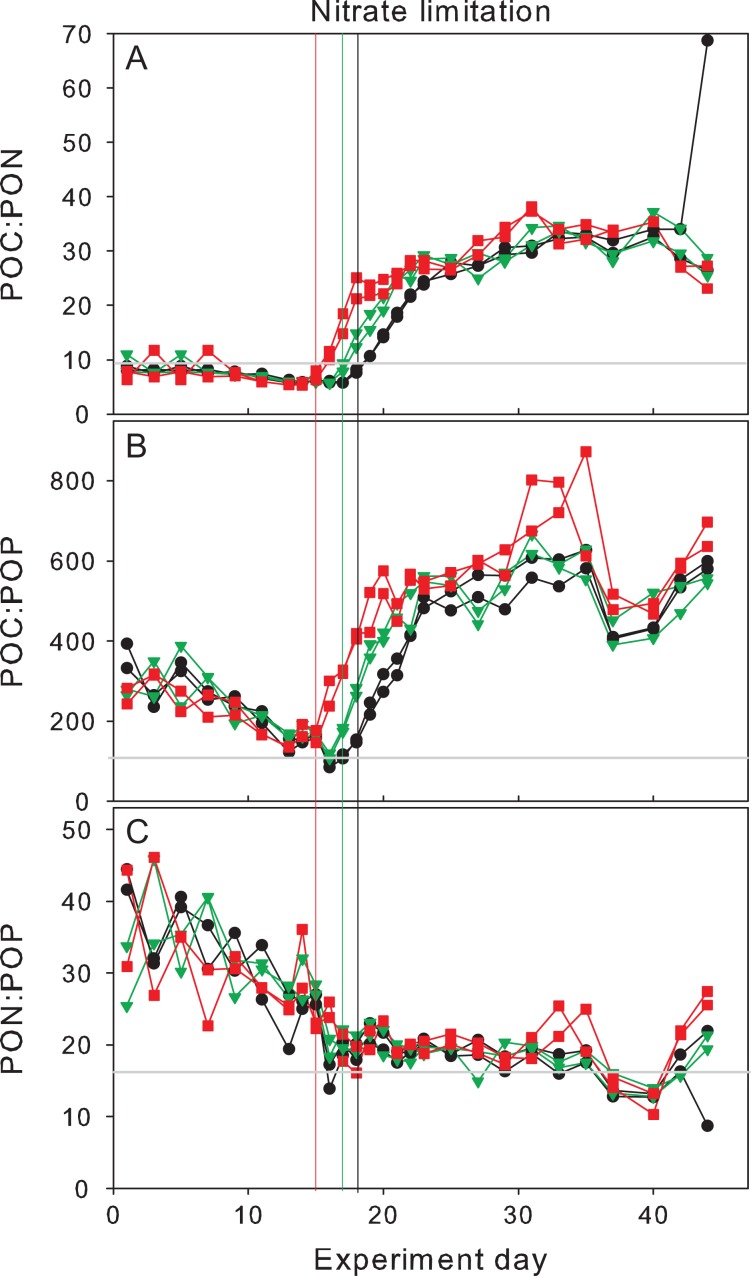
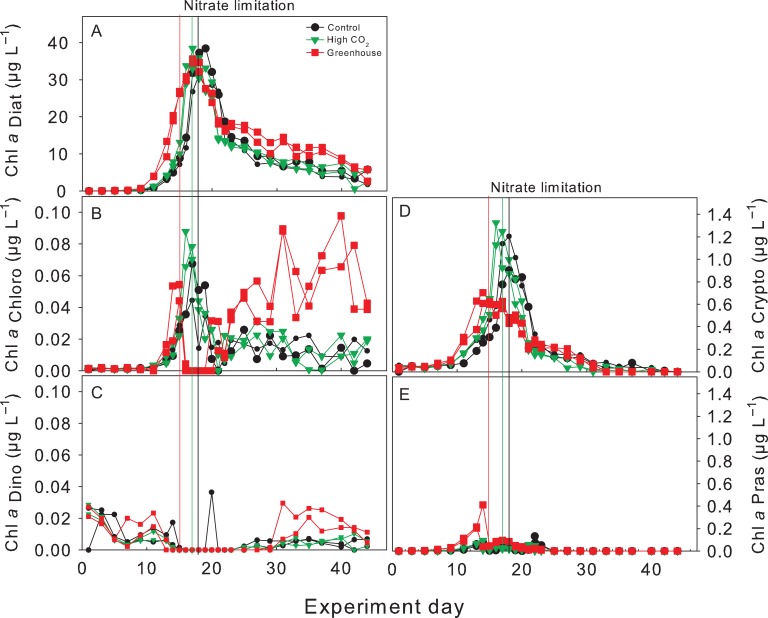
An indoor mesocosm experiment was carried out to investigate the combined effects of ocean acidification and warming on the species composition and biogeochemical element cycling during a winter/spring bloom with a natural phytoplankton assemblage from the Kiel fjord, Germany. The experimental setup consisted of a "Control" (ambient temperature of 4.8 °C and ~535 ± 25 μatm CO), a "High-CO" treatment (ambient temperature and initially 1020 ± 45 μatm CO) and a "Greenhouse" treatment (8.5 °C and initially 990 ± 60 μatm CO). Nutrient replete conditions prevailed at the beginning of the experiment and light was provided at levels upon reaching CO target levels. A diatom-dominated bloom developed in all treatments with as the dominant species but with an increased abundance and biomass contribution of larger diatom species in the Greenhouse treatment. Conditions in the Greenhouse treatment accelerated bloom development with faster utilization of inorganic nutrients and an earlier peak in phytoplankton biomass compared to the Control and High CO but no difference in maximum concentration of particulate organic matter (POM) between treatments. Loss of POM in the Greenhouse treatment, however, was twice as high as in the Control and High CO treatment at the end of the experiment, most likely due to an increased proportion of larger diatom species in that treatment. We hypothesize that the combination of warming and acidification can induce shifts in diatom species composition with potential feedbacks on biogeochemical element cycling.
开展了一项室内中宇宙实验,以研究海洋酸化和变暖对冬季/春季水华期间物种组成和生物地球化学元素循环的综合影响,实验使用了来自德国基尔峡湾的天然浮游植物组合。实验装置包括一个“对照”组(环境温度约为4.8°C,CO浓度约为535±25μatm)、一个“高CO”处理组(环境温度,初始CO浓度为1020±45μatm)和一个“温室”处理组(约8.5°C,初始CO浓度为990±60μatm)。实验开始时营养物质充足,达到CO目标水平后提供一定强度的光照。所有处理组均出现了以硅藻为主的水华,其中 为优势物种,但在“温室”处理组中,较大硅藻物种的丰度和生物量贡献增加。与“对照”组和“高CO”处理组相比,“温室”处理组的条件加速了水华发展,无机营养物质利用更快,浮游植物生物量峰值出现更早,但各处理组之间颗粒有机物(POM)的最大浓度没有差异。然而,在实验结束时,“温室”处理组中POM的损失是“对照”组和“高CO”处理组的两倍,这很可能是由于该处理组中较大硅藻物种的比例增加。我们推测,变暖和酸化的共同作用会导致硅藻物种组成发生变化,并对生物地球化学元素循环产生潜在反馈。