Shi Qian, Saifetiarova Julia, Taylor Anna Marie, Bhat Manzoor A
Department of Cellular and Integrative Physiology, School of Medicine, University of Texas Health Science Center at San Antonio, San Antonio, TX, United States.
Front Cell Neurosci. 2018 Jul 12;12:201. doi: 10.3389/fncel.2018.00201. eCollection 2018.
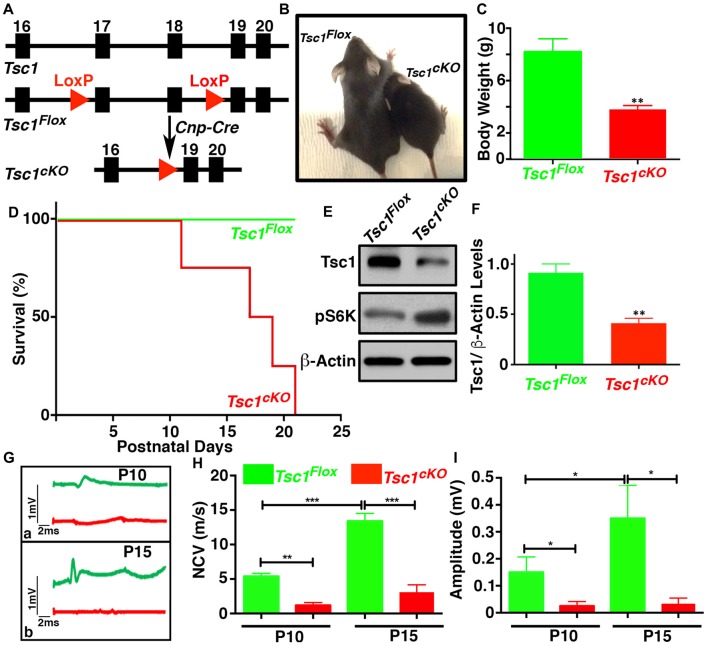
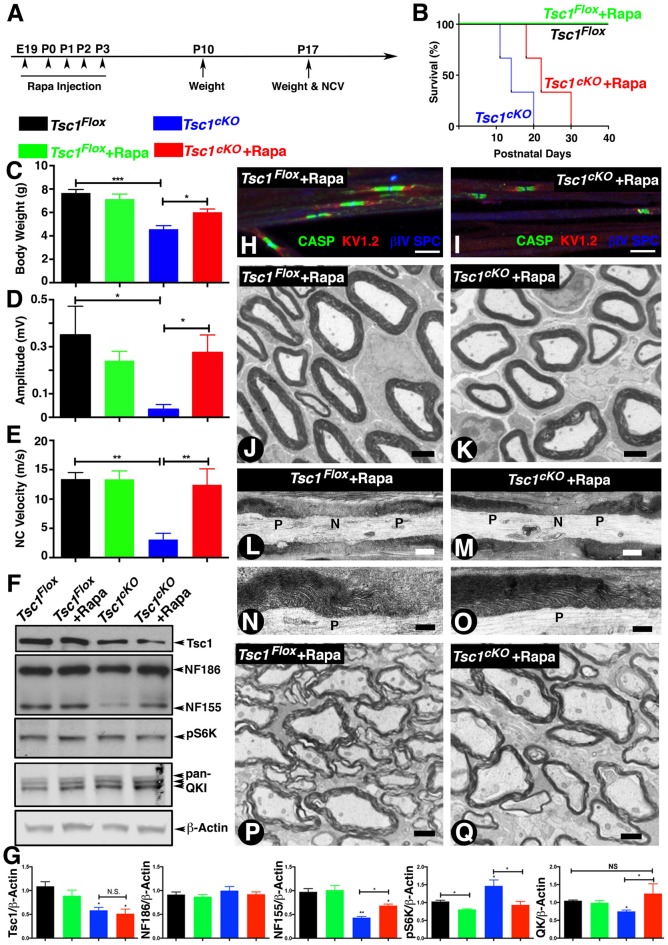
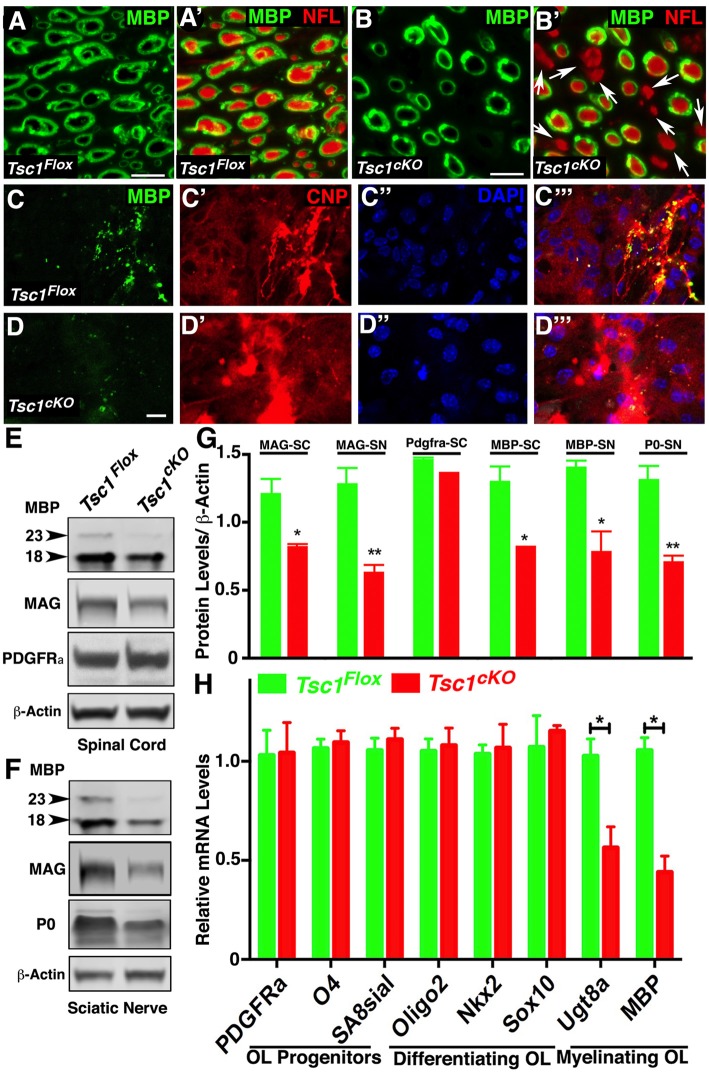
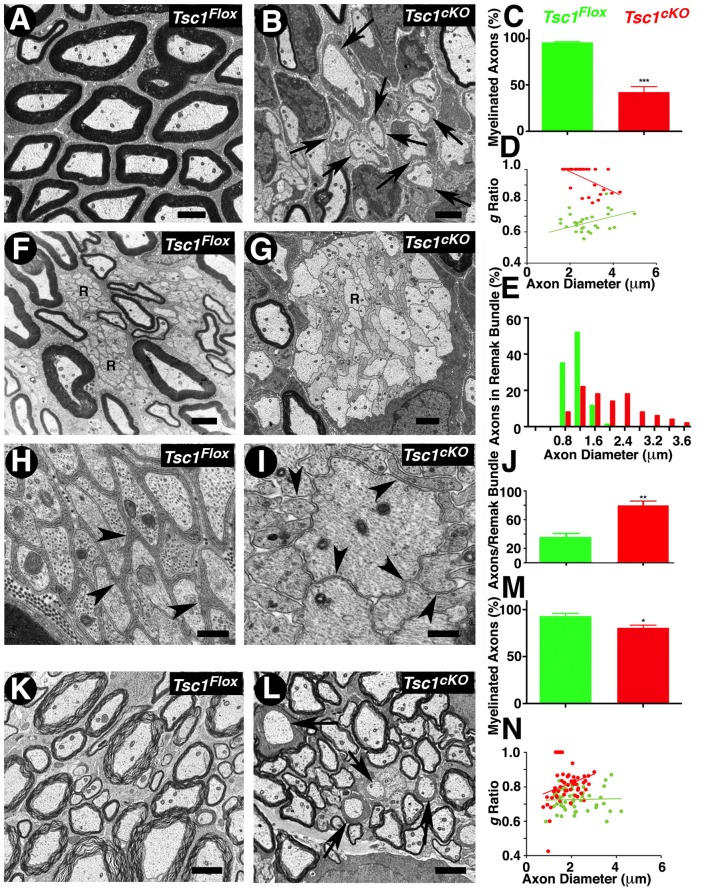
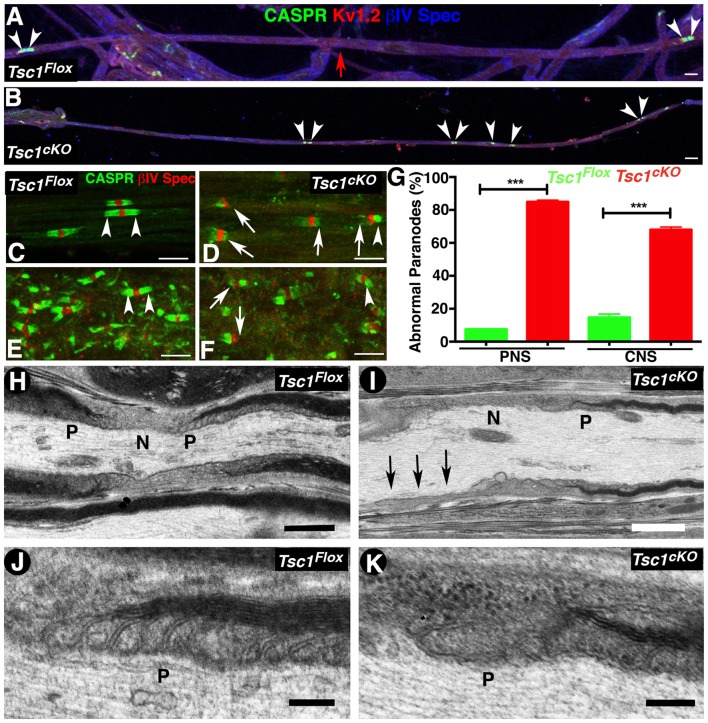
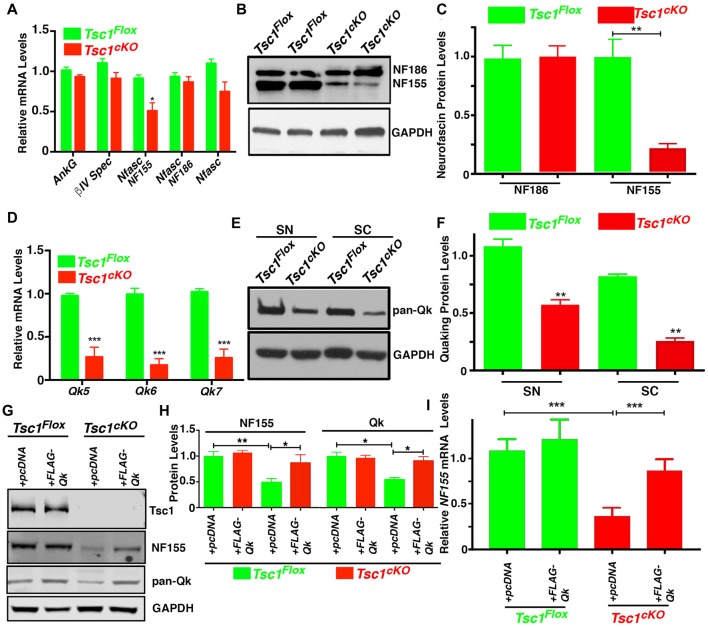
Mutations in human tuberous sclerosis complex (TSC) genes and are the leading causes of developmental brain abnormalities and large tumors in other tissues. Murine have been shown to negatively regulate the mammalian target of rapamycin complex 1 (mTORC1) signaling pathway in most tissues, and this pathway has been shown to be essential for proper oligodendrocytes/Schwann cell differentiation and myelination. Here, we report that ablation of gene specifically in oligodendrocytes/Schwann cells activates mTORC1 signaling resulting in severe motor disabilities, weight loss, and early postnatal death. The mutant mice of either sex showed reduced myelination, disrupted paranodal domains in myelinated axons, and disorganized unmyelinated Remak bundles. mRNA and protein expression analyses revealed strong reduction in the RNA-binding protein Quaking (Qk) and the 155 kDa glial Neurofascin (Nfasc). Re-introduction of exogenous gene in mutant oligodendrocytes restored Nfasc protein levels indicating that Qk is required for the stabilization of Nfasc mRNA. Interestingly, injection of Rapamycin, a pharmacological mTORC1 inhibitor, to pregnant mothers increased the lifespan of the mutant offspring, restored myelination as well as the levels of Qk and Nfasc, and consequently the organization of the paranodal domains. Together our studies show a critical role of mTORC1 signaling in the differentiation of myelinating glial cells and proper organization of axonal domains and provide insights into TSC-associated myelinated axon abnormalities.
人类结节性硬化症复合体(TSC)基因的突变是导致发育性脑异常和其他组织中大型肿瘤的主要原因。已表明小鼠TSC基因在大多数组织中对哺乳动物雷帕霉素靶蛋白复合体1(mTORC1)信号通路具有负调控作用,并且该通路已被证明对少突胶质细胞/施万细胞的正常分化和髓鞘形成至关重要。在此,我们报告在少突胶质细胞/施万细胞中特异性敲除TSC基因会激活mTORC1信号,导致严重的运动障碍、体重减轻和出生后早期死亡。两种性别的突变小鼠均表现出髓鞘形成减少、有髓轴突的结旁结构破坏以及无髓Remak束排列紊乱。mRNA和蛋白质表达分析显示RNA结合蛋白Quaking(Qk)和155 kDa胶质神经束蛋白(Nfasc)的表达大幅降低。在TSC突变的少突胶质细胞中重新引入外源TSC基因可恢复Nfasc蛋白水平,表明Qk是Nfasc mRNA稳定所必需的。有趣的是,给怀孕的母鼠注射雷帕霉素(一种mTORC1的药理学抑制剂)可延长突变后代的寿命,恢复髓鞘形成以及Qk和Nfasc的水平,进而恢复结旁结构的组织。我们的研究共同表明mTORC1信号在有髓胶质细胞分化和轴突结构的正常组织中起关键作用,并为TSC相关的有髓轴突异常提供了见解。