Ritter Maxi L, Avila Jesús, García-Escudero Vega, Hernández Félix, Pérez Mar
Departamento de Anatomía Histología y Neurociencia, Facultad de Medicina, Universidad Autonoma de Madrid (UAM), Madrid, Spain.
Centro de Biología Molecular Severo Ochoa, Consejo Superior de Investigaciones Científicas (CSIC), Universidad Autonoma de Madrid (UAM), Madrid, Spain.
Front Cell Neurosci. 2018 Jul 12;12:202. doi: 10.3389/fncel.2018.00202. eCollection 2018.
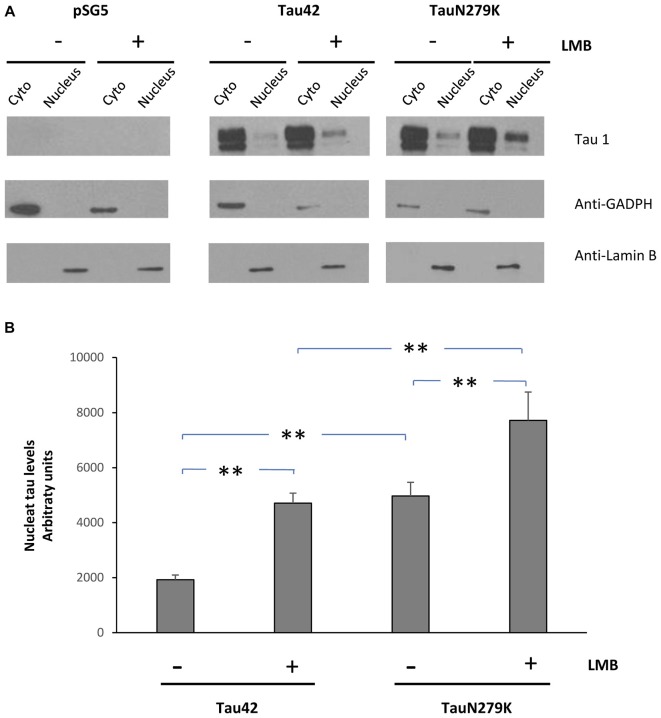
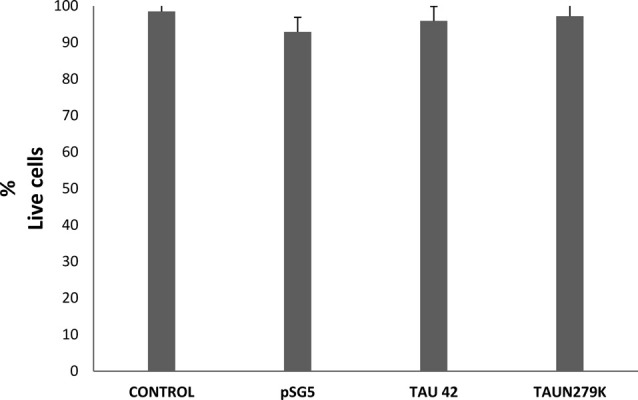
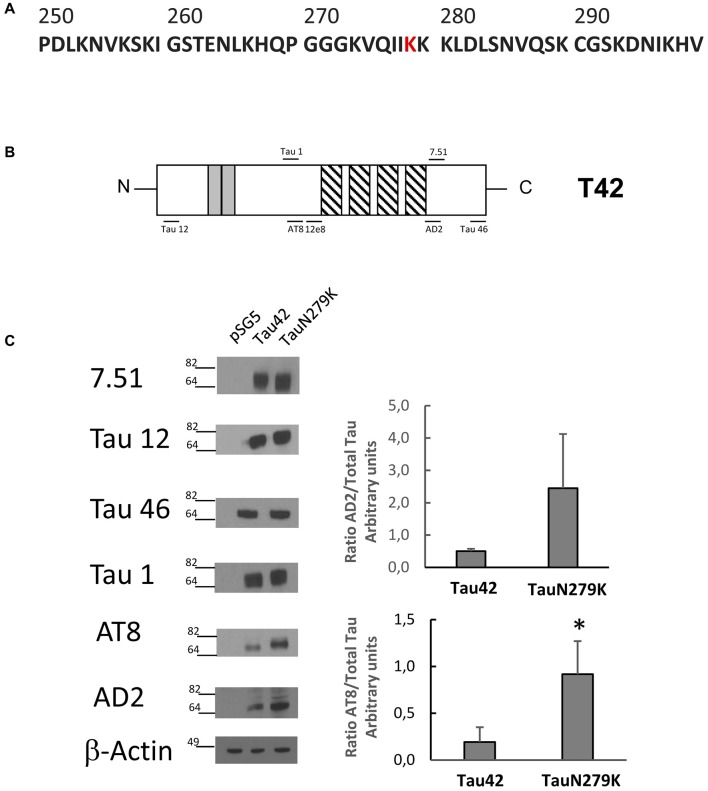
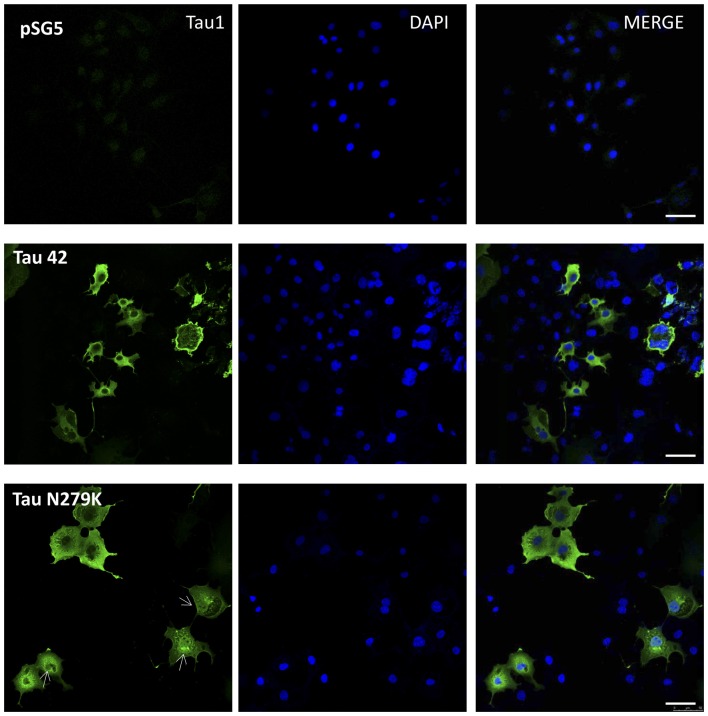
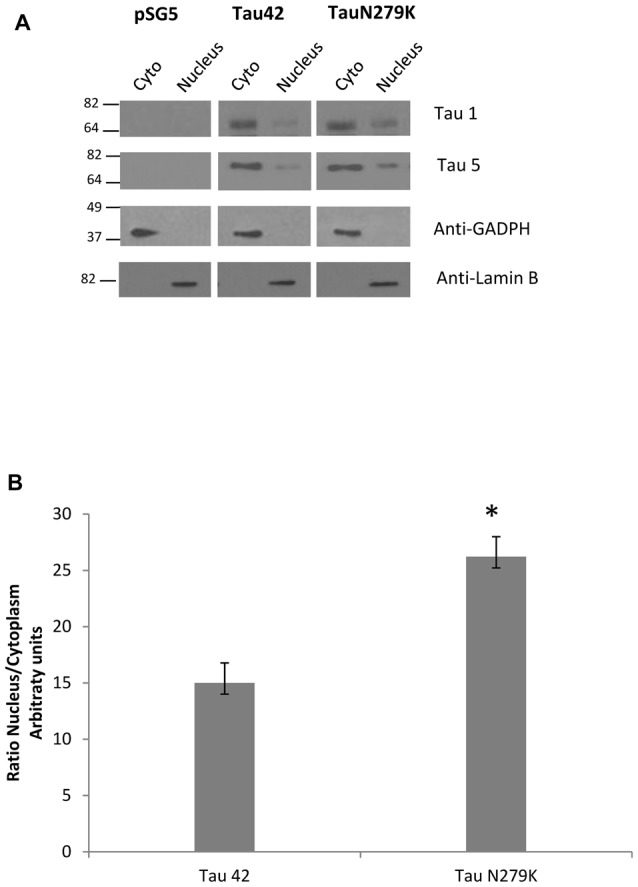
Tau is a microtubule-associated protein that plays an important role in Alzheimer's disease and related tauopathies. Approximately one-half of all cases of Frontotemporal dementia with parkinsonism-17 (FTDP-17) are caused by mutations in the MAPT gene. The N279K mutation is one of the three mutations more prevalent in FTDP-17 cases. Several studies have demonstrated that N279K Tau mutation alters alternative splicing inducing the presence of exon 10. Tau is mainly found in the cytosol of neuronal cells although it has also been localized within the nucleus. Here we demonstrate by biochemical and immunohistochemistry studies in COS-7 cells, that the proportion of mutant N279K Tau increases compared with wild-type at the cell nucleus although cell viability is not affected. These data will provide us with a better outline of the nuclear role of tau protein offering new clues related with this tauopathie.
Tau是一种与微管相关的蛋白质,在阿尔茨海默病及相关tau蛋白病中起重要作用。约一半的伴有帕金森综合征的额颞叶痴呆17型(FTDP - 17)病例由MAPT基因突变引起。N279K突变是FTDP - 17病例中更常见的三种突变之一。多项研究表明,N279K Tau突变会改变可变剪接,导致外显子10的出现。Tau主要存在于神经元细胞的胞质溶胶中,不过也已在细胞核中定位。在此,我们通过对COS - 7细胞进行生化和免疫组化研究证明,尽管细胞活力未受影响,但细胞核中突变型N279K Tau的比例相对于野生型有所增加。这些数据将为我们更好地勾勒tau蛋白的核作用提供与这种tau蛋白病相关的新线索。