Karikari Thomas K, Nagel David A, Grainger Alastair, Clarke-Bland Charlotte, Crowe James, Hill Eric J, Moffat Kevin G
School of Life Sciences, University of Warwick, Coventry, United Kingdom.
Midlands Integrative Biosciences Training Partnership, University of Warwick, Coventry, United Kingdom.
Front Cell Neurosci. 2019 Jul 9;13:296. doi: 10.3389/fncel.2019.00296. eCollection 2019.
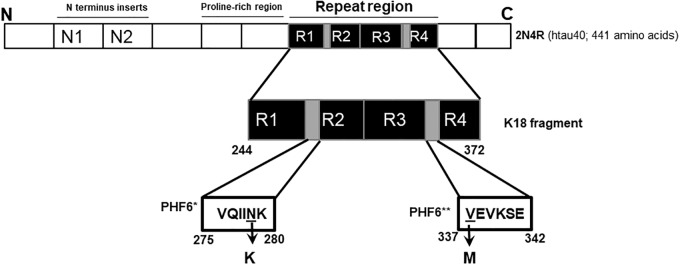
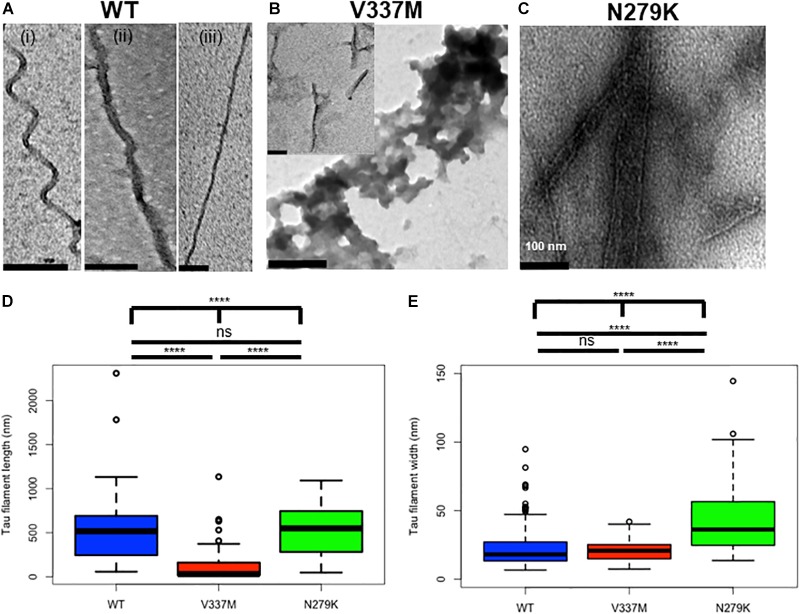
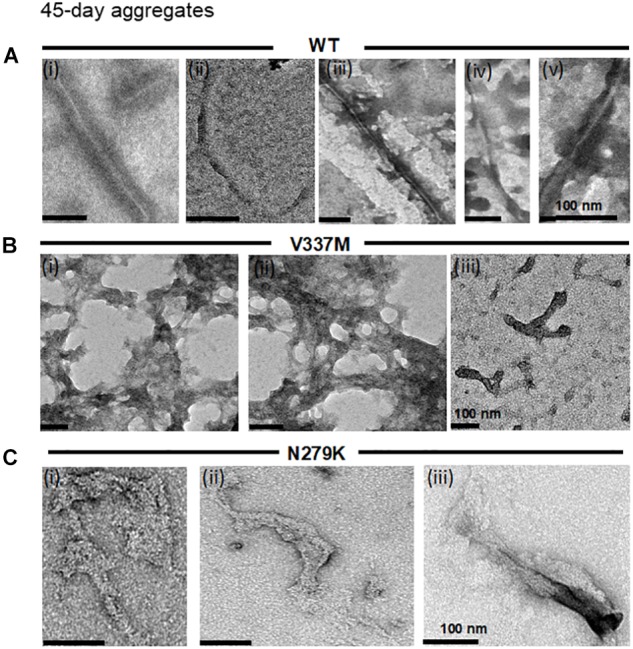
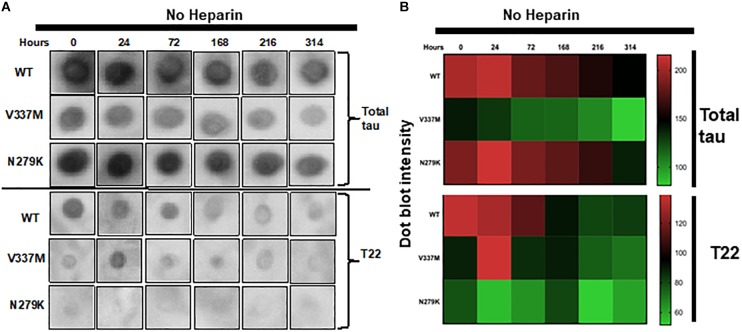
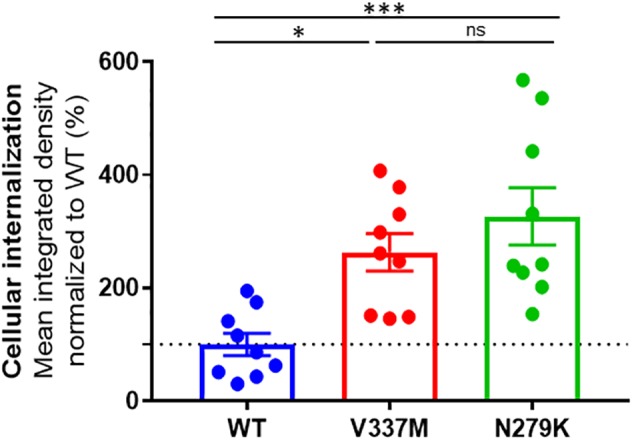
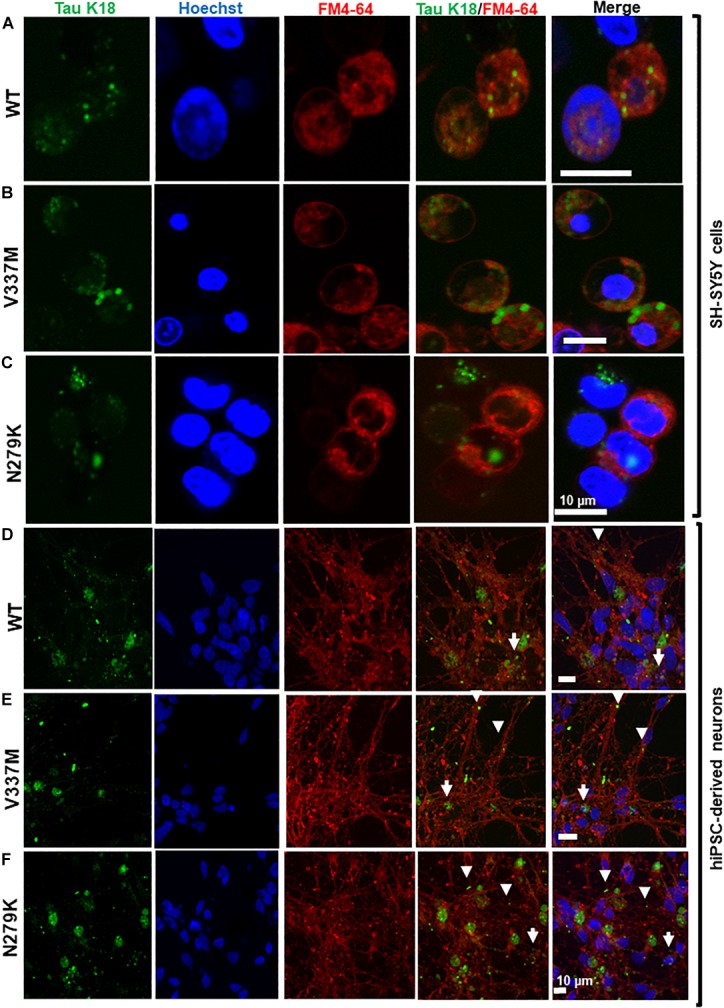
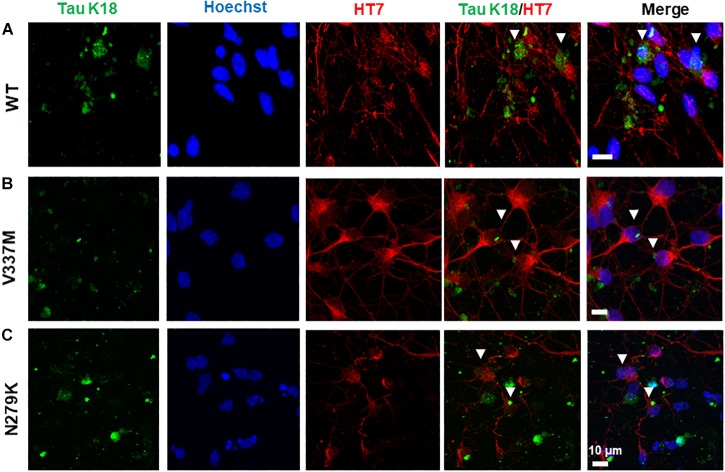
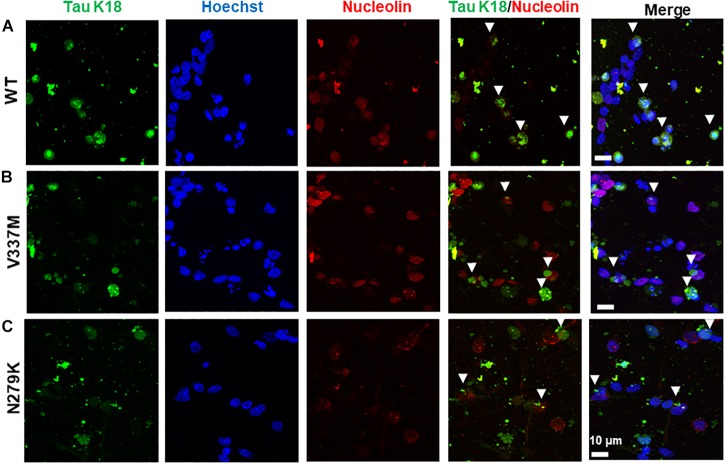
The inter-cellular propagation of tau aggregates in several neurodegenerative diseases involves, in part, recurring cycles of extracellular tau uptake, initiation of endogenous tau aggregation, and extracellular release of at least part of this protein complex. However, human brain tau extracts from diverse tauopathies exhibit variant or "strain" specificity in inducing inter-cellular propagation in both cell and animal models. It is unclear if these distinctive properties are affected by disease-specific differences in aggregated tau conformation and structure. We have used a combined structural and cell biological approach to study if two frontotemporal dementia (FTD)-associated pathologic mutations, V337M and N279K, affect the aggregation, conformation and cellular internalization of the tau four-repeat domain (K18) fragment. In both heparin-induced and native-state aggregation experiments, each FTD variant formed soluble and fibrillar aggregates with remarkable morphological and immunological distinctions from the wild type (WT) aggregates. Exogenously applied oligomers of the FTD tau-K18 variants (V337M and N279K) were significantly more efficiently taken up by SH-SY5Y neuroblastoma cells than WT tau-K18, suggesting mutation-induced changes in cellular internalization. However, shared internalization mechanisms were observed: endocytosed oligomers were distributed in the cytoplasm and nucleus of SH-SY5Y cells and the neurites and soma of human induced pluripotent stem cell-derived neurons, where they co-localized with endogenous tau and the nuclear protein nucleolin. Altogether, evidence of conformational and aggregation differences between WT and disease-mutated tau K18 is demonstrated, which may explain their distinct cellular internalization potencies. These findings may account for critical aspects of the molecular pathogenesis of tauopathies involving WT and mutated tau.
在几种神经退行性疾病中,tau聚集体的细胞间传播部分涉及细胞外tau摄取、内源性tau聚集起始以及该蛋白复合物至少一部分的细胞外释放的反复循环。然而,来自不同tau蛋白病的人脑tau提取物在细胞和动物模型中诱导细胞间传播时表现出变体或“毒株”特异性。尚不清楚这些独特性质是否受聚集tau构象和结构中疾病特异性差异的影响。我们采用结构和细胞生物学相结合的方法来研究两种与额颞叶痴呆(FTD)相关的病理突变V337M和N279K是否影响tau四重复结构域(K18)片段的聚集、构象和细胞内化。在肝素诱导的聚集实验和天然状态聚集实验中,每种FTD变体均形成了可溶性和纤维状聚集体,其形态和免疫特性与野生型(WT)聚集体有显著差异。外源性应用的FTD tau-K18变体(V337M和N279K)的寡聚体被SH-SY5Y神经母细胞瘤细胞摄取效率明显高于WT tau-K18,提示突变诱导了细胞内化的变化。然而,观察到了共同的内化机制:内化的寡聚体分布在SH-SY5Y细胞的细胞质和细胞核以及人诱导多能干细胞衍生神经元的神经突和胞体中,在那里它们与内源性tau和核蛋白核仁素共定位。总之,证明了WT和疾病突变的tau K18之间存在构象和聚集差异的证据,这可能解释了它们不同的细胞内化能力。这些发现可能解释了涉及WT和突变tau的tau蛋白病分子发病机制的关键方面。