Murugavel Shamini, Bugyei-Twum Antoinette, Matkar Pratiek N, Al-Mubarak Husain, Chen Hao H, Adam Mohamed, Jain Shubha, Narang Tanya, Abdin Rawand M, Qadura Mohammad, Connelly Kim A, Leong-Poi Howard, Singh Krishna K
Faculty of Science, York University, Toronto, ON, Canada.
Division of Cardiology, Li Ka Shing Knowledge Institute of St. Michael's Hospital, Toronto, ON, Canada.
Front Pharmacol. 2018 Jul 11;9:737. doi: 10.3389/fphar.2018.00737. eCollection 2018.
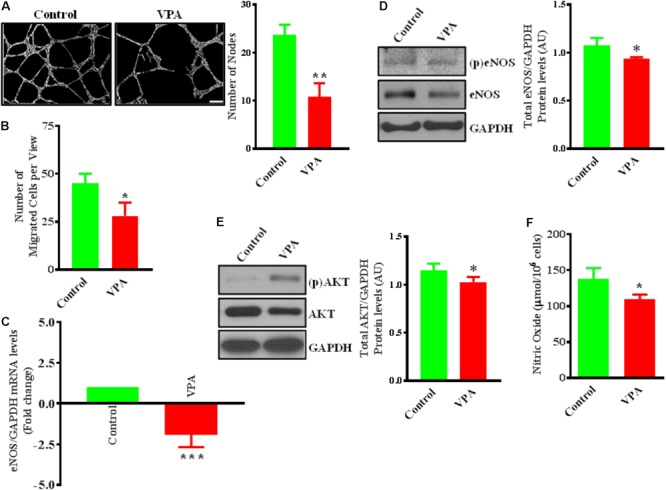
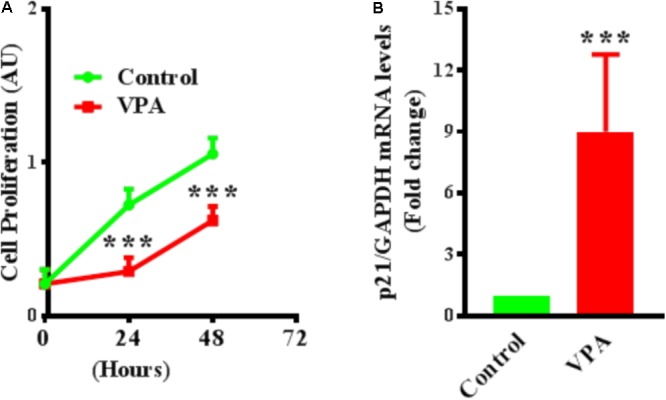
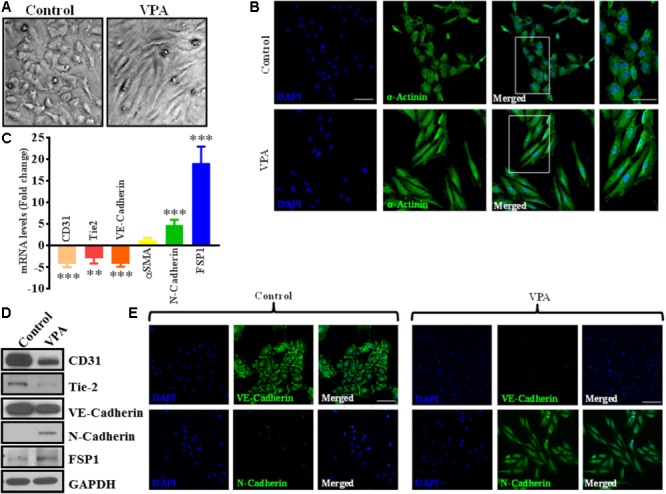
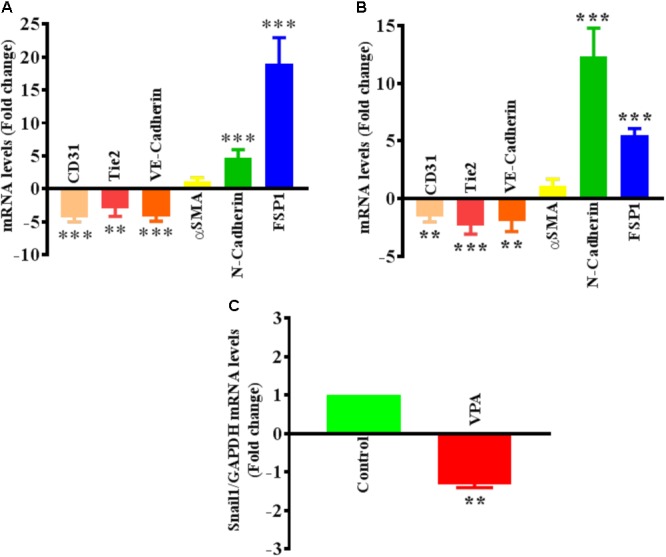
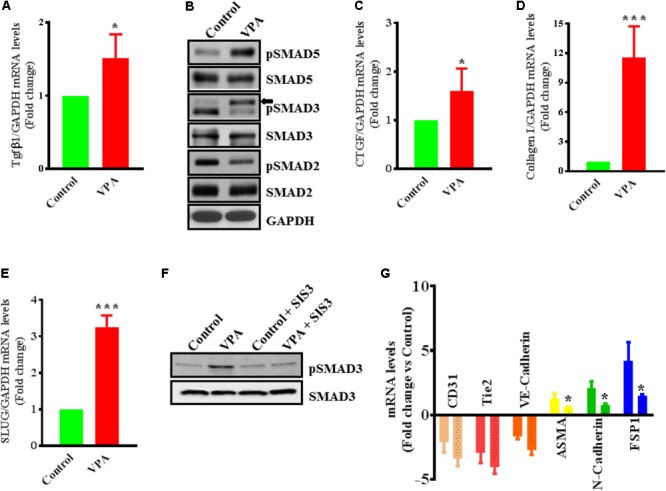
Valproic acid (VPA), a histone deacetylase (HDAC) inhibitor, is a widely used anticonvulsant drug that is currently undergoing clinical evaluation for anticancer therapy due to its anti-angiogenic potential. Endothelial cells (ECs) can transition into mesenchymal cells and this form of EC plasticity is called endothelial-to-mesenchymal transition (EndMT), which is widely implicated in several pathologies including cancer and organ fibrosis. However, the effect of VPA on EC plasticity and EndMT remains completely unknown. We report herein that VPA-treatment significantly inhibits tube formation, migration, nitric oxide production, proliferation and migration in ECs. A microscopic evaluation revealed, and qPCR, immunofluorescence and immunoblotting data confirmed EndMT-like phenotypic switching as well as an increased expression of pro-fibrotic genes in VPA-treated ECs. Furthermore, our data confirmed important and regulatory role played by TGFβ-signaling in VPA-induced EndMT. Our qPCR array data performed for 84 endothelial genes further supported our findings and demonstrated 28 significantly and differentially regulated genes mainly implicated in angiogenesis, endothelial function, EndMT and fibrosis. We, for the first time report that VPA-treatment associated EndMT contributes to the VPA-associated loss of endothelial function. Our data also suggest that VPA based therapeutics may exacerbate endothelial dysfunction and EndMT-related phenotype in patients undergoing anticonvulsant or anticancer therapy, warranting further investigation.
丙戊酸(VPA)是一种组蛋白脱乙酰酶(HDAC)抑制剂,是一种广泛使用的抗惊厥药物,由于其抗血管生成潜力,目前正在进行抗癌治疗的临床评估。内皮细胞(ECs)可以转变为间充质细胞,这种形式的EC可塑性被称为内皮-间充质转化(EndMT),它广泛涉及包括癌症和器官纤维化在内的多种病理过程。然而,VPA对EC可塑性和EndMT的影响仍然完全未知。我们在此报告,VPA处理显著抑制ECs中的管形成、迁移、一氧化氮产生、增殖和迁移。显微镜评估显示,qPCR、免疫荧光和免疫印迹数据证实了VPA处理的ECs中类似EndMT的表型转换以及促纤维化基因表达的增加。此外,我们的数据证实了TGFβ信号在VPA诱导的EndMT中发挥的重要调节作用。我们对84个内皮基因进行的qPCR阵列数据进一步支持了我们的发现,并证明了28个显著且差异调节的基因主要与血管生成、内皮功能、EndMT和纤维化有关。我们首次报告,VPA处理相关的EndMT导致了VPA相关的内皮功能丧失。我们的数据还表明,基于VPA的治疗方法可能会加重接受抗惊厥或抗癌治疗的患者的内皮功能障碍和EndMT相关表型,值得进一步研究。