Liu Yanhua, Zou Jin, Li Bingong, Wang Yuqin, Wang Delong, Hao Yanqin, Ke Xuan, Li Xingxing
Department of Cardiology, The First Affiliated Hospital, Nanchang University, Nanchang, Jiangxi 330006, P.R. China.
Department of Cardiology, Loudi Central Hospital, Loudi, Hunan 417000, P.R. China.
Int J Mol Med. 2017 Jul;40(1):65-74. doi: 10.3892/ijmm.2017.2998. Epub 2017 May 22.
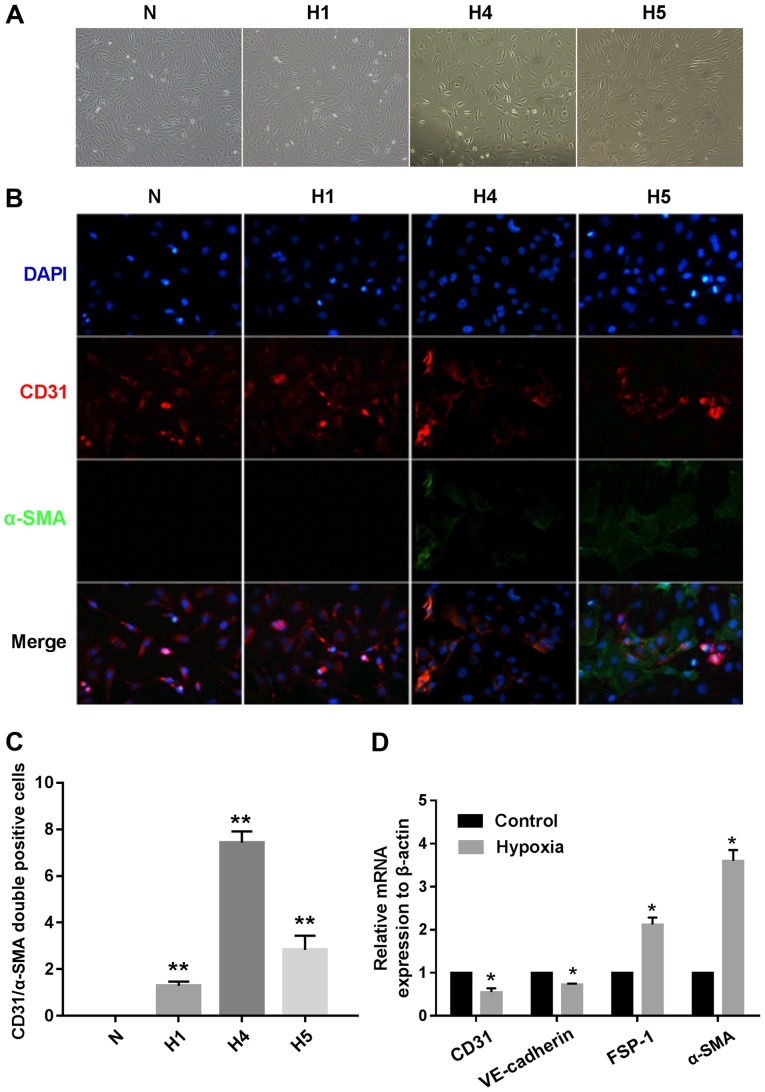
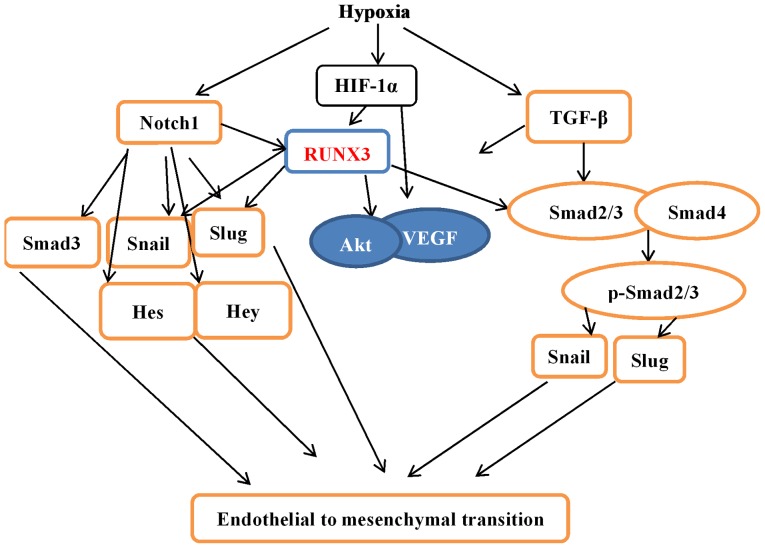
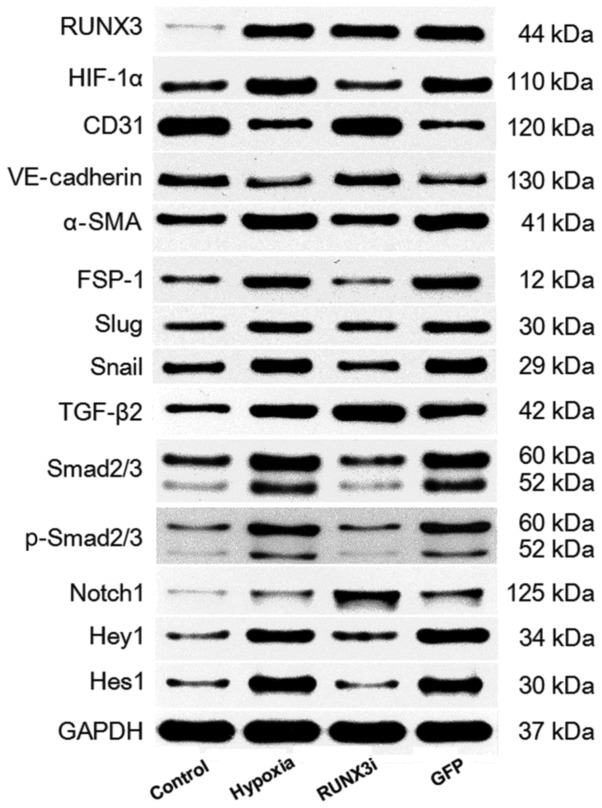
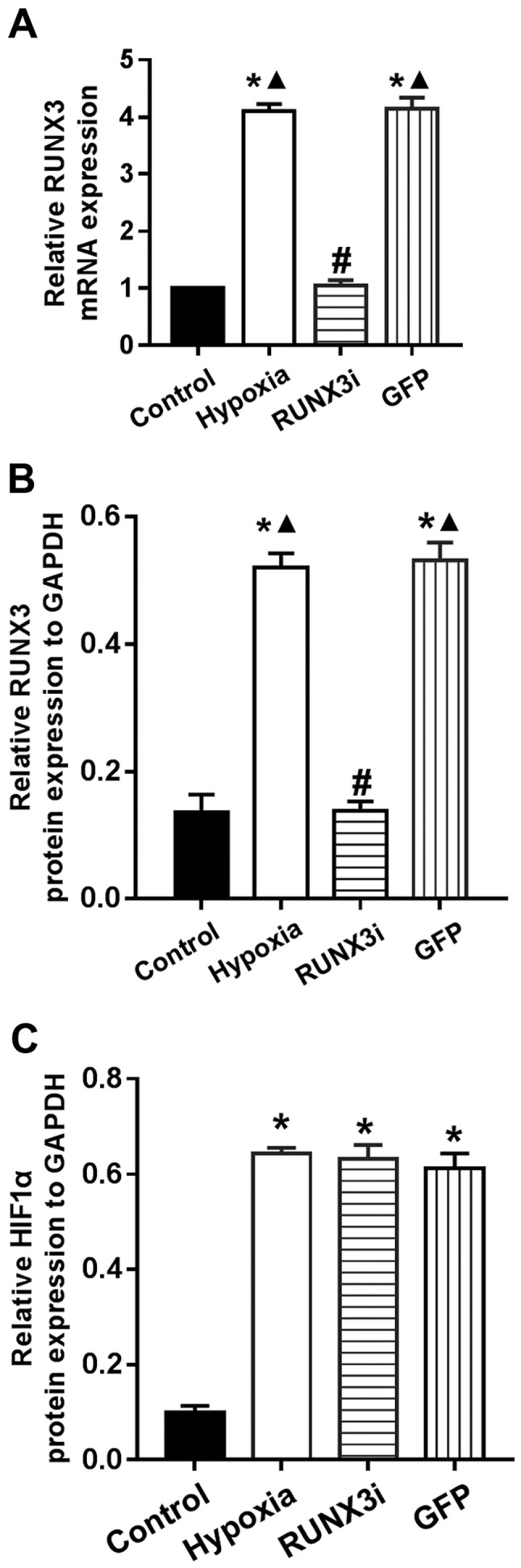
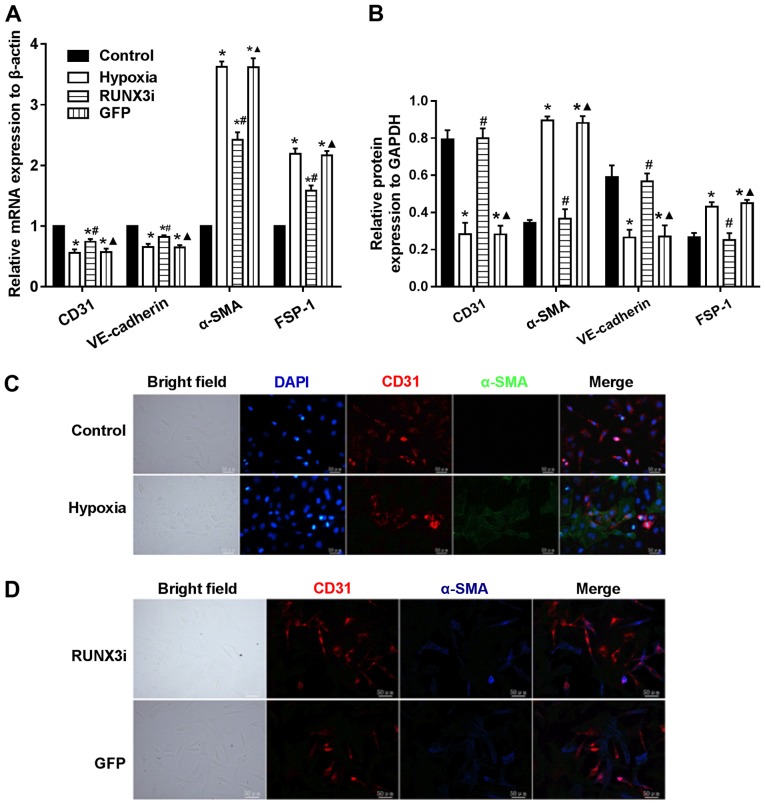
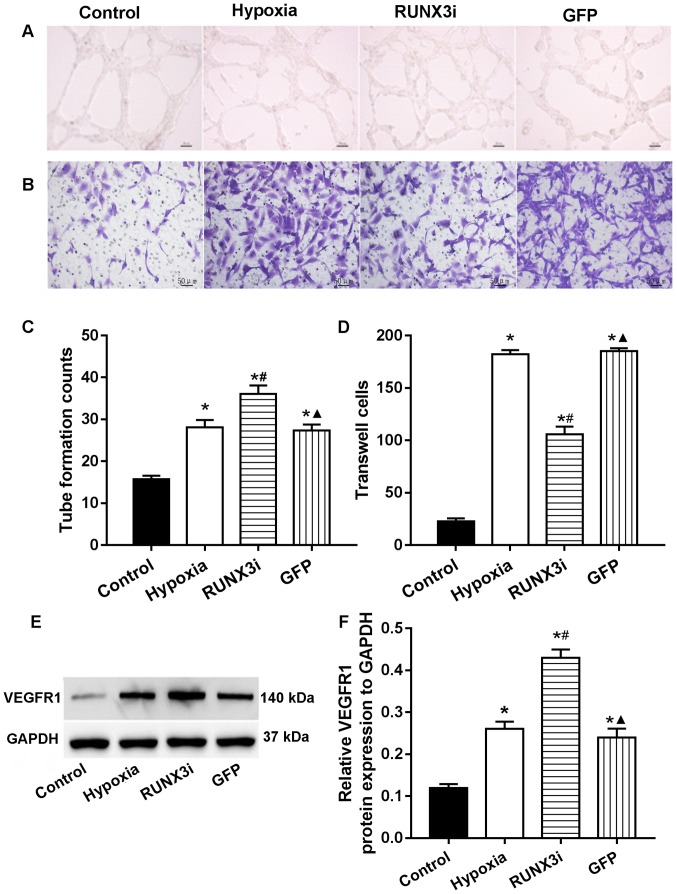
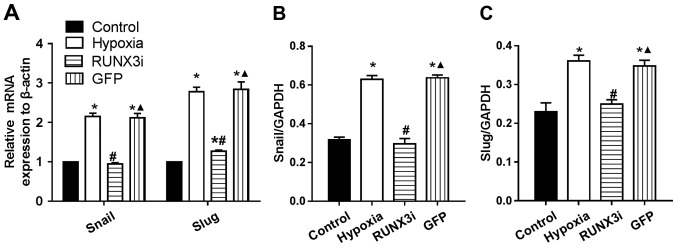
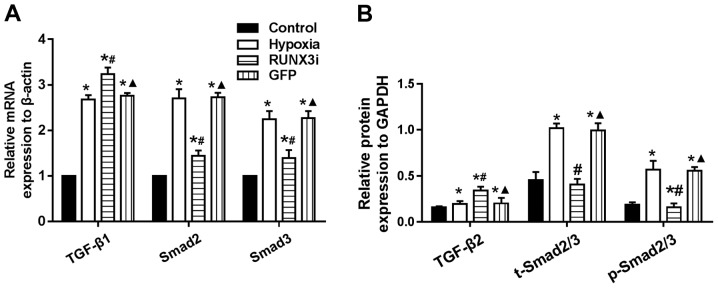
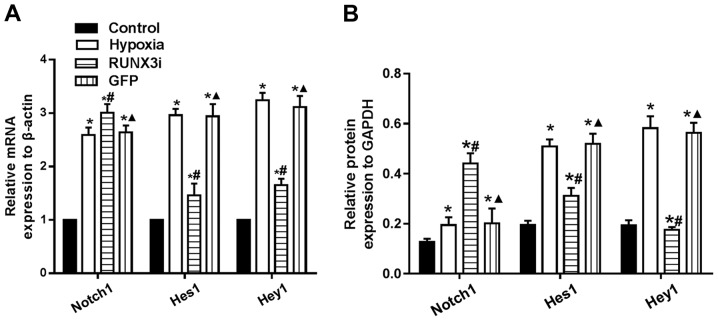
Endothelial-mesenchymal transition (EndMT) is an essential mechanism in the cardiovascular system, for both cardiovascular development and cardiovascular diseases (CVDs). Recent studies indicate that runt-related transcription factor 3 (RUNX3) contributes to EndMT and endothelial cell dysfunction. However, the underlying molecular mechanism remains unknown. The present study was designed to investigate the role of RUNX3 in EndMT and endothelial cell function, and to elucidate the underlying molecular mechanism. Human cardiac microvascular endothelial cells (HCMECs) were incubated in strictly controlled hypoxic conditions (1% O2). HCMECs were cultured under normoxic conditions (21% O2), and then moved to a strictly controlled hypoxic environment (1% O2). Under this hypoxic condition, the cells were transfected with the lentiviral vector containing RUNX3 or an empty lentiviral vector for 8 h. After the cells were cultured under hypoxic conditions for 4 days, CD31 and α-smooth muscle actin colocalization were assessed by immunofluorescence microscopy. Transwell migration and tube formation assays were used to examine the migration and angiogenesis ability. RT-qPCR and western blotting were used to determine the expression of molecules involved in EndMT. Hypoxia induced the transition of HCMECs to mesenchymal cells and markedly promoted tube formation and cell migration. Transforming growth factor-β (TGF-β) and Notch signaling were activated during the hypoxia-induced EndMT of HCMECs. RUNX3 knockdown attenuated EndMT of HCMECs, promoted angiogenic phenotype, and reduced endothelial cell migration. In conclusion, our results showed that RUNX3 knockdown attenuated hypoxia-induced EndMT and reversed endothelial cell functions. RUNX3 is a common downstream target of TGF-β and Notch signaling, and may be a novel therapeutic target for treating CVD mediated by EndMT.
内皮-间充质转化(EndMT)是心血管系统中一个重要机制,在心血管发育和心血管疾病(CVDs)中均发挥作用。最近的研究表明, runt相关转录因子3(RUNX3)促成EndMT和内皮细胞功能障碍。然而,其潜在分子机制仍不清楚。本研究旨在探讨RUNX3在EndMT和内皮细胞功能中的作用,并阐明其潜在分子机制。将人心脏微血管内皮细胞(HCMECs)置于严格控制的低氧条件(1% O₂)下培养。HCMECs先在常氧条件(21% O₂)下培养,然后转移至严格控制的低氧环境(1% O₂)。在此低氧条件下,用含RUNX3的慢病毒载体或空慢病毒载体转染细胞8小时。细胞在低氧条件下培养4天后,通过免疫荧光显微镜评估CD31和α-平滑肌肌动蛋白的共定位。采用Transwell迁移和管形成实验检测迁移和血管生成能力。RT-qPCR和蛋白质免疫印迹法用于测定EndMT相关分子的表达。低氧诱导HCMECs向间充质细胞转变,并显著促进管形成和细胞迁移。在低氧诱导的HCMECs的EndMT过程中,转化生长因子-β(TGF-β)和Notch信号被激活。RUNX3基因敲低减弱了HCMECs的EndMT,促进了血管生成表型,并减少了内皮细胞迁移。总之,我们的结果表明,RUNX3基因敲低减弱了低氧诱导的EndMT并逆转了内皮细胞功能。RUNX3是TGF-β和Notch信号的共同下游靶点,可能是治疗由EndMT介导的CVD的新治疗靶点。