Poole David C, Erickson Howard H
Department of Anatomy and Physiology,
Department of Kinesiology, College of Veterinary Medicine, Kansas State University, Manhattan, KS, USA,
Vet Med (Auckl). 2016 Nov 21;7:133-148. doi: 10.2147/VMRR.S120421. eCollection 2016.
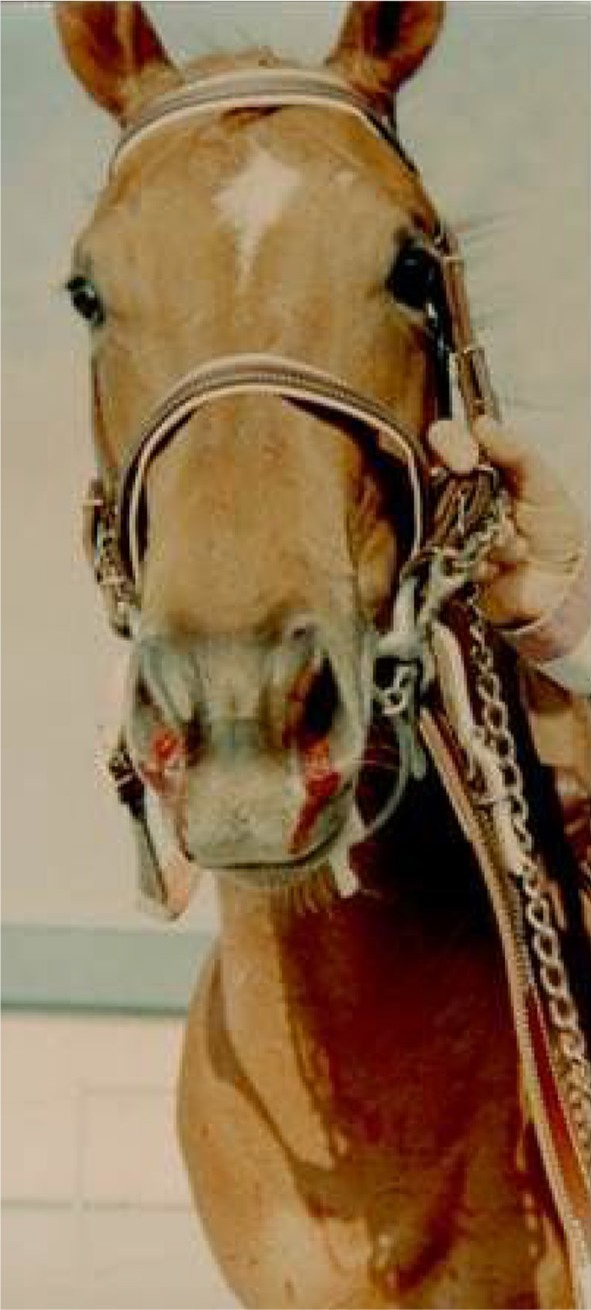
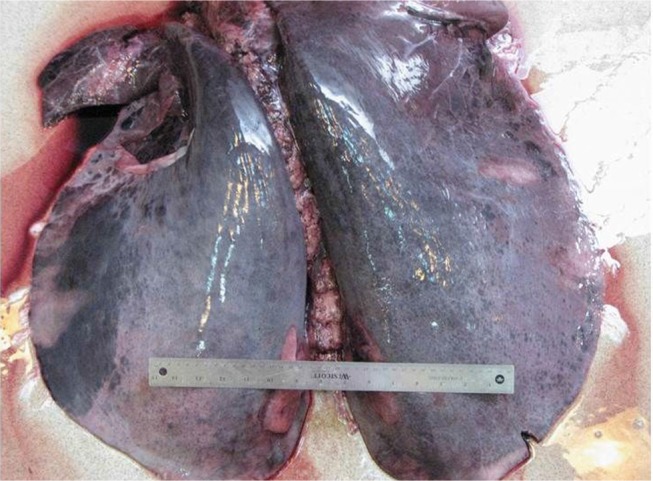
As the Thoroughbreds race for the final stretch, 44 hooves flash and thunder creating a cacophony of tortured air and turf. Orchestrated by selective breeding for physiology and biomechanics, expressed as speed, the millennia-old symphony of man and beast reaches its climax. At nearly 73 kilometers per hour (45 mph) over half a ton of flesh and bone dwarfs its limpet-like jockey as, eyes wild and nostrils flaring, their necks stretch for glory. Beneath each resplendent livery-adorned, latherin-splattered coat hides a monstrous heart trilling at 4 beats per second, and each minute, driving over 400 L (105 gallons) of oxygen-rich blood from lungs to muscles. Matching breath to stride frequency, those lungs will inhale 16 L (4 gallons) of air each stride moving >1,000 L/min in and out of each nostril - and yet failing. Engorged with blood and stretched to breaking point, those lungs can no longer redden the arterial blood but leave it dusky and cyanotic. Their exquisitely thin blood-gas barrier, a mere 10.5 μm thick (1/50,000 of an inch), ruptures, and red cells invade the lungs. After the race is won and lost, long after the frenetic crowd has quieted and gone, that blood will clog and inflame the airways. For a few horses, those who bleed extensively, it will overflow their lungs and spray from their nostrils incarnadining the walls of their stall: a horrifically poignant canvas that strikes at horse racing's very core. That exercise-induced pulmonary hemorrhage (EIPH) occurs is a medical and physiological reality. That every reasonable exigency is not taken to reduce/prevent it would be a travesty. This review is not intended to provide an exhaustive coverage of EIPH for which the reader is referred to recent reviews, rather, after a brief reminder of its physiologic and pathologic bases, focus is brought on the latest developments in EIPH discovery as this informs state-of-the-art knowledge, the implementation of that knowledge and recommendations for future research and treatment.
当纯种马向着最后冲刺阶段疾驰时,44只蹄子翻飞,轰鸣声震耳欲聋,搅得空气和草皮一片嘈杂。经过数千年的选育,马在生理和生物力学方面达到了完美结合,展现为速度,人与马的古老交响曲在此刻达到高潮。它们以近73公里每小时(45英里每小时)的速度疾驰,半吨多重的血肉之躯让身形如帽贝般的骑师显得矮小。马群眼神狂野,鼻孔张大,伸长脖子去追逐荣耀。在每一匹身披华丽马衣、溅满汗水的马皮下,都藏着一颗巨大的心脏,每秒跳动4次,每分钟驱使超过400升(105加仑)富含氧气的血液从肺部流向肌肉。为配合步伐频率进行呼吸,马的肺部每迈一步会吸入16升(4加仑)空气,每个鼻孔每分钟进出的空气量超过1000升——然而这仍不够。肺部因充血而扩张到极限,再也无法使动脉血变红,血液变得暗沉发绀。它们极其薄的气血屏障,仅有10.5微米厚(五万分之一英寸),发生破裂,红细胞侵入肺部。比赛胜负已分,在狂热的人群早已安静离去很久之后,那些血液会堵塞并炎症化气道。对一些马来说,那些出血严重的马,血液会从肺部溢出,从鼻孔喷出,染红马厩的墙壁:这是一幅极其凄惨的画面,直击赛马运动的核心。运动诱发的肺出血(EIPH)确有发生,这是医学和生理学上的事实。若不尽一切合理努力去减少/预防它,将是一种暴行。本综述并非旨在详尽涵盖EIPH,相关内容读者可参考近期的综述,相反,在简要回顾其生理和病理基础后,重点关注EIPH研究的最新进展,因为这有助于了解最新知识、该知识的应用以及对未来研究和治疗的建议。