Ashour Badawy Ahmed, Khedr Gehan, Omar Abbas, Bae Sejong, Arafat Waleed, Grant Stefan
Clinical Oncology and Nuclear Medicine Department, University of Alexandria Faculty of Medicine, Alexandria, Egypt. Email:
Asian Pac J Cancer Prev. 2018 Jul 27;19(7):1907-1910. doi: 10.22034/APJCP.2018.19.7.1907.
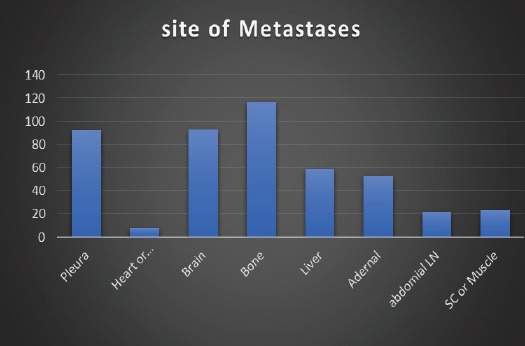
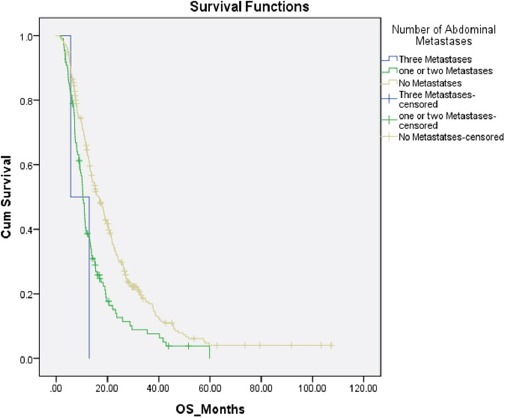
Background: Advanced stage non-small cell lung cancer (NSCLC) is a heterogenous disease, yet, with the exception of targeted therapies, most guidelines recommended uniform treatment irrespective of tumor burden or sites of metastases and this may explain, in part, the wide range of responses to same lines of therapy. Aim of work: In this work we tried to explore the effect of metastatic sites in on overall survival (OS), in an unselected group of Non-small cell lung cancer patients who received different treatments line. Methods: A retrospective analysis was performed on patients with stage IV NSCLC who received systemic treatment at UAB Cancer Center (NCI designated comprehensive cancer center) between 2002 to 2012. The details of sites of metastases, systemic therapy and overall survival were recorded for each patient. Result: In 409 patients who received systemic treatment, there was statistically significant lower OS in those presenting with liver metastases (p<0.001), adrenal metastases (p=0.011) and metastases to abdominal lymph nodes (p=0.014). There was no statistically significance difference in OS in patient presenting with pleural metastases or effusion (p=0.908), metastases to heart or pericardium (p=0.654), metastases to bone (p=0.281), brain (p=0.717) or skin and subcutaneous tissue (p=0.642). Conclusion: Intra-abdominal metastases confer a particularly poor prognosis in stage IV NSCLC treated with systemic therapy and may identify patients in whom aggressive treatment beyond first line therapy is not appropriate.
晚期非小细胞肺癌(NSCLC)是一种异质性疾病,然而,除了靶向治疗外,大多数指南建议无论肿瘤负荷或转移部位如何,都采用统一的治疗方法,这可能部分解释了对同一线治疗的广泛反应。工作目的:在这项工作中,我们试图在一组未选择的接受不同治疗线的非小细胞肺癌患者中,探讨转移部位对总生存期(OS)的影响。方法:对2002年至2012年在UAB癌症中心(美国国立癌症研究所指定的综合癌症中心)接受全身治疗的IV期NSCLC患者进行回顾性分析。记录每位患者的转移部位、全身治疗和总生存期的详细信息。结果:在接受全身治疗的409例患者中,出现肝转移(p<0.001)、肾上腺转移(p=0.011)和腹部淋巴结转移(p=0.014)的患者的总生存期在统计学上显著较低。出现胸膜转移或胸腔积液(p=0.908)、心脏或心包转移(p=0.654)、骨转移(p=0.281)、脑转移(p=0.717)或皮肤及皮下组织转移(p=0.642)的患者的总生存期无统计学显著差异。结论:在接受全身治疗的IV期NSCLC患者中,腹内转移预示着特别差的预后,可能识别出不适合一线治疗以外积极治疗的患者。