Saitou M, Satta Y, Gokcumen O
Dept. of Biological Sciences, SUNY at Buffalo, NY, 14260-1300.
Dept. of Biological Sciences, The University of Tokyo, Tokyo, Japan, 113-0033.
G3 (Bethesda). 2018 Aug 30;8(9):2953-2966. doi: 10.1534/g3.118.200462.
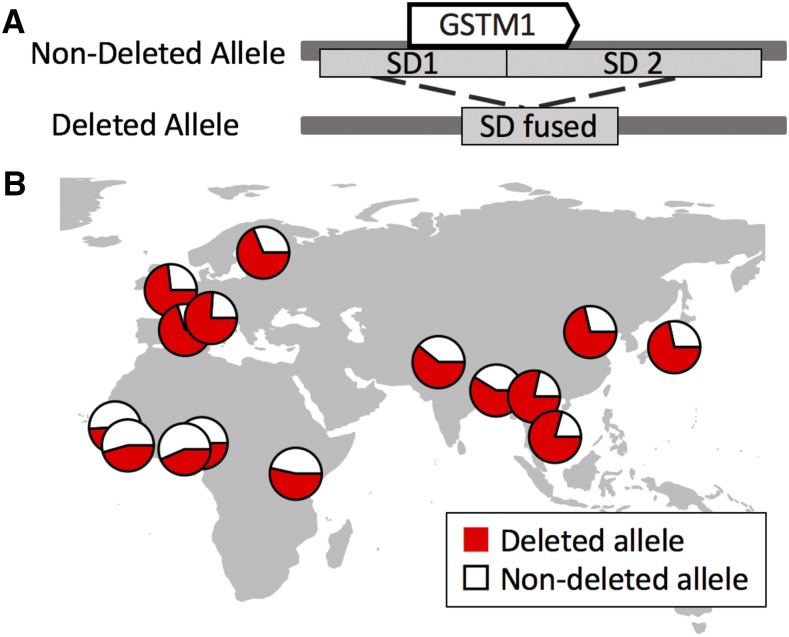
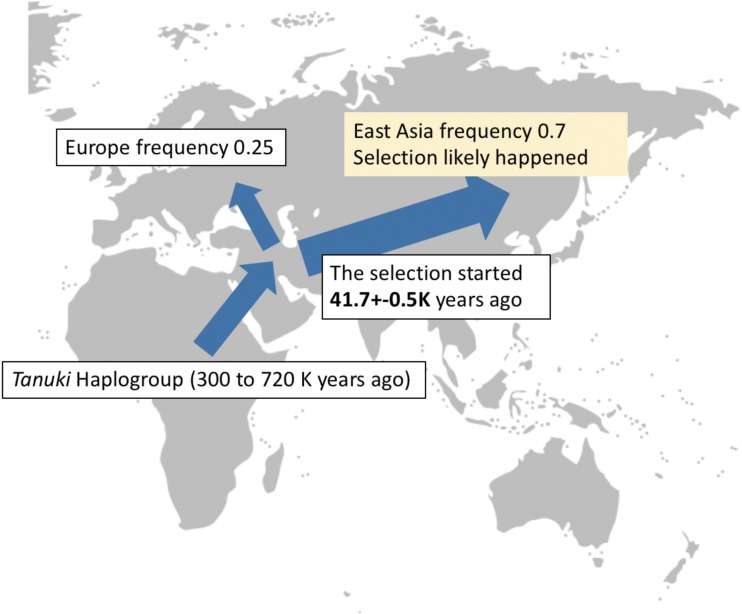
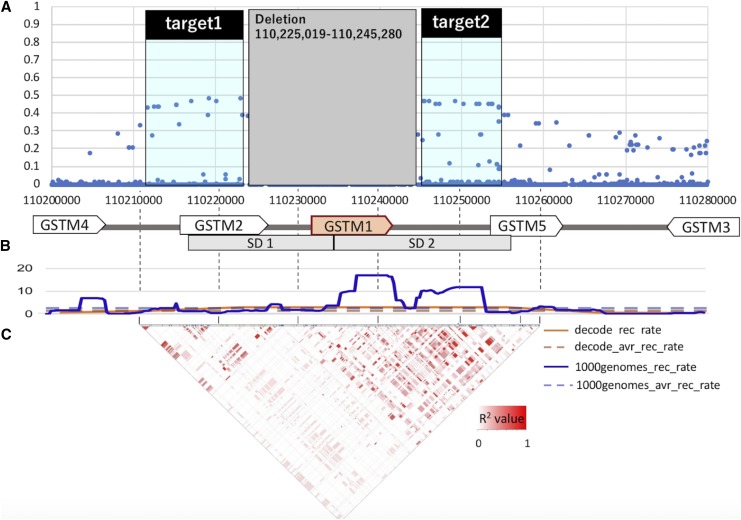
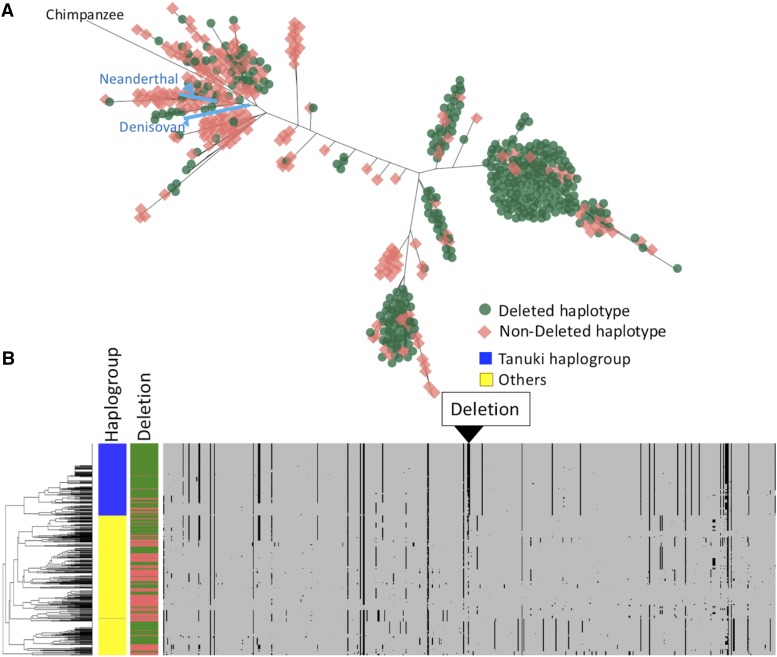
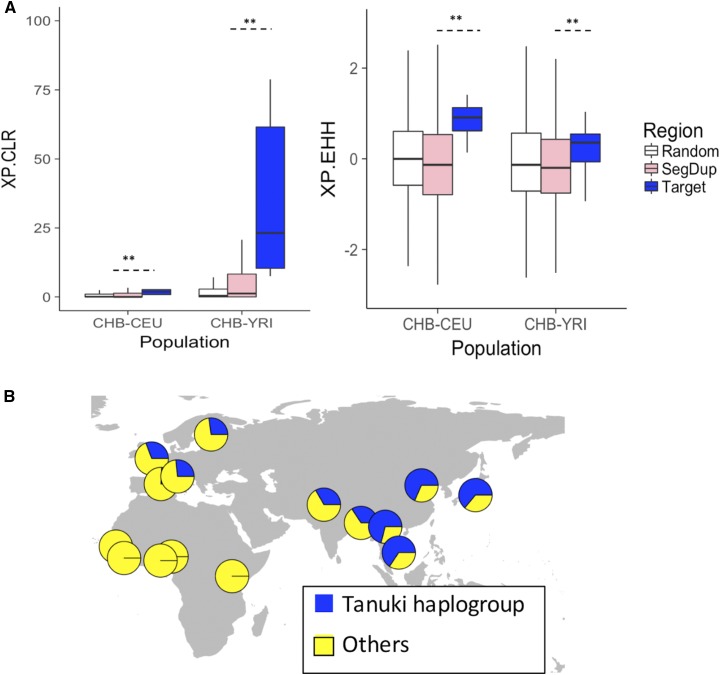
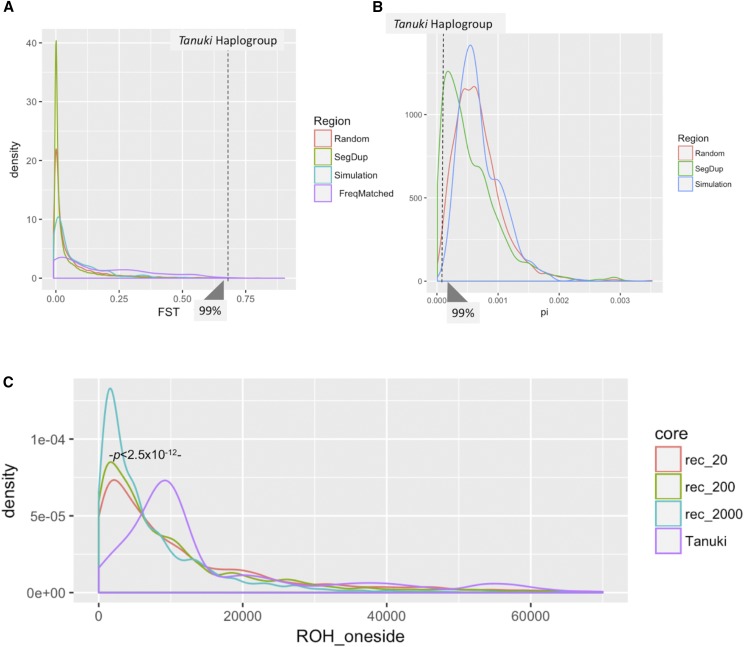
The deletion of the metabolizing Glutathione S-transferase Mu 1 () gene has been associated with multiple cancers, metabolic and autoimmune disorders, as well as drug response. It is unusually common, with allele frequency reaching up to 75% in some human populations. Such high allele frequency of a derived allele with apparent impact on an otherwise conserved gene is a rare phenomenon. To investigate the evolutionary history of this locus, we analyzed 310 genomes using population genetics tools. Our analysis revealed a surprising lack of linkage disequilibrium between the deletion and the flanking single nucleotide variants in this locus. Tests that measure extended homozygosity and rapid change in allele frequency revealed signatures of an incomplete sweep in the locus. Using empirical approaches, we identified the haplogroup, which carries the deletion and is found in approximately 70% of East Asian chromosomes. This haplogroup has rapidly increased in frequency in East Asian populations, contributing to a high population differentiation among continental human groups. We showed that extended homozygosity and population differentiation for this haplogroup is incompatible with simulated neutral expectations in East Asian populations. In parallel, we found that the haplogroup is significantly associated with the expression levels of other genes. Collectively, our results suggest that standing variation in this locus has likely undergone an incomplete sweep in East Asia with regulatory impact on multiple genes. Our study provides the necessary framework for further studies to elucidate the evolutionary reasons that maintain disease-susceptibility variants in the locus.
代谢性谷胱甘肽S-转移酶Mu 1()基因的缺失与多种癌症、代谢和自身免疫性疾病以及药物反应有关。它异常常见,在某些人群中等位基因频率高达75%。一个衍生等位基因对一个原本保守的基因有明显影响,却具有如此高的等位基因频率,这是一种罕见现象。为了研究该基因座的进化历史,我们使用群体遗传学工具分析了310个基因组。我们的分析表明,该基因座中缺失与侧翼单核苷酸变异之间令人惊讶地缺乏连锁不平衡。测量扩展纯合性和等位基因频率快速变化的测试揭示了该基因座存在不完全清除的特征。通过实证方法,我们确定了单倍群,它携带缺失且在大约70%的东亚染色体中被发现。这个单倍群在东亚人群中的频率迅速增加,导致了大陆人群之间的高度群体分化。我们表明,该单倍群的扩展纯合性和群体分化与东亚人群中模拟的中性预期不相符。同时,我们发现单倍群与其他基因的表达水平显著相关。总体而言,我们的结果表明,该基因座的现存变异在东亚可能经历了一次不完全清除,对多个基因具有调控影响。我们的研究为进一步研究阐明维持该基因座疾病易感性变异的进化原因提供了必要框架。