Institute of Clinical Pharmacology, Guangzhou University of Chinese Medicine, Guangzhou, China.
The First Affiliated Hospital of Guangzhou traditional Chinese Medicine, Guangzhou, China.
Biomed Res Int. 2018 Jul 10;2018:4606752. doi: 10.1155/2018/4606752. eCollection 2018.
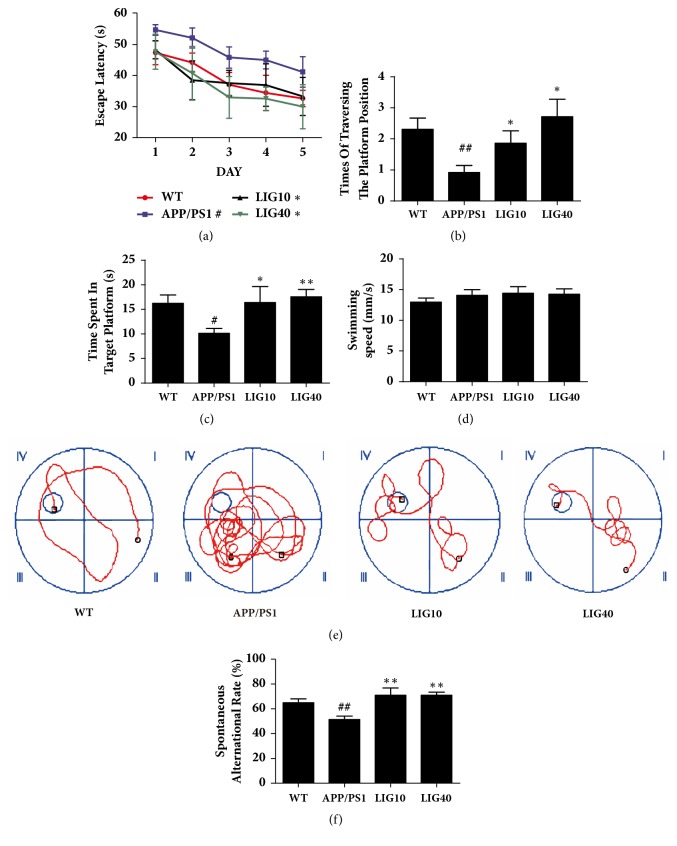
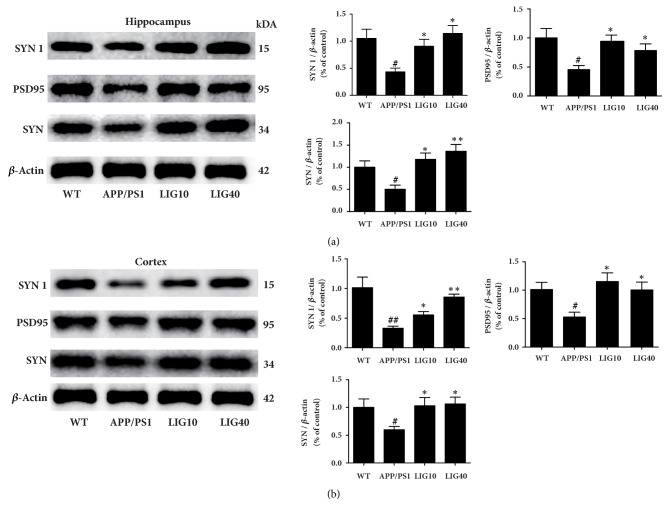
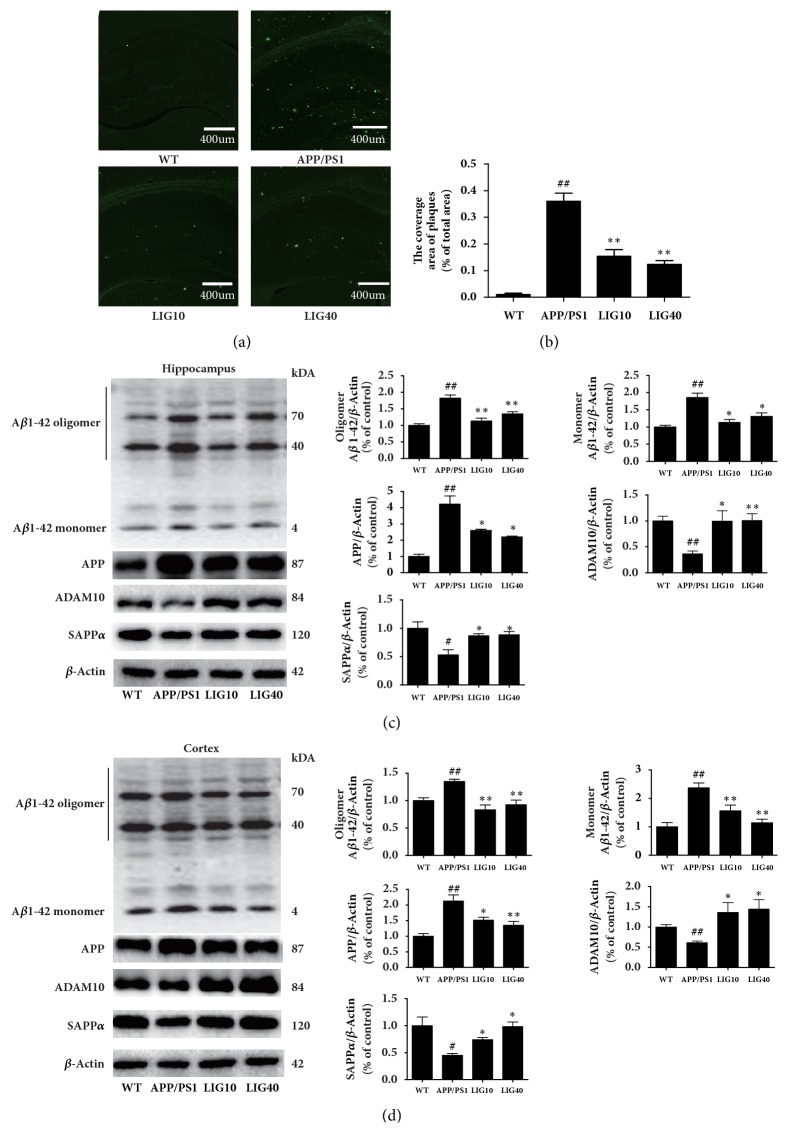
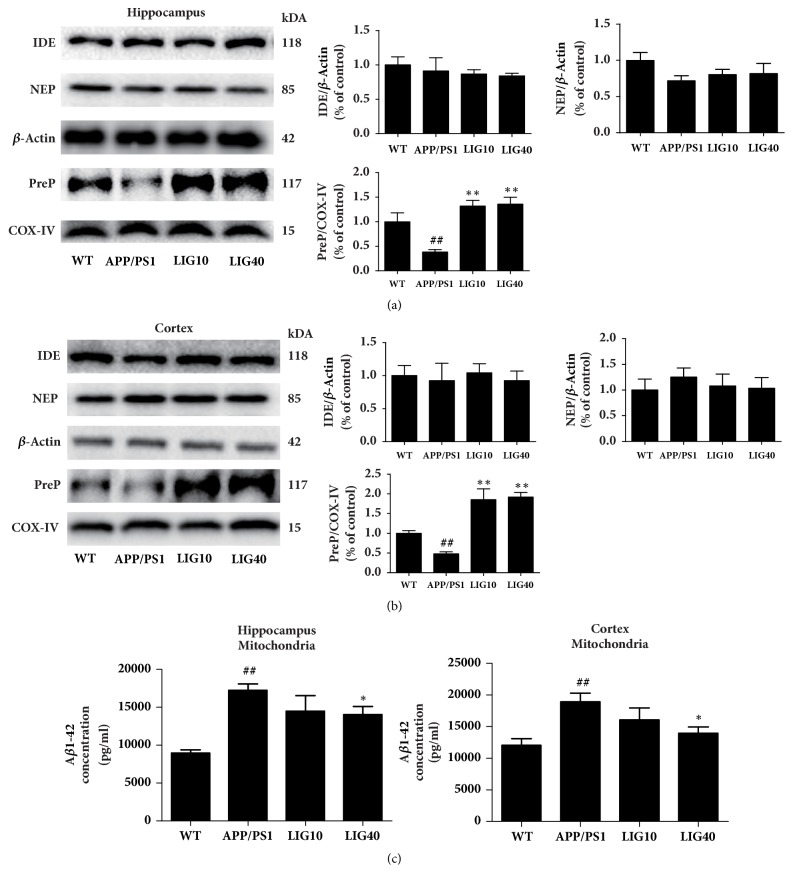
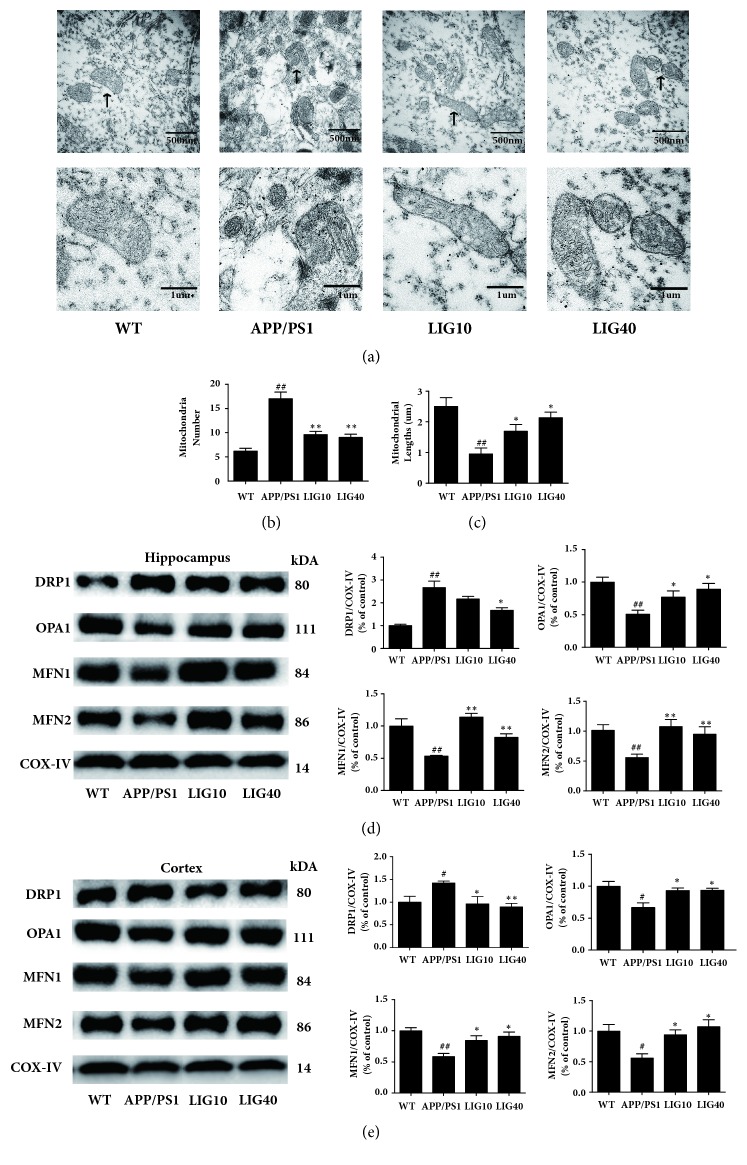
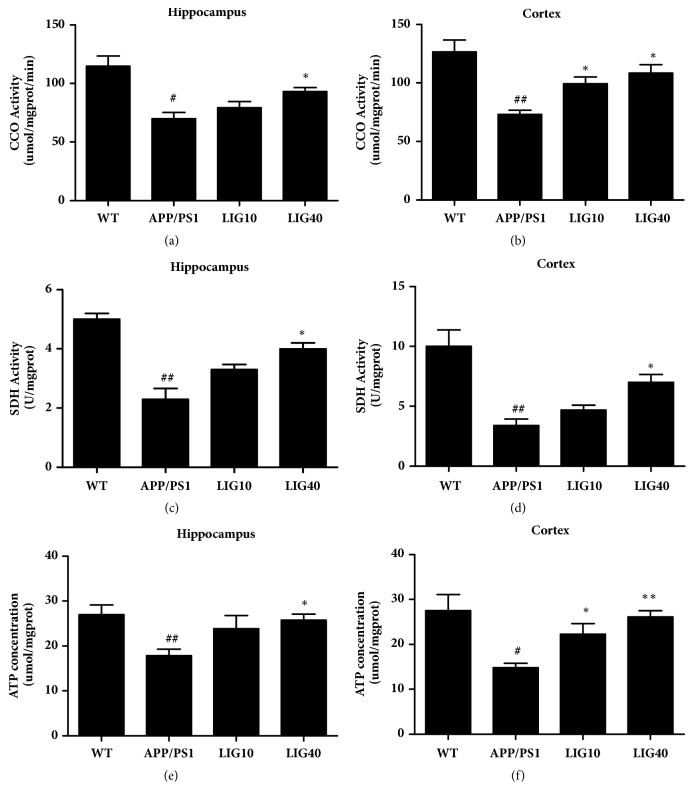
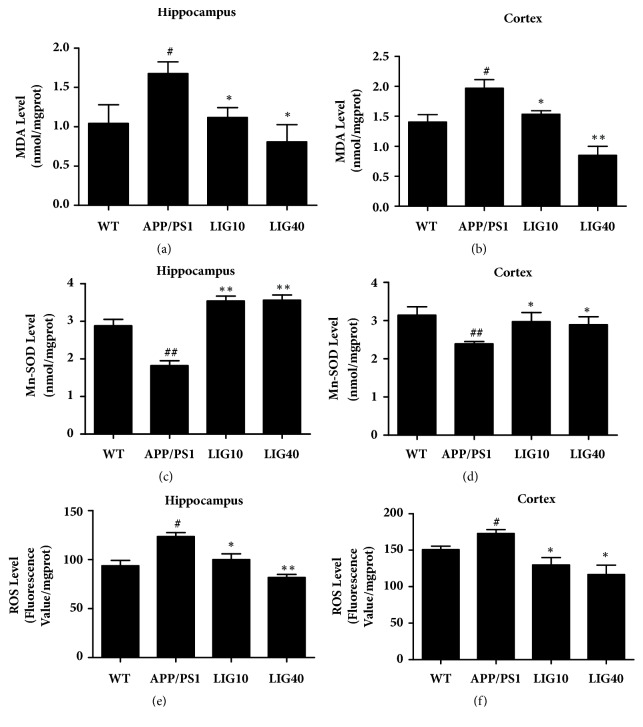
Ligustilide, the main lipophilic component of Radix angelicae sinensis, has been shown to ameliorate cognitive dysfunction in a few Alzheimer's disease mouse models, but its mechanism is not fully understood. In this study, we employed 7-month-old APP/PS1 mice to explore whether LIG is able to protect against Alzheimer's disease progression. The Morris water maze and Y-maze test results showed that eight weeks of intragastric administration of LIG (10 mg/kg, 40 mg/kg) every day improved memory deficit in APP/PS1 mice. The thioflavin-S staining and Western blot results (Aβ monomer/oligomer, APP, ADAM10, SAPP, and PreP) showed that LIG reduced A levels in the brain of APP/PS1 mice. Transmission electron microscopy analysis showed that LIG reduced the mitochondria number and increased the mitochondrial length in the hippocampal CA1 area of APP/PS1 mice. A reduced level of Drp1 (fission) and increased levels of Mfn1, Mfn2, and Opa1 (fusion) were found in APP/PS1 mice treated with LIG. An increased ATP level in the brain and increased activities of cytochrome c oxidase (CCO) and succinate dehydrogenase (SDH) in mitochondrion separated from the hippocampus and cortex revealed that LIG alleviated mitochondrial dysfunction. LIG exerts an antioxidation effect via reducing the levels of malondialdehyde (MDA) and reactive oxygen species (ROS) and increasing the activity of Mn-SOD in the brain. Elevated levels of PSD-95, synaptophysin, and synapsin 1 in both the hippocampus and cortex indicated that LIG provided synaptic protection. These findings show that treatment with LIG ameliorates mitochondrial dynamics and morphology issues, improves mitochondrial function, reduces A levels in the brain, restores the synaptic structure, and ameliorates memory deficit in APP/PS1 mice. These results imply that LIG may serve as a potential antidementia drug.
藁本内酯是当归的主要亲脂性成分,已被证明可改善几种阿尔茨海默病小鼠模型的认知功能障碍,但作用机制尚不完全清楚。在这项研究中,我们使用 7 月龄的 APP/PS1 小鼠来探讨 LIG 是否能够预防阿尔茨海默病的进展。 Morris 水迷宫和 Y 迷宫测试结果表明,每天灌胃给予 LIG(10mg/kg、40mg/kg)8 周可改善 APP/PS1 小鼠的记忆缺陷。硫黄素 S 染色和 Western blot 结果(Aβ单体/寡聚体、APP、ADAM10、SAPP 和 PreP)显示,LIG 降低了 APP/PS1 小鼠大脑中的 Aβ水平。透射电子显微镜分析显示,LIG 减少了 APP/PS1 小鼠海马 CA1 区的线粒体数量并增加了线粒体长度。在 LIG 处理的 APP/PS1 小鼠中发现 Drp1(分裂)水平降低,Mfn1、Mfn2 和 Opa1(融合)水平升高。大脑中 ATP 水平升高,分离自海马和皮质的线粒体中细胞色素 c 氧化酶(CCO)和琥珀酸脱氢酶(SDH)活性升高,表明 LIG 缓解了线粒体功能障碍。LIG 通过降低大脑中丙二醛(MDA)和活性氧(ROS)的水平以及增加 Mn-SOD 的活性来发挥抗氧化作用。海马和皮质中 PSD-95、突触小体蛋白和突触素 1 的水平升高表明 LIG 提供了突触保护。这些发现表明,LIG 治疗可改善线粒体动力学和形态问题,改善线粒体功能,降低大脑中的 Aβ水平,恢复突触结构,并改善 APP/PS1 小鼠的记忆缺陷。这些结果表明,LIG 可能作为一种潜在的抗痴呆药物。