Department of Biomedical Sciences and Pathobiology, College of Veterinary Medicine, Virginia Tech, Blacksburg, VA 24061, USA.
Nutrients. 2018 Aug 3;10(8):1016. doi: 10.3390/nu10081016.
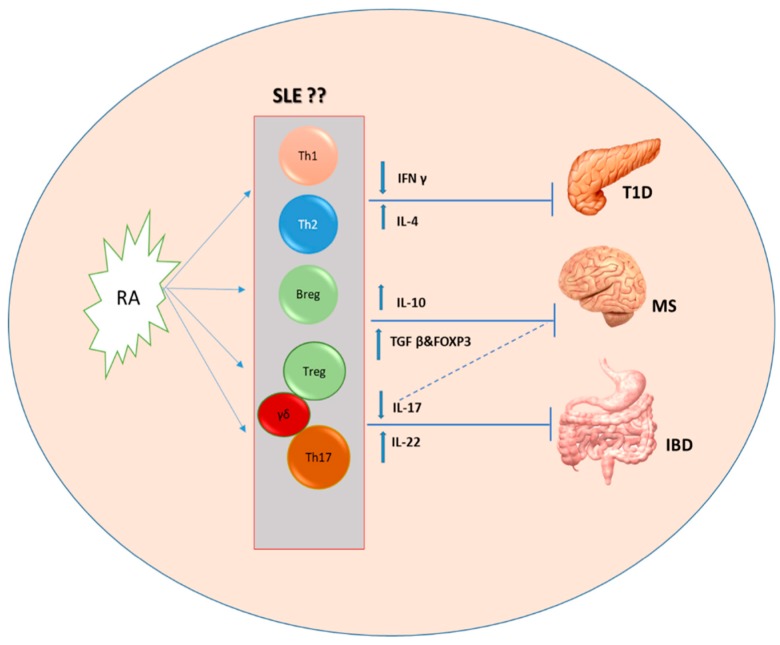
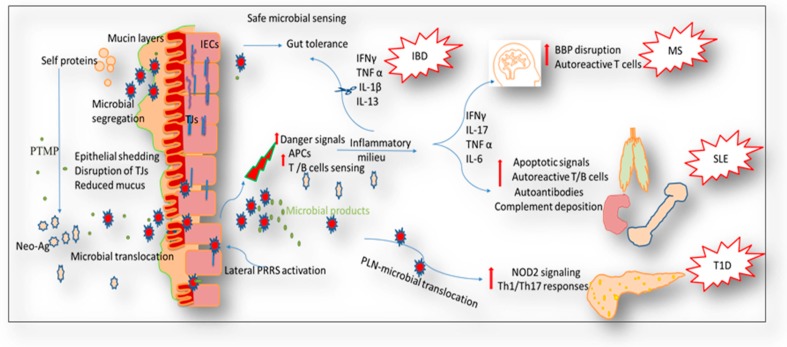
A leaky gut has been observed in a number of autoimmune diseases including type 1 diabetes, multiple sclerosis, inflammatory bowel disease, and systemic lupus erythematosus. Previous studies from our laboratory have shown that lupus mice also bear a leaky gut and that the intestinal barrier function can be enhanced by gut colonization of probiotics such as spp Retinoic acid (RA) can increase the relative abundance of spp. in the gut. Interestingly, RA has also been shown to strengthen the barrier function of epithelial cells in vitro and in the absence of probiotic bacteria. These reports bring up an interesting question of whether RA exerts protective effects on the intestinal barrier directly or through regulating the microbiota colonization. In this review, we will discuss the roles of RA in immunomodulation, recent literature on the involvement of a leaky gut in different autoimmune diseases, and how RA shapes the outcomes of these diseases.
在包括 1 型糖尿病、多发性硬化症、炎症性肠病和系统性红斑狼疮在内的许多自身免疫性疾病中,都观察到了肠漏现象。我们实验室的先前研究表明,狼疮小鼠也存在肠漏现象,而肠道益生菌定植可以增强肠道屏障功能,例如 spp 视黄酸 (RA) 可以增加 spp 在肠道中的相对丰度。有趣的是,RA 也已被证明可以在体外和不存在益生菌的情况下增强上皮细胞的屏障功能。这些报告提出了一个有趣的问题,即 RA 是直接通过调节微生物群定植还是通过调节微生物群定植来发挥对肠道屏障的保护作用。在这篇综述中,我们将讨论 RA 在免疫调节中的作用、最近关于不同自身免疫性疾病中肠漏的文献,以及 RA 如何影响这些疾病的结果。