Brakenhoff Timo B, Moons Karel Gm, Kluin Jolanda, Groenwold Rolf Hh
Julius Center for Health Sciences and Primary Care, University Medical Center Utrecht, Utrecht, The Netherlands.
Heart Center, Academic Medical Center, Amsterdam, The Netherlands.
Health Serv Insights. 2018 Jul 5;11:1178632918785133. doi: 10.1177/1178632918785133. eCollection 2018.
When profiling health care providers, adjustment for case-mix is essential. However, conventional risk adjustment methods may perform poorly, especially when provider volumes are small or events rare. Propensity score (PS) methods, commonly used in observational studies of binary treatments, have been shown to perform well when the amount of observations and/or events are low and can be extended to a multiple provider setting. The objective of this study was to evaluate the performance of different risk adjustment methods when profiling multiple health care providers that perform highly protocolized procedures, such as coronary artery bypass grafting.
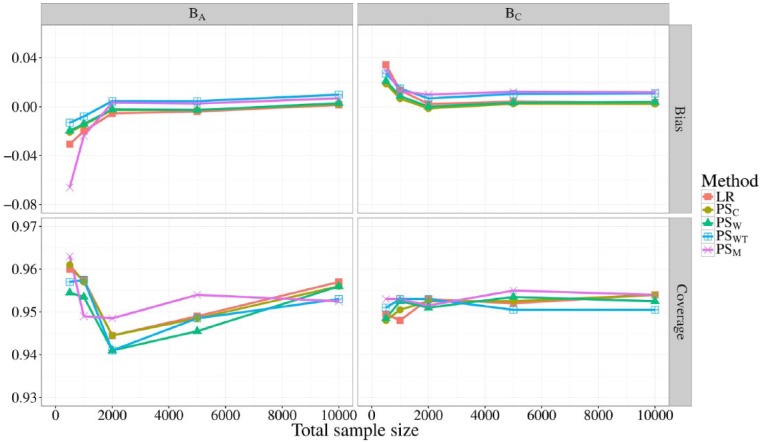
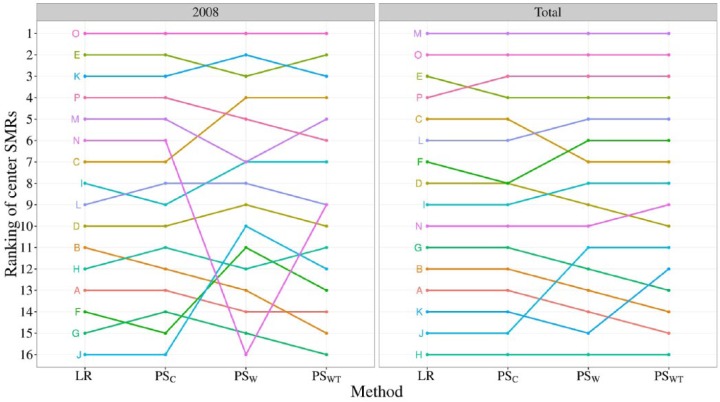
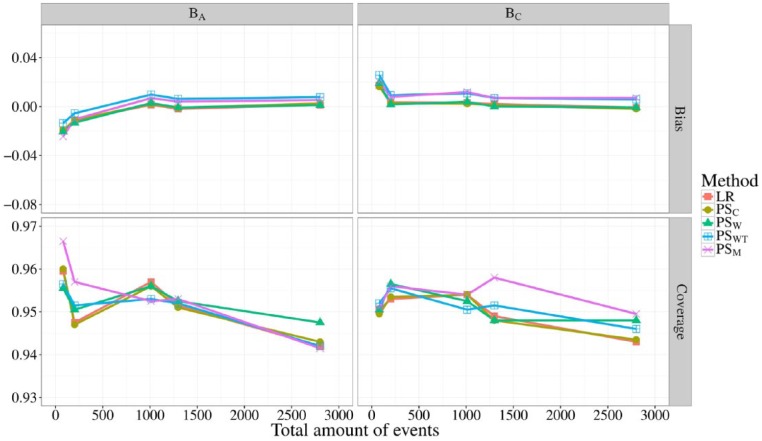
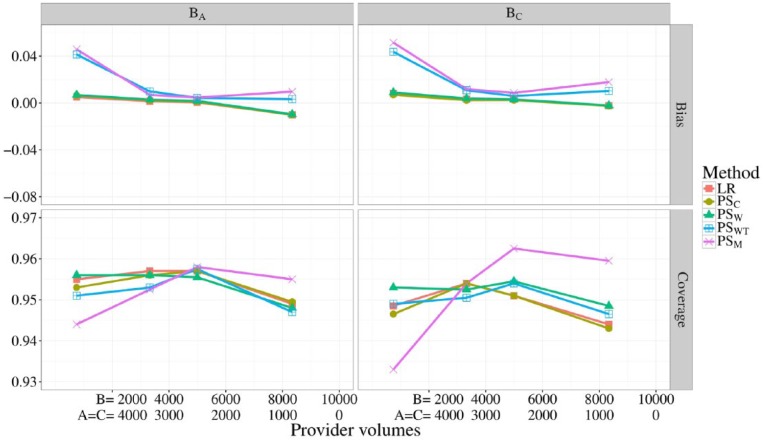
In a simulation study, provider effects estimated using PS adjustment, PS weighting, PS matching, and multivariable logistic regression were compared in terms of bias, coverage and mean squared error (MSE) when varying the event rate, sample size, provider volumes, and number of providers. An empirical example from the field of cardiac surgery was used to demonstrate the different methods.
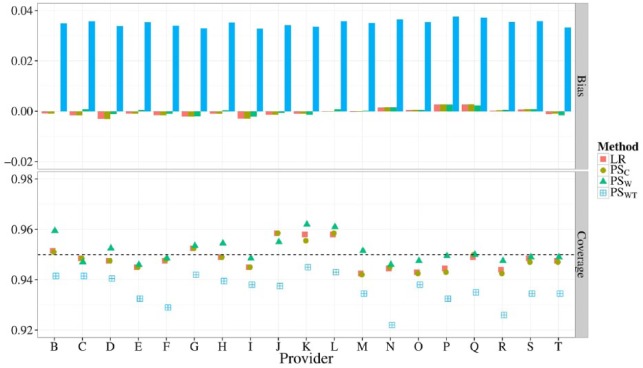
Overall, PS adjustment, PS weighting, and logistic regression resulted in provider effects with low amounts of bias and good coverage. The PS matching and PS weighting with trimming led to biased effects and high MSE across several scenarios. Moreover, PS matching is not practical to implement when the number of providers surpasses three.
None of the PS methods clearly outperformed logistic regression, except when sample sizes were relatively small. Propensity score matching performed worse than the other PS methods considered.
在对医疗服务提供者进行剖析时,病例组合调整至关重要。然而,传统的风险调整方法可能效果不佳,尤其是在提供者数量较少或事件罕见的情况下。倾向评分(PS)方法常用于二元治疗的观察性研究,当观察值和/或事件数量较少时已显示出良好的性能,并且可以扩展到多个提供者的情况。本研究的目的是评估在剖析执行高度标准化程序(如冠状动脉搭桥术)的多个医疗服务提供者时,不同风险调整方法的性能。
在一项模拟研究中,当改变事件发生率、样本量、提供者数量和提供者人数时,比较了使用PS调整、PS加权、PS匹配和多变量逻辑回归估计的提供者效应在偏差、覆盖率和均方误差(MSE)方面的差异。使用心脏外科领域的一个实证例子来展示不同的方法。
总体而言,PS调整、PS加权和逻辑回归产生的提供者效应偏差较小且覆盖率良好。在几种情况下,PS匹配和带修剪的PS加权导致效应有偏差且MSE较高。此外,当提供者人数超过三人时,PS匹配在实施上不切实际。
除样本量相对较小时外,没有一种PS方法明显优于逻辑回归。倾向评分匹配的表现比其他考虑的PS方法更差。