Department of Biomedical Sciences, University of Sassari, Viale San Pietro 43B, 07100 Sassari, Italy.
Viruses. 2018 Aug 7;10(8):412. doi: 10.3390/v10080412.
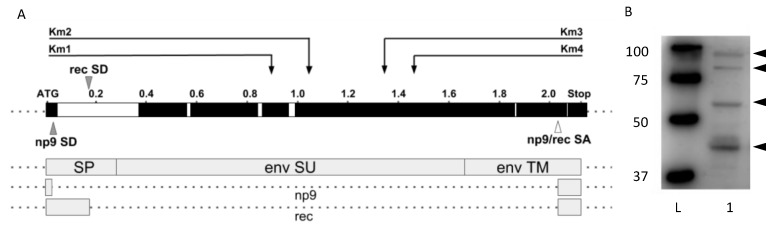
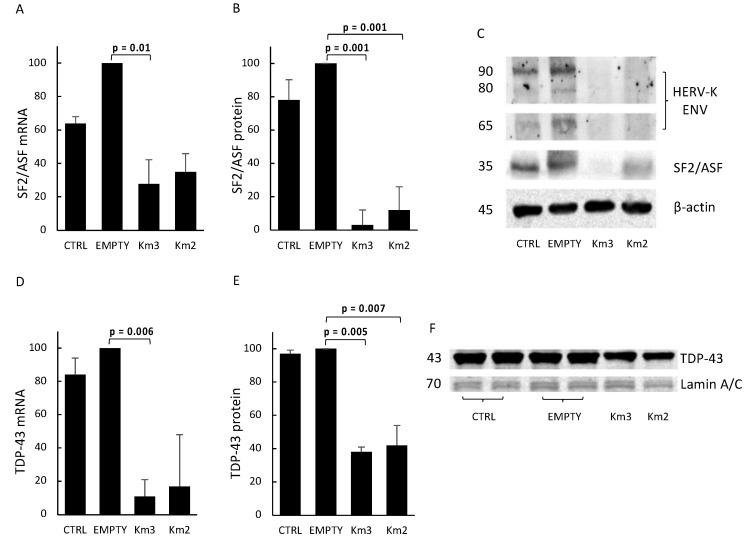
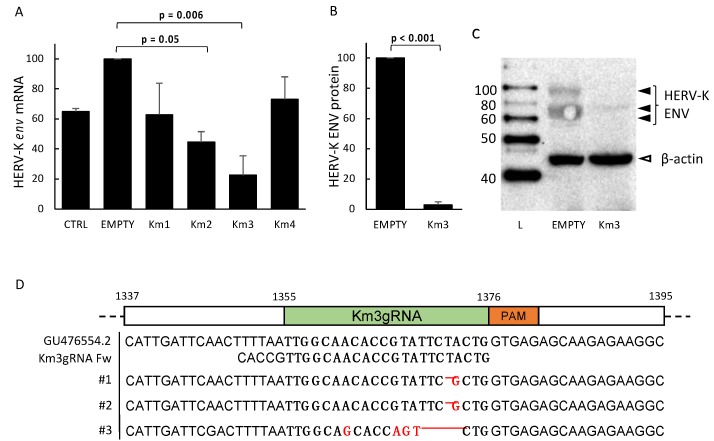
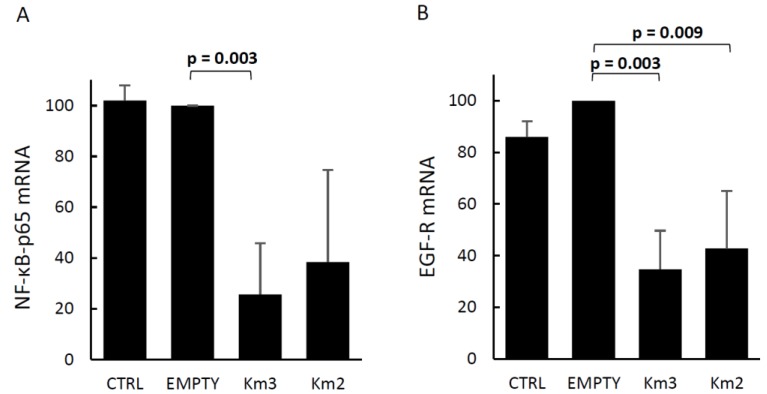
The human endogenous retrovirus (HERV)-K, human mouse mammary tumor virus like-2 (HML-2) subgroup of HERVs is activated in several tumors and has been related to prostate cancer progression and motor neuron diseases. The cellular splicing factor 2/alternative splicing factor (SF2/ASF) is a positive regulator of gene expression, coded by a potent proto-oncogene, amplified, and abnormally expressed in tumors. TAR DNA-binding protein-43 (TDP-43) is a DNA/RNA-binding protein, negative regulator of alternative splicing, known for causing neurodegeneration, and with complex roles in oncogenesis. We used the clustered regularly interspaced short palindromic repeats (CRISPR)/Cas9 technology, with the Cas9 system from (SaCas9), to disrupt the HERV-K(HML-2) gene, and evaluated the effects on cultured cells. The tool was tested on human prostate cancer LNCaP cells, whose HERV-K transcription profile is known. It caused HERV-K(HML-2) disruption (the first reported of a HERV gene), as evaluated by DNA sequencing, and inhibition of transcripts and proteins. The HERV-K(HML-2) disruption was found to interfere with important regulators of cell expression and proliferation, involved in manaling, RNA-binding, and alternative splicing, such as epidermal growth factor receptor (EGF-R), nuclear factor kappa-light-chain-enhancer of activated B cells (NF-κB), SF2/ASF, and TDP-43. These novel findings suggest that HERV-K is not an innocent bystander, they reinforce its links to oncogenesis and motor neuron diseases, and they open potential innovative therapeutic options.
人类内源性逆转录病毒 (HERV)-K、人类鼠乳腺瘤病毒样-2 (HML-2) 亚群的 HERV 在几种肿瘤中被激活,并与前列腺癌进展和运动神经元疾病有关。细胞剪接因子 2/替代剪接因子 (SF2/ASF) 是一种基因表达的正调节剂,由一种有效的原癌基因编码,在肿瘤中扩增并异常表达。TAR DNA 结合蛋白-43 (TDP-43) 是一种 DNA/RNA 结合蛋白,是替代剪接的负调节剂,已知可引起神经退行性变,并在肿瘤发生中具有复杂的作用。我们使用了成簇规律间隔短回文重复序列 (CRISPR)/Cas9 技术,使用来自 Staphylococcus aureus 的 Cas9 系统 (SaCas9) 来破坏 HERV-K(HML-2) 基因,并评估了对培养细胞的影响。该工具在人前列腺癌细胞 LNCaP 上进行了测试,已知其 HERV-K 转录谱。通过 DNA 测序评估,它导致 HERV-K(HML-2) 破坏(首次报道的 HERV 基因),并抑制 转录本和蛋白质。发现 HERV-K(HML-2) 的破坏干扰了细胞表达和增殖的重要调节剂,这些调节剂参与了信号转导、RNA 结合和替代剪接,如表皮生长因子受体 (EGF-R)、核因子 kappa 轻链增强子的 B 细胞激活 (NF-κB)、SF2/ASF 和 TDP-43。这些新发现表明 HERV-K 不是无辜的旁观者,它们加强了其与肿瘤发生和运动神经元疾病的联系,并为潜在的创新治疗选择开辟了道路。