Li Xin, Wei Ji-Peng, Ahammed Golam J, Zhang Lan, Li Yang, Yan Peng, Zhang Li-Ping, Han Wen-Yan
Key Laboratory of Tea Quality and Safety Control, Ministry of Agriculture, Tea Research Institute, Chinese Academy of Agricultural Sciences, Hangzhou, China.
Graduate School of Chinese Academy of Agricultural Sciences, Beijing, China.
Front Plant Sci. 2018 Jul 24;9:1016. doi: 10.3389/fpls.2018.01016. eCollection 2018.
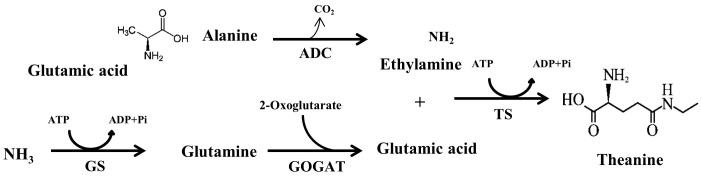
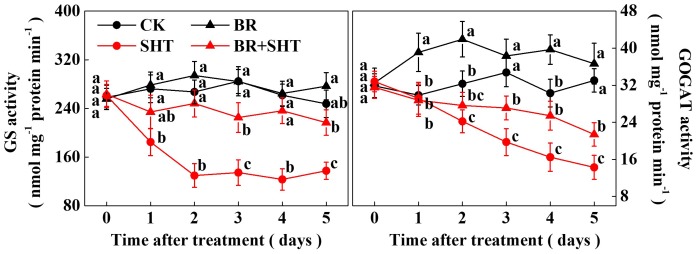
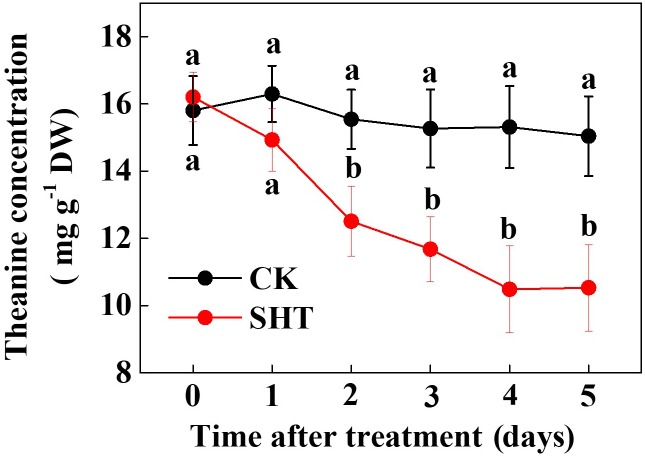
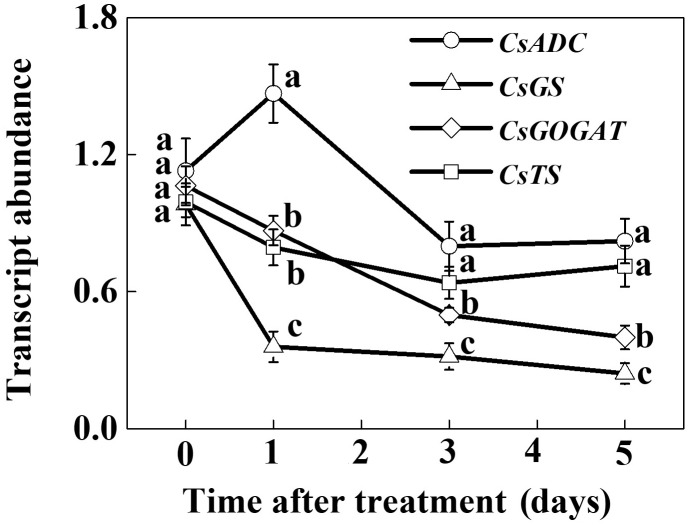
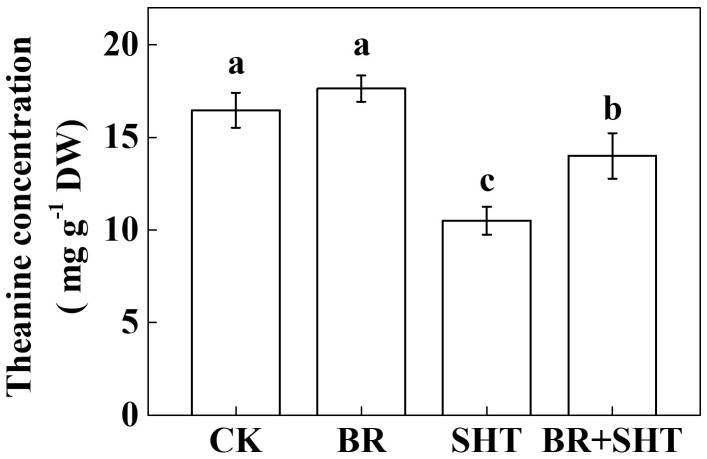
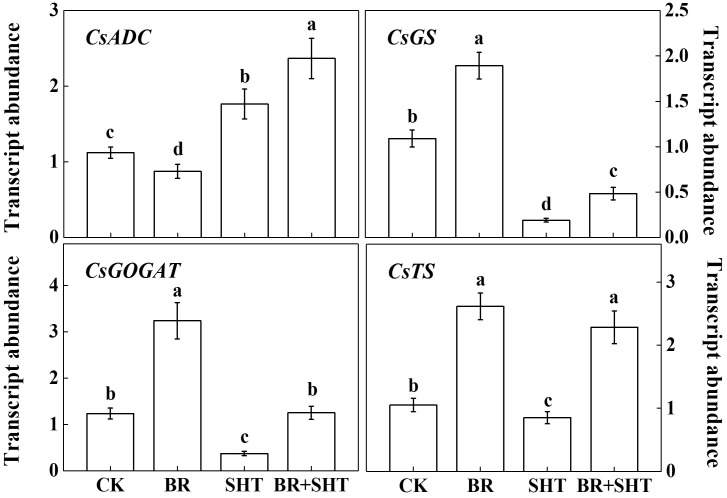
Temperature is a major environmental signal that governs plant growth and development. A moderately high ambient temperature alters plant metabolism without significant induction of heat-stress responses. Despite ancillary reports on the negative effect of warmer climate on tea quality, information on specific effect of sub high temperature (SHT) on theanine accumulation is scanty. L-Theanine is the most abundant free amino acid in tea ( L.) leaves that contributes to the unique umami flavor of green tea infusion. Tea harvested in warmer months lacks distinctive umami taste due to low theanine content. In this study, we showed that SHT (35°C) gradually decreased theanine concentration over time, which was closely associated with the SHT-induced suppression in theanine biosynthetic genes. 24-epibrassinolide (BR), a bioactive brassinosteroids, attenuated the SHT-induced reduction in theanine concentration by upregulating the transcript levels of theanine biosynthetic genes, such as (), (), () and (). Furthermore, time-course analysis of the activity of theanine biosynthetic enzyme reveals that BR-induced regulation of GS and GOGAT activity plays essential role in maintaining theanine content in tea leaves under SHT, which is consistent with the central position of GOGAT in theanine biosynthetic pathway. Therefore, it is convincing to propose that exogenous BR treatment can be advocated to improve summer tea quality by enhancing accumulation of theanine. However, a future challenge is to use this information on the role of BR in theanine biosynthesis and thermotolerance to further understand how BR may be tuned to benefit plant fitness for enhancing tea quality.
温度是控制植物生长发育的主要环境信号。适度较高的环境温度会改变植物代谢,而不会显著诱导热应激反应。尽管有关于气候变暖对茶叶品质负面影响的辅助报道,但关于亚高温(SHT)对茶氨酸积累的具体影响的信息却很少。L-茶氨酸是茶树叶片中最丰富的游离氨基酸,它赋予绿茶茶汤独特的鲜味。在温暖月份采摘的茶叶由于茶氨酸含量低而缺乏独特的鲜味。在本研究中,我们发现亚高温(35°C)会随着时间的推移逐渐降低茶氨酸浓度,这与亚高温诱导的茶氨酸生物合成基因的抑制密切相关。24-表油菜素内酯(BR),一种生物活性油菜素类固醇,通过上调茶氨酸生物合成基因如()、()、()和()的转录水平,减弱了亚高温诱导的茶氨酸浓度降低。此外,对茶氨酸生物合成酶活性的时间进程分析表明,BR诱导的谷氨酰胺合成酶(GS)和谷氨酸合酶(GOGAT)活性的调节在维持亚高温下茶叶中茶氨酸含量方面起着重要作用,这与GOGAT在茶氨酸生物合成途径中的核心地位一致。因此,有说服力的是,建议通过外源BR处理来提高夏季茶叶品质,即通过增强茶氨酸的积累。然而,未来的一个挑战是利用这些关于BR在茶氨酸生物合成和耐热性中的作用的信息,进一步了解如何调节BR以有益于植物适应性,从而提高茶叶品质。