Centre for Stem Cell Biology, Department of Biomedical Science, The University of Sheffield, Sheffield, United Kingdom.
Computational and Data Science Laboratory, High Performance Computing and Networking Institute, National Research Council of Italy, Napoli, Italy.
Elife. 2018 Aug 10;7:e35786. doi: 10.7554/eLife.35786.
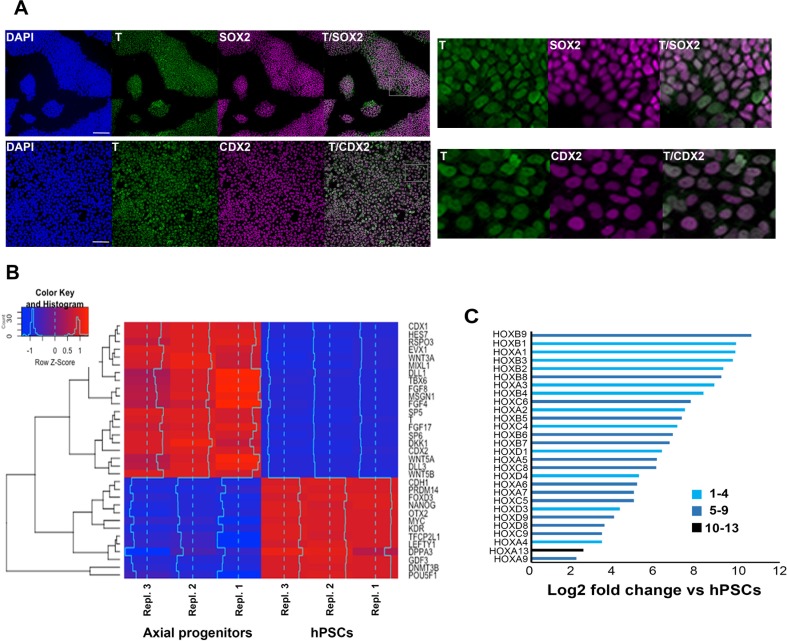
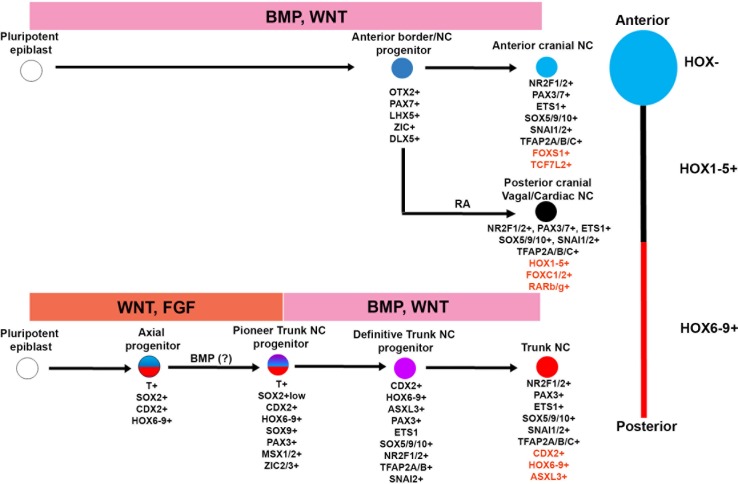
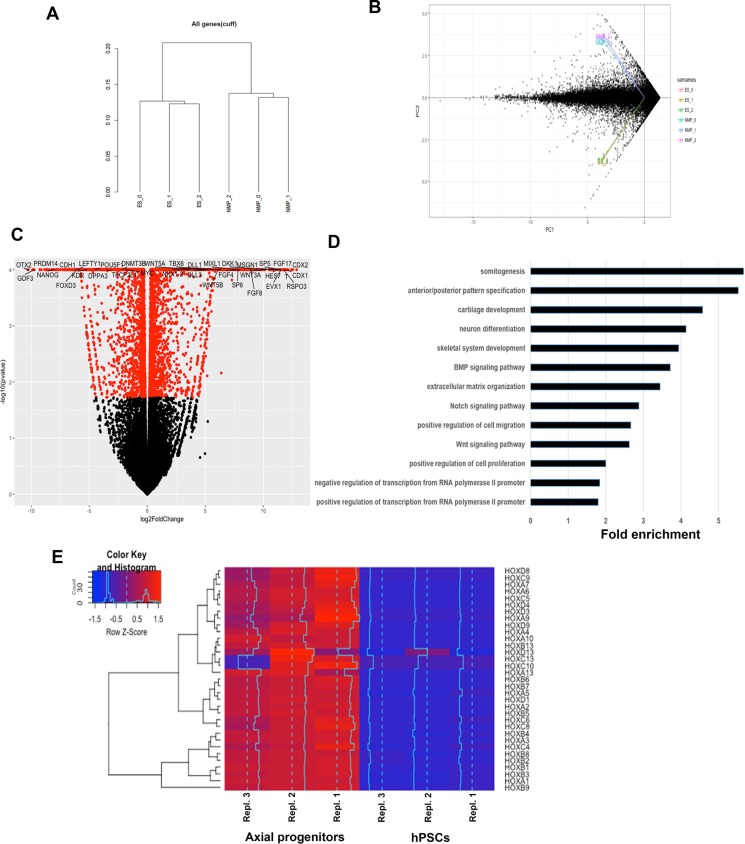
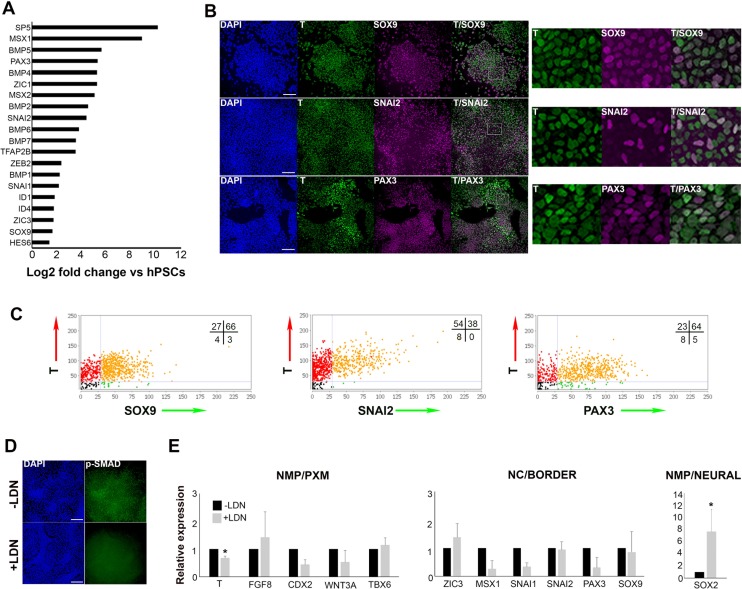
The neural crest (NC) is a multipotent embryonic cell population that generates distinct cell types in an axial position-dependent manner. The production of NC cells from human pluripotent stem cells (hPSCs) is a valuable approach to study human NC biology. However, the origin of human trunk NC remains undefined and current in vitro differentiation strategies induce only a modest yield of trunk NC cells. Here we show that hPSC-derived axial progenitors, the posteriorly-located drivers of embryonic axis elongation, give rise to trunk NC cells and their derivatives. Moreover, we define the molecular signatures associated with the emergence of human NC cells of distinct axial identities in vitro. Collectively, our findings indicate that there are two routes toward a human post-cranial NC state: the birth of cardiac and vagal NC is facilitated by retinoic acid-induced posteriorisation of an anterior precursor whereas trunk NC arises within a pool of posterior axial progenitors.
神经嵴(NC)是一种多能胚胎细胞群,以轴向位置依赖的方式产生不同的细胞类型。从人类多能干细胞(hPSC)中产生 NC 细胞是研究人类 NC 生物学的一种有价值的方法。然而,人类躯干 NC 的起源尚未确定,目前的体外分化策略只能诱导少量的躯干 NC 细胞。在这里,我们表明 hPSC 衍生的轴向祖细胞,即胚胎轴伸长的后部驱动因子,产生躯干 NC 细胞及其衍生物。此外,我们定义了与体外不同轴向身份的人类 NC 细胞出现相关的分子特征。总的来说,我们的研究结果表明,存在两种通向人类颅后 NC 状态的途径:心脏和迷走神经 NC 的产生是通过视黄酸诱导的前部前体的后部化来促进的,而躯干 NC 则在一个后部轴向祖细胞池中产生。