Cavanagh Kate, Churchard Alasdair, O'Hanlon Puffin, Mundy Thomas, Votolato Phoebe, Jones Fergal, Gu Jenny, Strauss Clara
1School of Psychology, University of Sussex, Falmer, East Sussex BN1 9QH UK.
2Sussex Partnership NHS Foundation Trust, Hove, BN3 7HZ UK.
Mindfulness (N Y). 2018;9(4):1191-1205. doi: 10.1007/s12671-017-0856-1. Epub 2018 Jan 16.
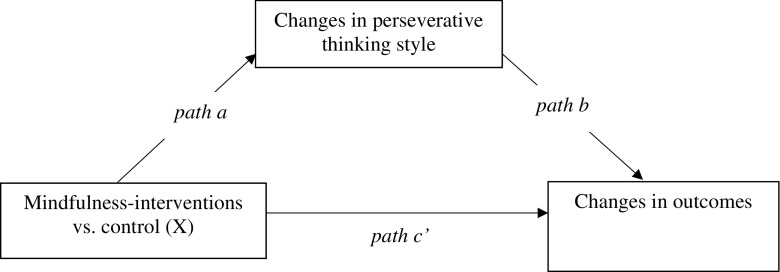
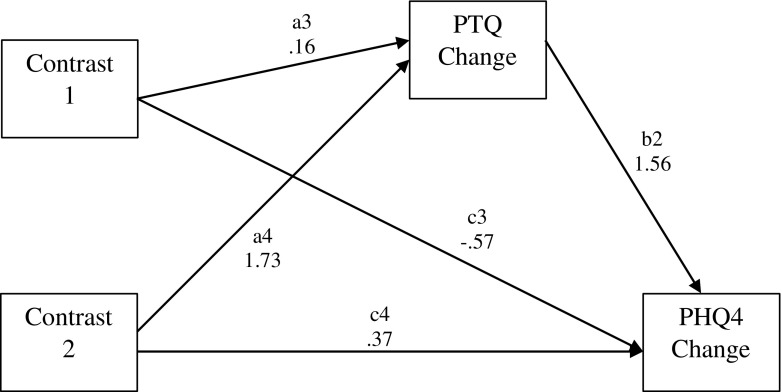
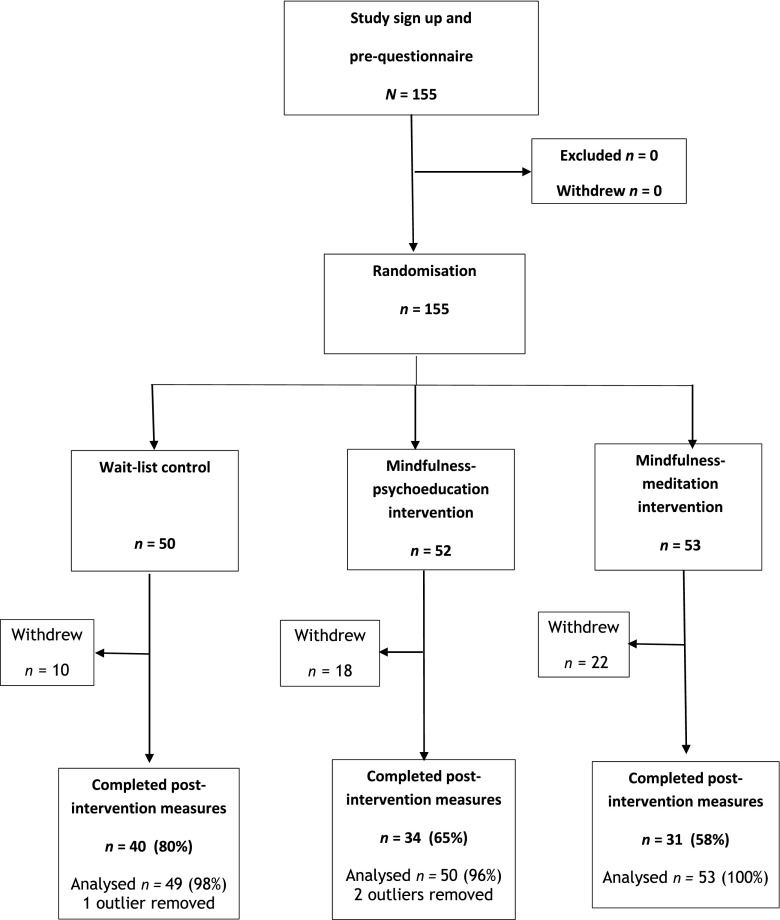
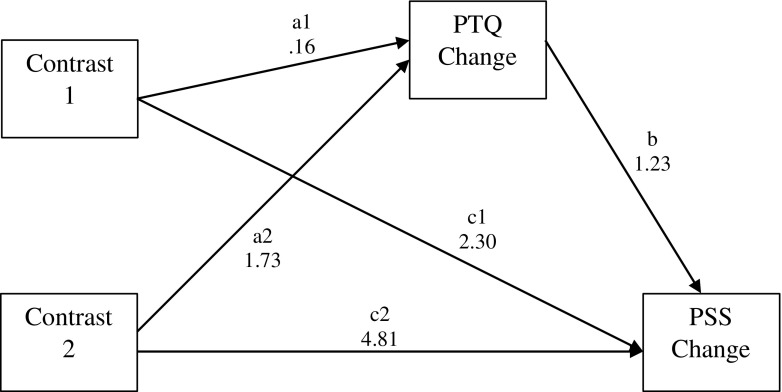
Building on previous research, this study compared the effects of two brief, online mindfulness-based interventions (MBIs; with and without formal meditation practice) and a no intervention control group in a non-clinical sample. One hundred and fifty-five university staff and students were randomly allocated to a 2-week, self-guided, online MBI with or without mindfulness meditation practice, or a wait list control. Measures of mindfulness, perceived stress, perseverative thinking and anxiety/depression symptoms within were administered before and after the intervention period. Intention to treat analysis identified significant differences between groups on change over time for all measured outcomes. Participation in the MBIs was associated with significant improvements in all measured domains (all s < 0.05), with effect sizes in the small to medium range (0.25 to 0.37, 95% CIs 0.11 to 0.56). No significant changes on these measures were found for the control group. Change in perseverative thinking was found to mediate the relationship between condition and improvement on perceived stress and anxiety/depression symptom outcomes. Contrary to our hypotheses, no differences between the intervention conditions were found. Limitations of the study included reliance on self-report data, a relatively high attrition rate and absence of a longer-term follow-up. This study provides evidence in support of the feasibility and effectiveness of brief, self-guided MBIs in a non-clinical population and suggests that reduced perseverative thinking may be a mechanism of change. Our findings provide preliminary evidence for the effectiveness of a mindfulness psychoeducation condition, without an invitation to formal mindfulness meditation practice. Further research is needed to confirm and better understand these results and to test the potential of such interventions.
基于先前的研究,本研究在非临床样本中比较了两种简短的、基于网络的正念干预措施(MBIs,一种有正式冥想练习,一种没有)以及一个无干预对照组的效果。155名大学教职员工和学生被随机分配到为期两周的、自我引导的、有或没有正念冥想练习的网络MBIs组,或等待名单对照组。在干预期前后分别进行正念、感知压力、持续思维以及焦虑/抑郁症状的测量。意向性分析表明,所有测量结果在组间随时间的变化存在显著差异。参与MBIs与所有测量领域的显著改善相关(所有p<0.05),效应大小在小到中等范围内(0.25至0.37,95%置信区间0.11至0.56)。对照组在这些测量指标上未发现显著变化。发现持续思维的变化介导了干预条件与感知压力和焦虑/抑郁症状结果改善之间的关系。与我们的假设相反,未发现干预条件之间存在差异。本研究的局限性包括依赖自我报告数据、相对较高的损耗率以及缺乏长期随访。本研究为简短的、自我引导的MBIs在非临床人群中的可行性和有效性提供了证据,并表明减少持续思维可能是一种改变机制。我们的研究结果为正念心理教育条件的有效性提供了初步证据,而无需邀请进行正式的正念冥想练习。需要进一步的研究来证实并更好地理解这些结果,并测试此类干预措施的潜力。