a National Center for Biodefense and Infectious Diseases , George Mason University , Manassas , VA , USA.
b Leidos Health Life Sciences , Frederick , MA , USA.
Virulence. 2018;9(1):1403-1421. doi: 10.1080/21505594.2018.1509668.
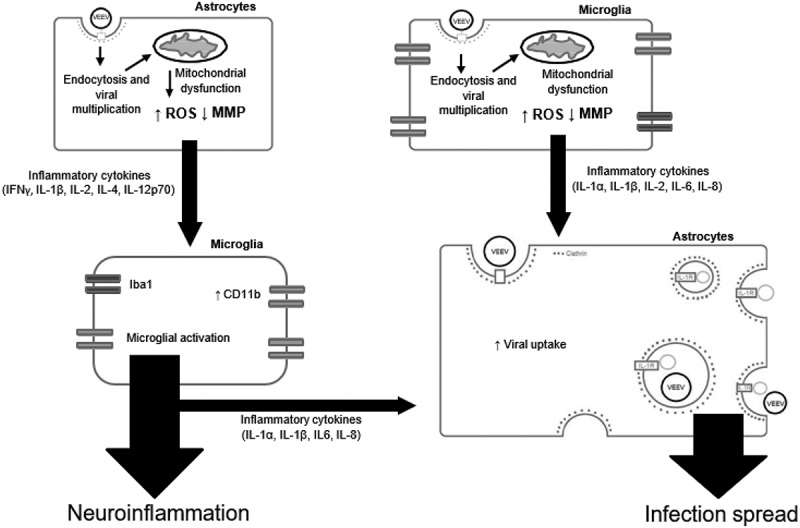
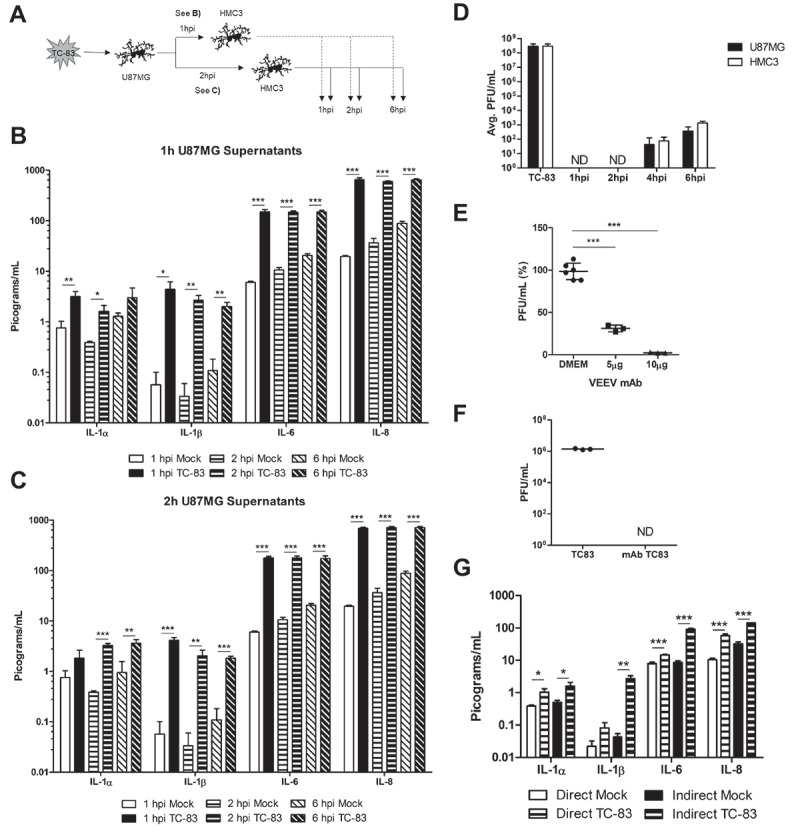
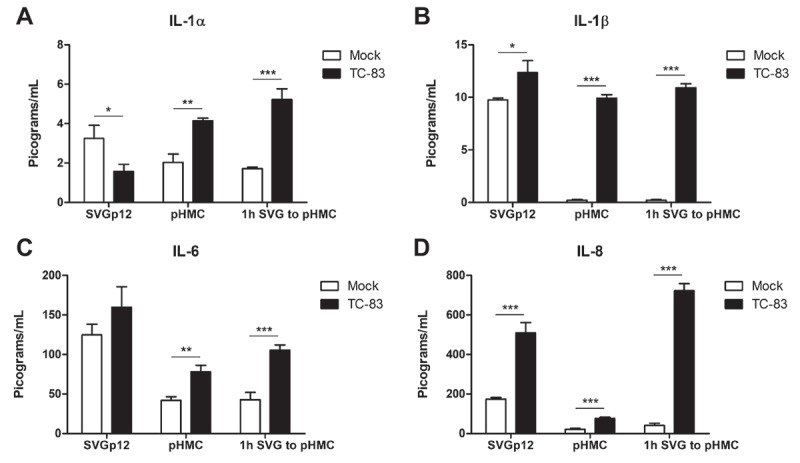
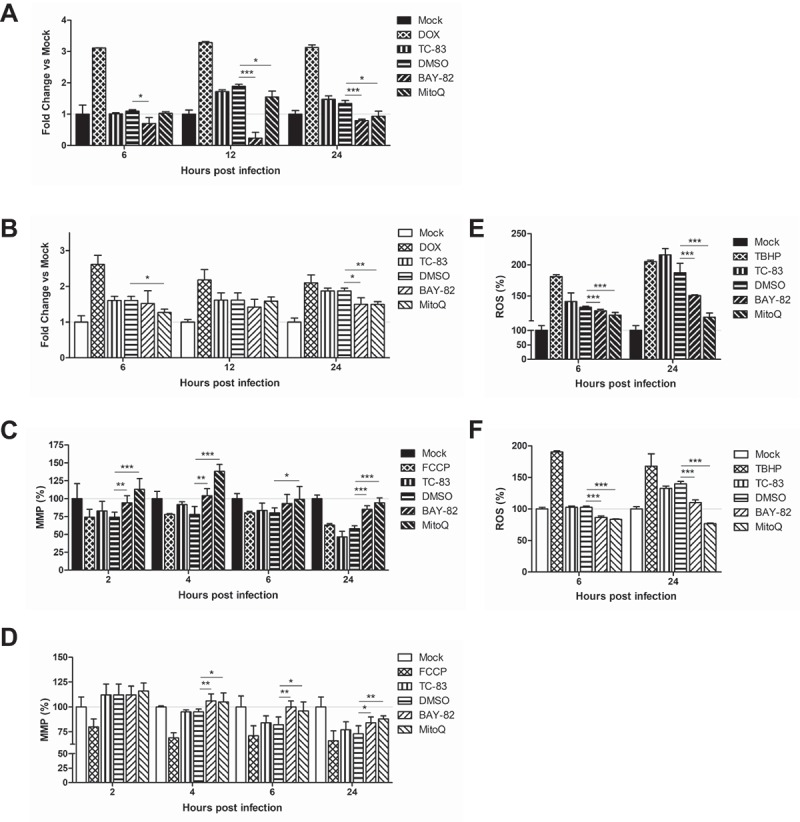
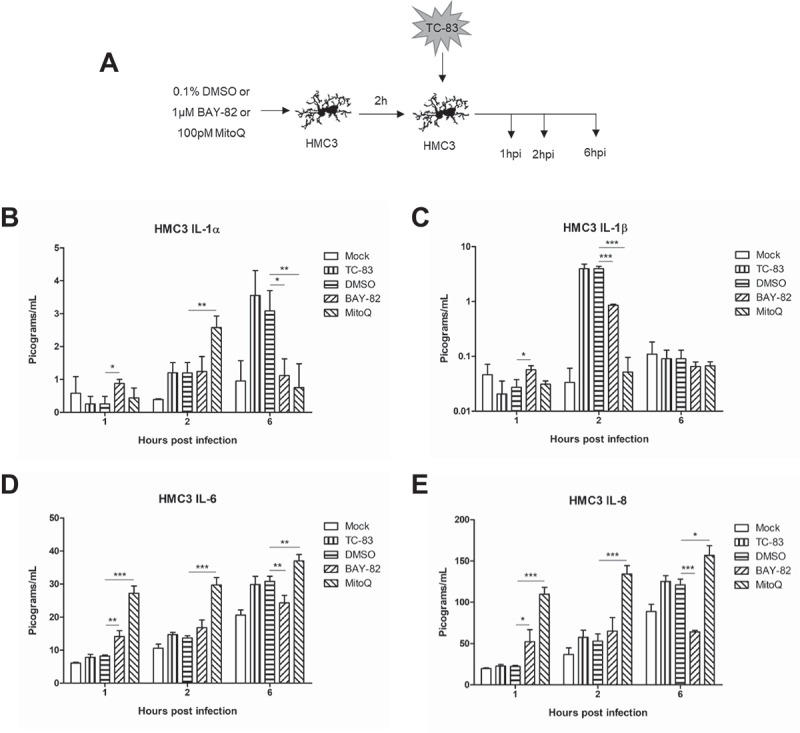
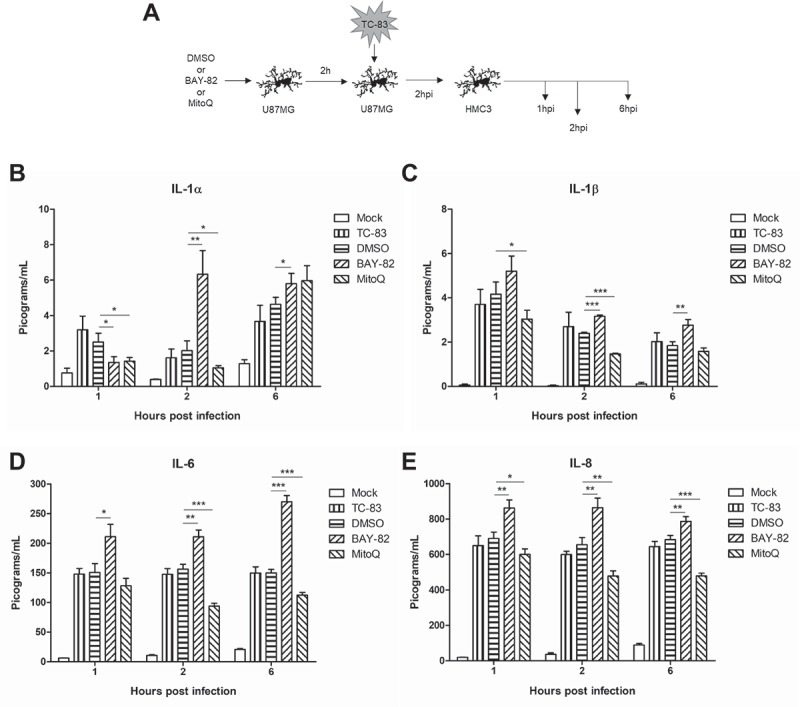
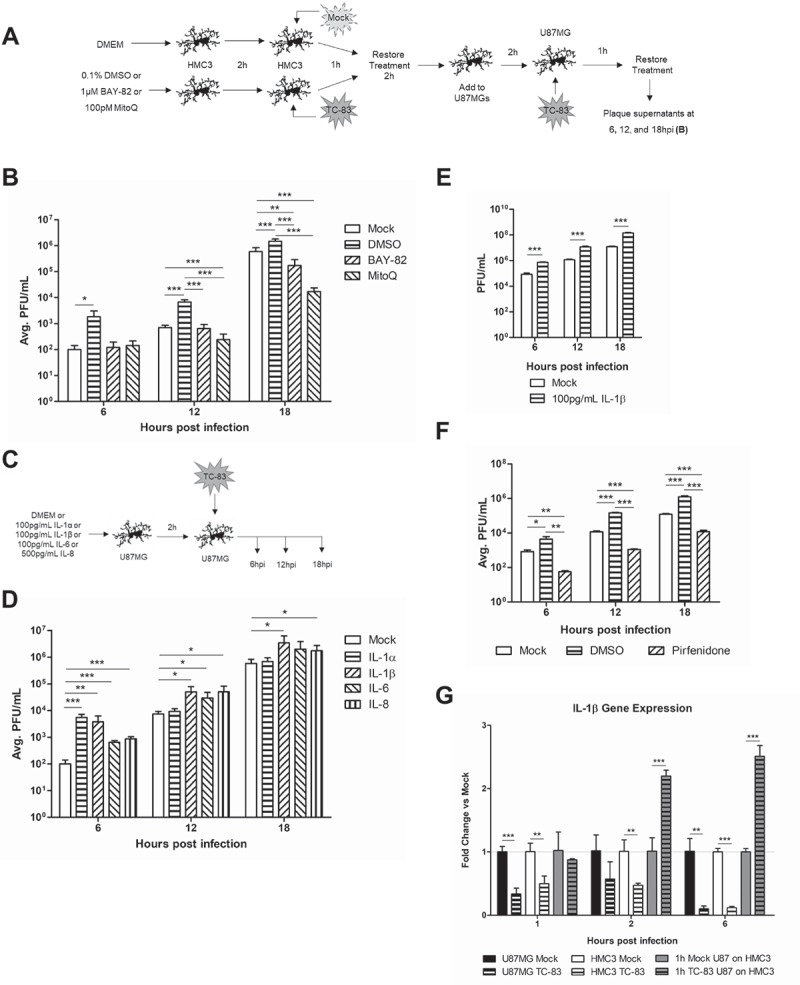
Venezuelan equine encephalitis virus (VEEV) is a neurotropic arbovirus that is highly infectious as an aerosol and can result in an encephalitic phenotype in infected individuals. VEEV infections are known to be associated with robust inflammation that eventually contributes to neurodegenerative phenotypes. In this study, we utilize the TC-83 strain of VEEV, which is known to induce the expression of IL-6, IL-8, and other pro-inflammatory cytokines. We had previously demonstrated that TC-83 infection resulted in changes in mitochondrial function, eventually resulting in mitophagy. In this manuscript, we provide data that links upstream mitochondrial dysfunction with downstream pro-inflammatory cytokine production in the context of microglia and astrocytoma cells. We also provide data on the role of bystander cells, which significantly contribute to the overall inflammatory load. Use of a mitochondrial-targeted antioxidant, mitoquinone mesylate, greatly reduced the inflammatory cytokine load and ameliorated bystander cell inflammatory responses more significantly than a broad-spectrum anti-inflammatory compound (BAY 11-7082). Our data suggest that the inflammatory mediators, especially IL-1β, may prime naïve cells to infection and lead to increased infection rates in microglial and astrocytoma cells. Cumulatively, our data suggest that the interplay between mitochondrial dysfunction and inflammatory events elicited in a neuronal microenvironment during a TC-83 infection may contribute to the spread of infection.
委内瑞拉马脑炎病毒(VEEV)是一种神经嗜性虫媒病毒,具有很强的气溶胶感染性,并可导致感染个体出现脑炎表型。已知 VEEV 感染与强烈的炎症反应有关,最终导致神经退行性表型。在这项研究中,我们利用 TC-83 株 VEEV,该病毒株已知可诱导 IL-6、IL-8 和其他促炎细胞因子的表达。我们之前已经证明,TC-83 感染导致线粒体功能改变,最终导致自噬。在本手稿中,我们提供的数据将上游线粒体功能障碍与小胶质细胞和星形细胞瘤细胞中下游促炎细胞因子的产生联系起来。我们还提供了关于旁观者细胞作用的数据,这些细胞对总炎症负荷有重要贡献。使用线粒体靶向抗氧化剂米托醌甲磺酸盐可大大降低炎症细胞因子负荷,并比广谱抗炎化合物(BAY 11-7082)更显著地改善旁观者细胞的炎症反应。我们的数据表明,炎症介质,特别是 IL-1β,可能使未感染的细胞对感染产生易感性,并导致小胶质细胞和星形细胞瘤细胞的感染率增加。总的来说,我们的数据表明,在 TC-83 感染期间神经元微环境中发生的线粒体功能障碍和炎症事件之间的相互作用可能导致感染的传播。