Department of Neuroscience, Mental Health, and Sensory Organs (NESMOS), Faculty of Medicine and Psychology, Sapienza University, Unit of Psychiatry, Sant'Andrea University Hospital, Rome, Italy.
Residency School in Psychiatry, Faculty of Medicine and Psychology, Sapienza University, Unit of Psychiatry, Sant'Andrea University Hospital, Rome, Italy.
Curr Neuropharmacol. 2019;17(8):710-736. doi: 10.2174/1570159X16666180813155017.
Obsessive-compulsive disorder (OCD) is associated with affective and cognitive symptoms causing personal distress and reduced global functioning. These have considerable societal costs due to healthcare service utilization.
Our aim was to assess the efficacy of pharmacological interventions in OCD and clinical guidelines, providing a comprehensive overview of this field.
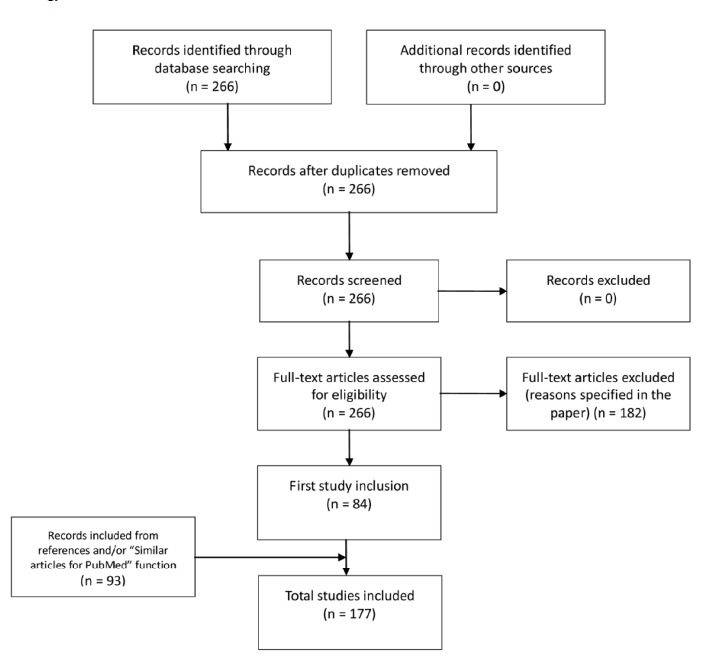
We searched the PubMed database for papers dealing with drug treatment of OCD, with a specific focus on clinical guidelines, treatments with antidepressants, antipsychotics, mood stabilizers, off-label medications, and pharmacogenomics.
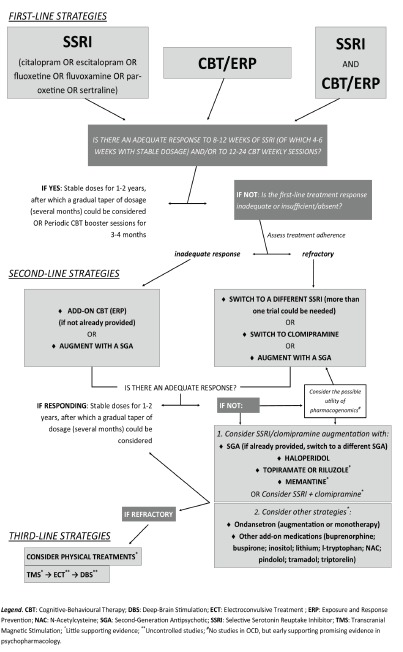
Prolonged administration of selective serotonin reuptake inhibitors (SSRIs) is most effective. Better results can be obtained with a SSRI combined with cognitive behavioral therapy (CBT) or the similarly oriented exposure and response prevention (ERP). Refractory OCD could be treated with different strategies, including a switch to another SSRI or clomipramine, or augmentation with an atypical antipsychotic. The addition of medications other than antipsychotics or intravenous antidepressant administration needs further investigation, as the evidence is inconsistent. Pharmacogenomics and personalization of therapy could reduce treatment resistance.
SSRI/clomipramine in combination with CBT/ERP is associated with the optimal response compared to each treatment alone or to other treatments. New strategies for refractory OCD are needed. The role of pharmacogenomics could become preponderant in the coming years.
强迫症(OCD)与情感和认知症状相关,导致个人痛苦和整体功能下降。由于医疗保健服务的利用,这些症状产生了相当大的社会成本。
我们旨在评估药物干预在 OCD 及临床指南中的疗效,为该领域提供全面的概述。
我们在 PubMed 数据库中搜索了关于强迫症药物治疗的论文,特别关注临床指南、抗抑郁药、抗精神病药、心境稳定剂、超适应证药物和药物基因组学的治疗。
选择性 5-羟色胺再摄取抑制剂(SSRIs)的长期给药最有效。SSRIs 联合认知行为疗法(CBT)或类似的暴露和反应预防(ERP)可以获得更好的结果。对于难治性 OCD,可以采用不同的策略进行治疗,包括换用另一种 SSRIs 或氯米帕明,或添加非典型抗精神病药进行增效治疗。需要进一步研究其他抗精神病药物以外的药物添加或静脉内抗抑郁药物给药,因为证据不一致。药物基因组学和治疗的个体化可以降低治疗抵抗。
与每种治疗单独或其他治疗相比,SSRIs/氯米帕明联合 CBT/ERP 与最佳反应相关。需要新的策略来治疗难治性 OCD。在未来几年,药物基因组学的作用可能会变得更为重要。